$BNB the new L1 keeps BNB, but its fee model changes who actually pays
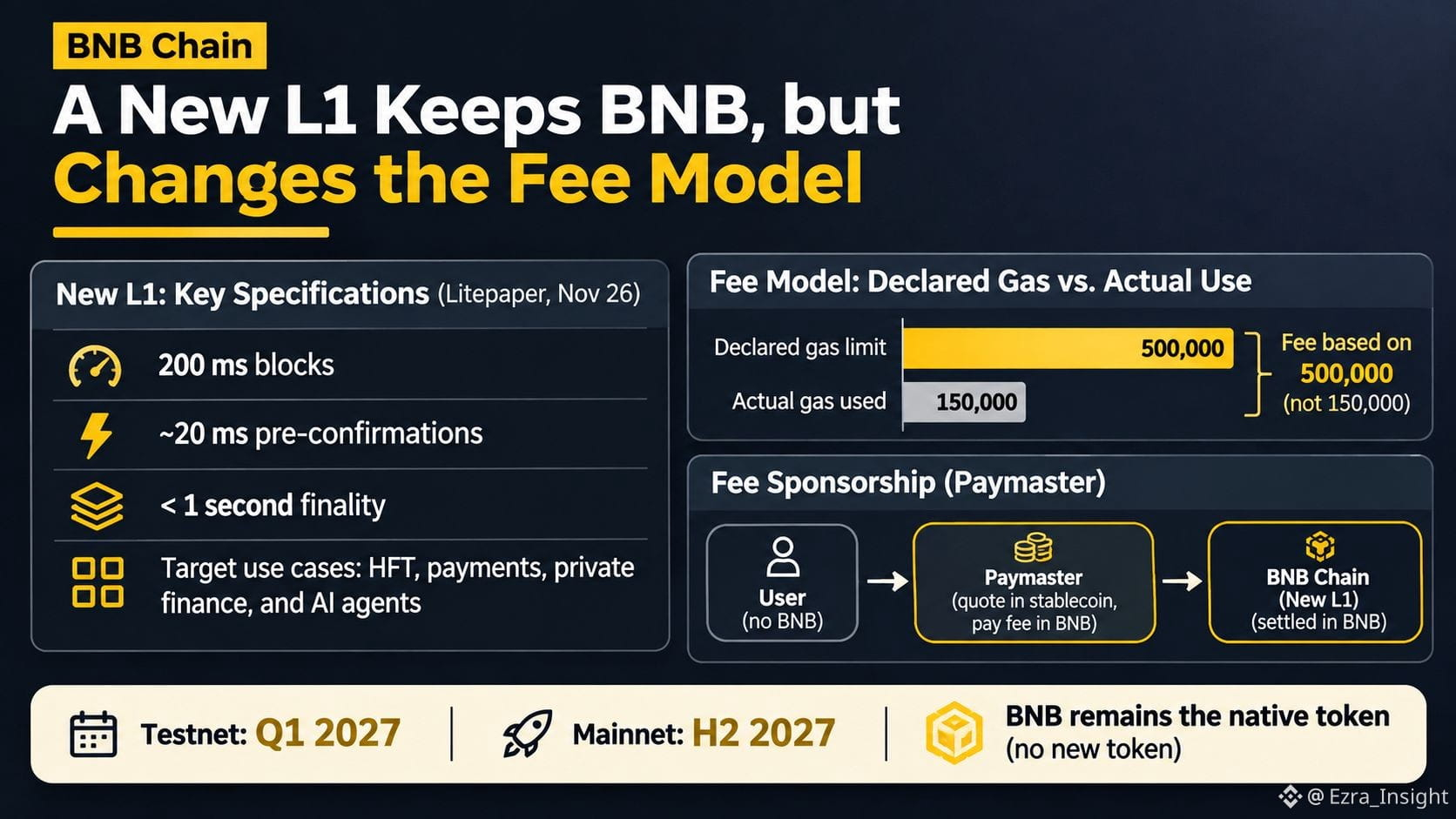
BNB Chain's new L1 litepaper, published on Nov 26, describes a network targeting 200-millisecond blocks, approximately 20-millisecond pre-confirmations and sub-second finality. The design is aimed at high-frequency trading, payments, private financial transactions and AI agents. BNB remains the native token, with no separate token planned. But the more interesting detail is how the network intends to charge for transactions.
Unlike a conventional gas model, the new L1 charges ordinary transactions according to their declared gas limit, not the gas they actually consume. If a transaction declares 500,000 gas but uses only 150,000, the fee is still based on 500,000. The charge also applies when execution fails. That gives block producers a way to reserve capacity before execution, but it puts more responsibility on wallets and applications to estimate gas correctly.
There is another distinction. Applications can sponsor fees, and a paymaster can quote reimbursement in a stablecoin while paying the underlying network fee in BNB. Users may therefore transact without holding BNB themselves, but the network still requires BNB to settle the fee. Sponsorship changes who pays, not whether the token is used.
The performance figures are targets, not production results. The network currently runs as a multi-validator development network, with public testnet targeted for Q1 2027 and mainnet for the second half of the year. I think the real test is not whether BNB remains the gas token. It does. It is whether the new applications generate enough transaction activity to create meaningful demand beyond the existing BNB ecosystem.
#Binance