$BFUSD: The One-Minute Pause Before Signal Consumption
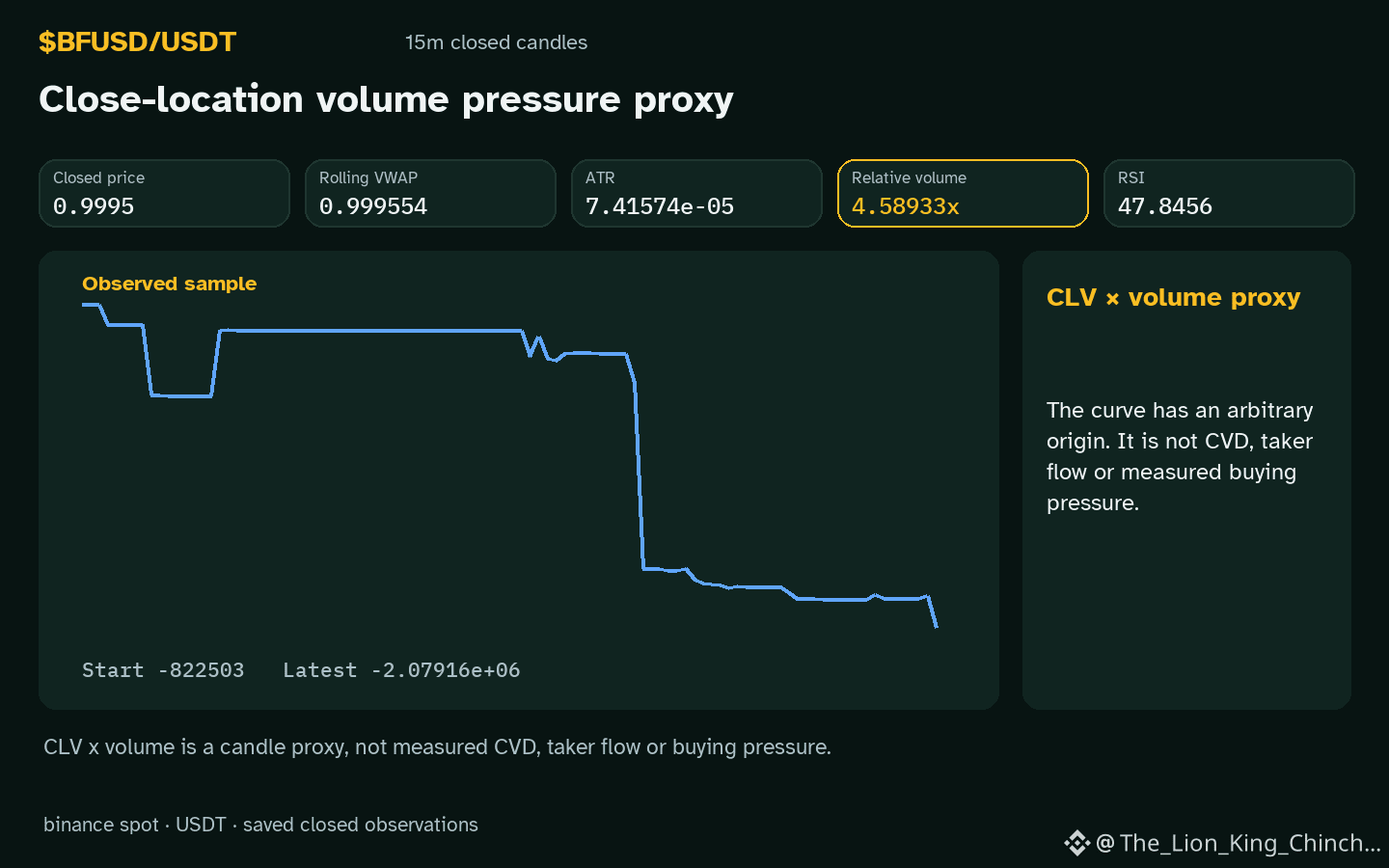
$BFUSD sits inside its recorded range with hourly direction down and volume above baseline. Relative volume reads 4.59x baseline while RSI shows 47.8. A daily change of 0% and hourly change of -0.010004% frame the current observation. The research question asks whether a deliberate pause before opening information feeds can shift interpretation quality.
Imagine two analysts viewing the same snapshot. One opens Telegram immediately and sees a chorus of directional calls. The other waits sixty seconds, notes the range position and volume context, then reads the same messages. The first may weight confirmatory language higher because the price tick just moved. The second has a mental anchor: price near 0.9995 or 0.9996, volume elevated but not extreme. This anchor does not guarantee better decisions; it only changes the order of evidence integration.
A counterexample: if the feed delivers a verified protocol halt announcement during that minute, the pause delays critical data. The mechanism assumes most feed content is noise, not signal. If the feed is mostly signal, waiting degrades edge. The self-check is simple: after the next session, compare outcomes when you paused versus when you reacted instantly. Did the pause correlate with fewer chased entries or wider stops? If not, the habit adds friction without benefit.
Current measurements describe only this saved observation. A future closed candle breaking the recorded range with sustained volume would weaken the range-based anchor. Until then, the trade-off remains entry quality versus chasing, framed by a one-minute rule worth testing.
Probabilistic market research, not a recommendation or guaranteed return.
#BFUSD #RiskManagement