

#canmarketsreboundafterthanksgiving? 🌍 #PositiveMindsGlobalResults
BINANCE SQUARE | INVEST • LEARN • GROW • TOGETHER
NOVEMBER 27, 2026 | US MARKETS • INFLATION • FEDERAL RESERVE • GLOBAL ECONOMY
Wall Street's Holiday Pause Comes With a Bigger Question: Is Inflation Keeping the Fed on Hold—or Moving Toward Another Hike?
The Thanksgiving holiday has temporarily paused trading activity across Wall Street, but it has not paused the debate about the direction of the US economy. Investors are entering Friday's shortened session with a difficult combination to evaluate: resilient economic growth, stubborn inflation, rising borrowing-cost concerns and uncertainty surrounding the Federal Reserve's next policy move.
The market's attention is increasingly shifting away from simply asking whether the economy is growing and toward a more complicated question: Can the US economy remain strong without forcing interest rates higher for longer?
1. What Is Happening in the Market Right Now?
Wall Street is navigating a difficult period in which economic strength is no longer automatically good news for investors. Strong growth and consumer spending may appear positive, but when inflation remains elevated, they can reduce the Federal Reserve's ability to lower borrowing costs.
The latest US economic figures have intensified this concern. Third-quarter GDP growth was revised up to 4.3%, while October inflation accelerated and core PCE rose faster than expected. That combination has strengthened expectations that the Federal Reserve may need to keep monetary policy restrictive for longer—or raise rates again.
Investors are also reassessing valuations across technology and AI-related stocks after recent declines, particularly in companies whose prices have risen significantly on expectations of future AI growth.
The current market environment is increasingly defined by three competing forces:
Economic resilience: Growth and consumer activity remain stronger than many investors expected.
Inflation pressure: Rising prices are making a rapid return to lower interest rates less likely.
Market valuation concerns: Investors are questioning whether AI, technology and growth stocks are priced too aggressively relative to future earnings.
2. Why Are Investors Facing a Downturn?
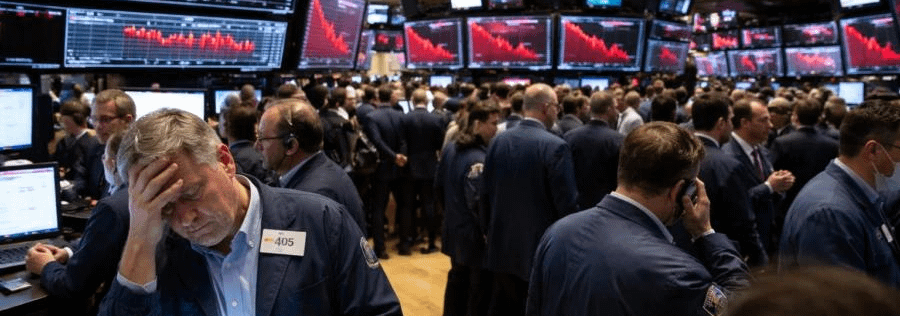
The recent weakness in US equities reflects more than a single economic report. Investors are increasingly concerned about the possibility that interest rates could remain higher, financial conditions could tighten, and expensive technology stocks could face further valuation adjustments.
The sell-off has also exposed the market's heavy dependence on AI-related companies. When confidence in the AI investment cycle weakens, pressure can spread quickly across semiconductor stocks, cloud infrastructure companies, technology ETFs and the broader Nasdaq.
Recent trading has shown how quickly optimism can fade. The Nasdaq has been particularly vulnerable, while the S&P 500 has struggled and volatility has remained elevated. Investors are increasingly prioritizing cash flow, earnings visibility and realistic valuations over growth stories alone.
What investors are looking for now
Lower inflation: Evidence that price pressures are finally moving sustainably toward the Fed's 2% target.
Clearer interest-rate direction: Greater confidence about whether December will bring another hike and how 2027 policy could unfold.
Corporate earnings strength: Companies capable of delivering profits despite higher borrowing costs.
AI profitability: Proof that enormous AI infrastructure investments can generate meaningful returns.
Market stability: A reduction in volatility and a recovery in investor confidence.
Defensive opportunities: Greater interest in quality companies, cash-rich businesses and sectors less sensitive to higher rates.
The shift in investor behavior is becoming increasingly visible: the market is demanding stronger evidence before rewarding expensive growth stocks.
3. Major US Stock Indexes — Where the Pressure Is Concentrated
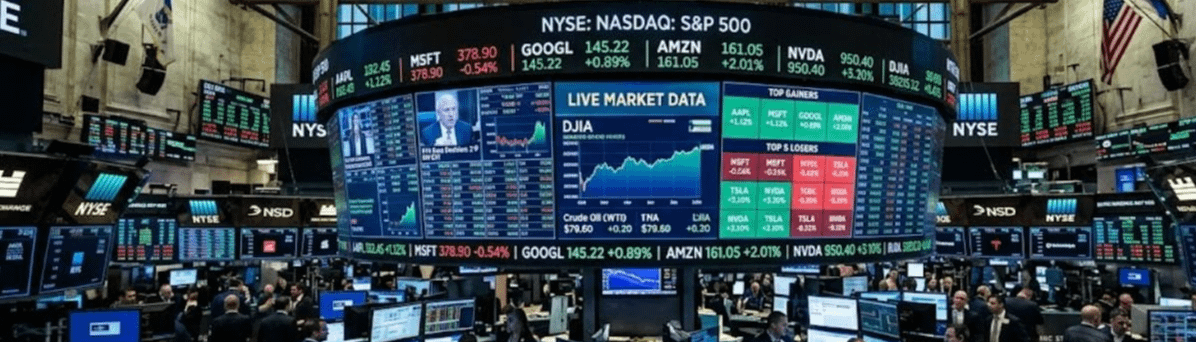
The three major US benchmarks are being influenced by different parts of the economy, but all remain sensitive to inflation, interest-rate expectations and the direction of corporate earnings.
S&P 500 — Broad market benchmark
The S&P 500 reflects the performance of large US companies across technology, financials, healthcare, industrials and consumer sectors. Investors are watching whether the market can stabilize amid rising yields, valuation pressure and weakening sentiment toward AI-heavy stocks.
Nasdaq Composite — Technology and growth exposure
The Nasdaq remains especially sensitive to AI spending expectations, semiconductor performance, future earnings growth and interest rates. Higher borrowing costs can reduce the present value investors assign to future earnings, placing pressure on high-valuation technology companies.
Dow Jones Industrial Average — Established blue-chip companies
The Dow offers exposure to major established businesses across industrial, financial, consumer and healthcare sectors. Investors may look toward more mature companies with established earnings and dividends when technology-sector volatility increases.
Russell 2000 — Smaller US companies
Small-cap stocks are particularly sensitive to domestic borrowing costs, bank lending conditions and economic demand. If rates remain elevated, smaller businesses could face greater financing pressure than large corporations with stronger balance sheets.
Note: The latest verified closing figures for all four indexes are not available in the retrieved sources, so specific index levels and percentage changes are intentionally omitted.
4. Sticky Inflation and Robust GDP: A Difficult Combination for the Fed
The US economy is sending a message that policymakers may find difficult to ignore. Economic growth is stronger than expected, yet inflation remains too high to comfortably support an easing cycle.
The latest figures released ahead of Thanksgiving highlighted the following:
US economic data — October inflation and third-quarter growth
US GDP growth · Q3 annualized Headline PCE · October YoY
4.3% 3.8%
Core PCE · October YoY Fed inflation target
3.3% 2.0%
The GDP revision indicates that economic activity remained powerful during the third quarter. However, the acceleration in core PCE inflation is the more uncomfortable development for the Federal Reserve because it suggests underlying price pressures have not cooled sufficiently.
Core PCE excludes food and energy prices, helping policymakers evaluate the underlying inflation trend. With annual core PCE at 3.3%, inflation remains substantially above the central bank's 2% objective.
This creates a complicated policy dilemma:
Raising interest rates could help control inflation but increase pressure on mortgages, businesses, credit and equity valuations.
Keeping rates unchanged could allow inflation to remain elevated for longer.
Cutting rates prematurely could risk renewed inflationary pressure.
The stronger economy gives the Fed room to remain restrictive, but it also increases the challenge of slowing inflation without causing a deeper economic or financial-market disruption.
5. December Fed Rate-Hike Expectations: Why Markets Are Nervous
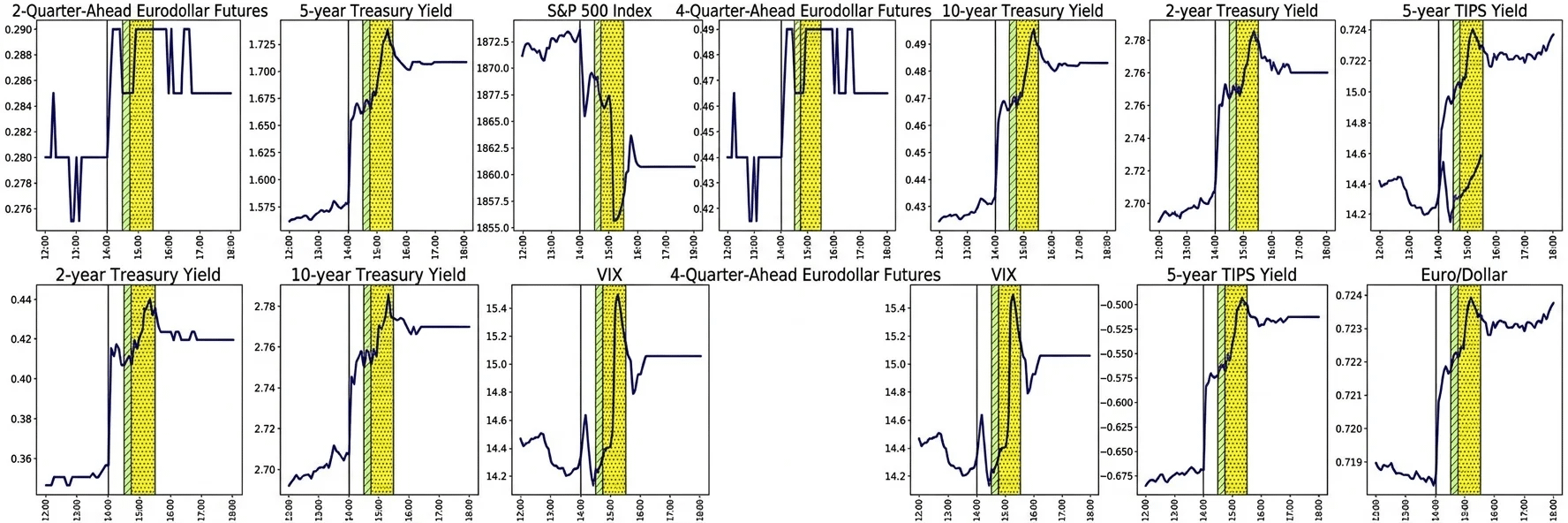
The Federal Reserve is approaching its final policy meeting of 2026 with inflation concerns still firmly in the spotlight.
Following the latest inflation data and stronger GDP figures, financial markets are increasingly anticipating another 25-basis-point rate increase in December. Recent reporting indicates that a December hike is close to fully priced in, while Federal Reserve meeting minutes have reinforced concerns that inflation could remain persistent into 2027.
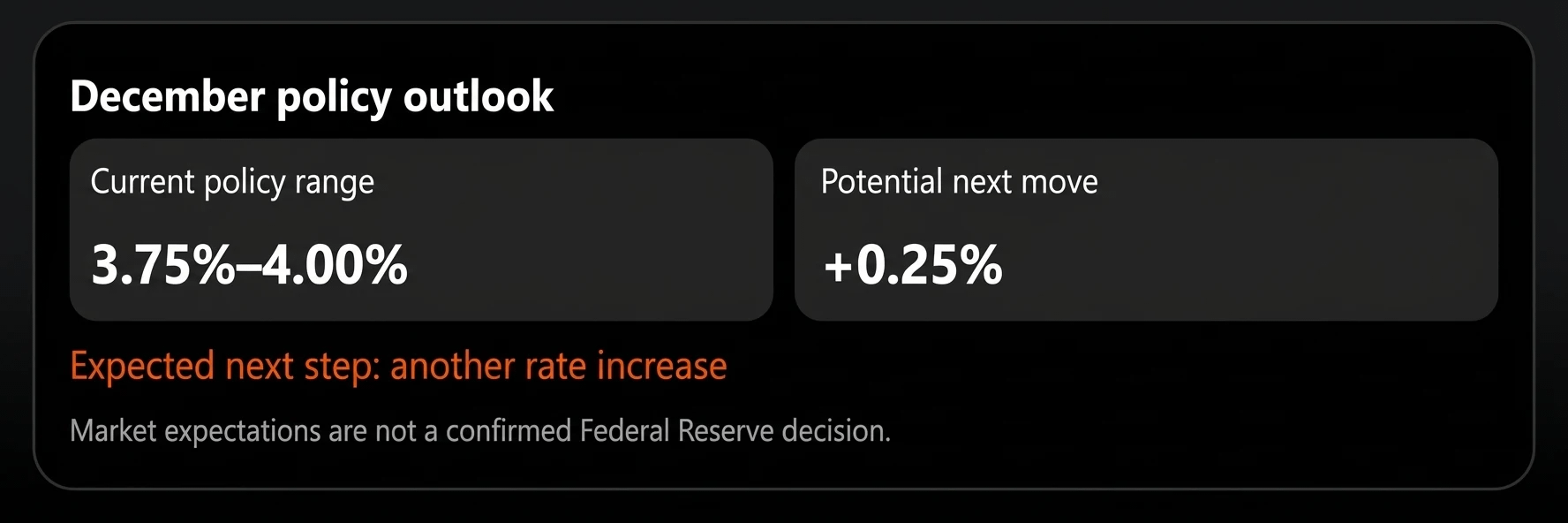
If the Fed raises rates by another 25 basis points, the federal funds target range would move to 4.00%–4.25%.
Why a rate hike matters for stocks
Higher interest rates can have several consequences for financial markets:
Increase Treasury yields, potentially attracting capital away from equities.
Raise financing costs for companies and households.
Pressure technology and growth stocks through higher valuation discount rates.
Strengthen the US dollar, depending on global rate differentials and market positioning.
Increase the risk of slower investment, consumer spending and economic growth.
Investors are now looking beyond the December meeting. The bigger concern is whether another hike would represent the final tightening move—or the beginning of a longer period of restrictive monetary policy.
6. Thanksgiving Trading: A Short Session With Limited Liquidity
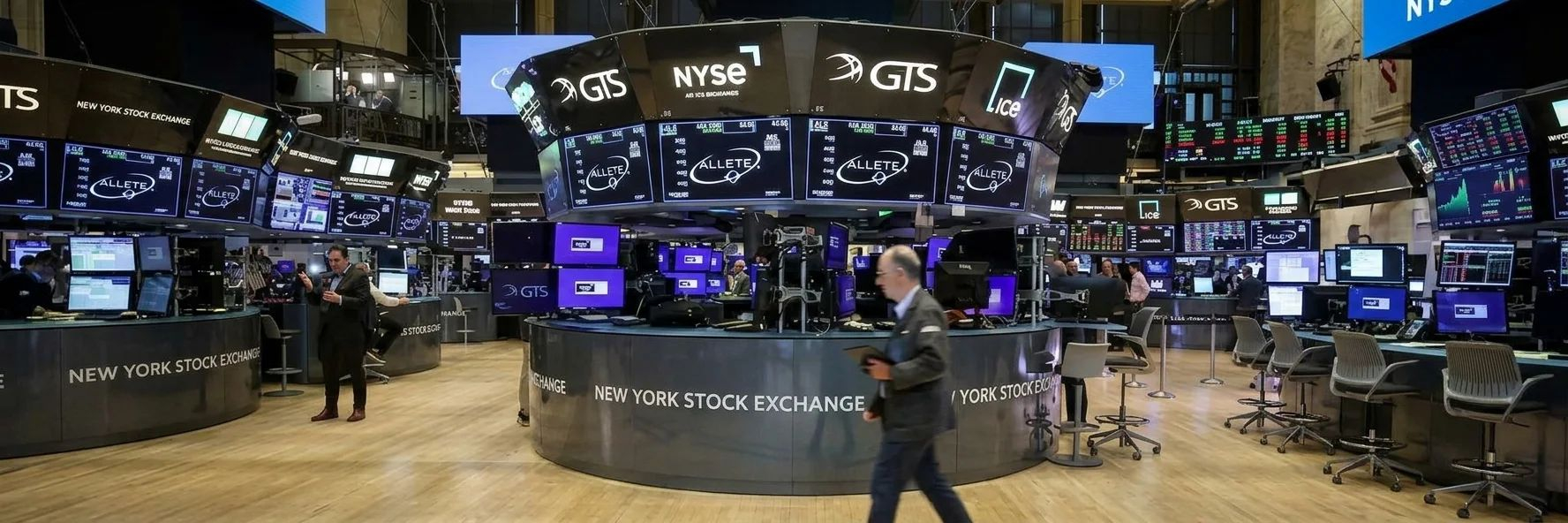
US markets are operating on a shortened holiday schedule this week.
US Thanksgiving trading schedule
Thursday, November 26
Thanksgiving Day Markets closed
Friday, November 27
NYSE & Nasdaq early close 1:00 PM ET
NYSE's official 2026 holiday schedule confirms the Thanksgiving closure and Friday early closing time.
Shortened trading sessions can produce thinner liquidity, less participation from institutional traders and potentially sharper price movements when unexpected news appears.
Investors should avoid interpreting every move during a holiday session as a reliable signal of the market's broader direction. Low-volume rallies and sell-offs may not carry the same significance as movements during a full trading session.
7. What Investors Are Watching Next
The coming days could determine whether markets find temporary relief or face another round of volatility.
Treasury yields
Higher yields could continue drawing capital toward fixed-income assets and putting pressure on equities.
Federal Reserve guidance
Investors will look for clues about whether December's rate increase could be the last move—or whether additional tightening is possible in 2027.
AI and technology valuations
Earnings expectations, capital spending, future AI revenues and the profitability of massive infrastructure investments remain critical.
US dollar and global capital flows
A stronger dollar and tighter US financial conditions could affect emerging markets, commodities, international equities and cryptocurrencies.
Energy and geopolitical risks
Renewed energy-price increases could make the inflation challenge more difficult and complicate the Fed's policy decisions.
8. The Bigger Picture: A Strong Economy, but a More Difficult Market
The US economy is not necessarily entering a downturn simply because stock prices are falling. The current environment may instead reflect a repricing of risk, valuations and future interest-rate expectations.
However, the combination of strong GDP growth, persistent core inflation and potentially higher borrowing costs is creating an uncomfortable environment for equity investors.
The next market direction may depend less on how strong the economy looks today and more on whether inflation can finally cool without damaging economic growth.
Bullish scenario: Inflation begins easing, Treasury yields stabilize, the Fed's December increase becomes the final hike, corporate earnings remain resilient and technology stocks recover.
Bearish scenario: Inflation remains sticky, the Fed signals further tightening, bond yields rise, AI valuations face another correction and financial conditions become increasingly restrictive.
The market is approaching a critical test of confidence. Investors are not simply searching for growth anymore—they are looking for growth that can survive higher interest rates, inflation and tighter financial conditions.
For now, patience, disciplined risk management and careful attention to economic data may matter more than chasing every short-term market rebound.
Disclaimer: This article is for educational and informational purposes only and does not constitute financial or investment advice. Markets are volatile, interest-rate expectations can change rapidly, and forecasts are not guarantees. Always conduct your own research and assess your risk tolerance before making investment decisions.
#USMarkets #Inflation #FederalReserve #CorePCE #FedRates #StockMarket #WallStreet #NASDAQ #SP500 #DowJones #GDP #InterestRates #GlobalEconomy #MarketOutlook #PositiveMindsGlobalResults

