


Over the past few weeks, investors were holding on to one simple hope: inflation would cool, the U.S. economy would slow, and the Federal Reserve would be forced to pause rate hikes in December.
But yesterday's data turned that expectation upside down, bringing the threat of monetary tightening back into focus.
Here's the full story, with the numbers and what they could mean for global markets and BTC.
1. Inflation refuses to surrender
The Personal Consumption Expenditures (PCE) index, the Fed's preferred inflation gauge, rose to 3.8% year over year, its highest level in five months.
Even more concerning, Core PCE jumped to 3.3%, above expectations and marking its fastest pace in nearly three years.
In other words, inflation isn't just moving away from the Fed's 2% target. It's starting to accelerate again.
2. The U.S. economy is still running hot
At the same time, the second estimate of third-quarter GDP growth came in at 4.3%, compared with expectations of just 3.5% and an initial estimate of 3.4%.
No central bank can easily justify pausing monetary tightening while the economy is growing this quickly and inflation is moving higher again.
3. Markets have already made up their minds about December
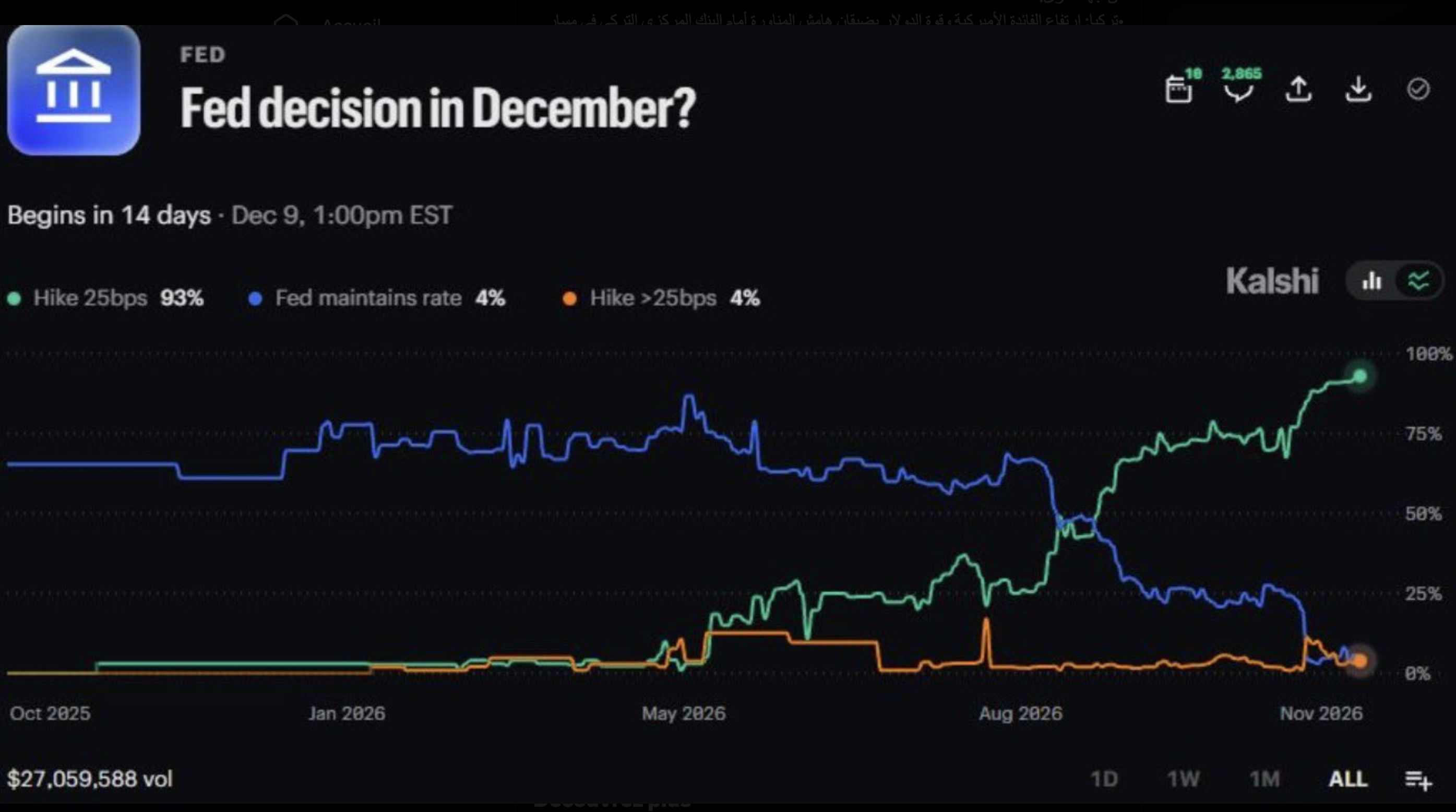
Prediction markets are no longer asking whether the Fed will raise rates.
Current pricing suggests the outcome is almost settled:
• 25-basis-point hike: 93%
• No change in rates: 4%
• Larger 50-basis-point hike: 4%
But pay attention…
The real risk isn't the December rate hike itself.
A 25-basis-point increase at the December 9 meeting is already fully priced in.
The real shock that many investors are overlooking lies in three areas:
First: The 2027 rate path
The debate is no longer about a single meeting.
The question now is whether rate hikes will extend into early 2027, and what the Fed's updated projections, the Dot Plot, will reveal at its next meeting.
Second: The hidden contradiction in the data
Despite 4.3% economic growth in the third quarter, October data showed a clear slowdown in real consumer spending.
This suggests businesses are still able to pass higher costs on to consumers, while households are beginning to feel the pressure of rising prices.
That's one of the most difficult situations any monetary policymaker can face.
What about Bitcoin?
Higher rates could mean stronger yields, a stronger dollar and tighter liquidity all potential headwinds for $BTC .
However, if restrictive policy eventually weakens the economy, expectations of future rate cuts could support Bitcoin.
I'm watching Treasury yields, dollar strength and global liquidity.
The real question isn't one rate hike. It's how long tight monetary policy will last.

This article is for information and education only and is not investment advice. Crypto assets are volatile and high risk. Do your own research.
📌 Follow @Bluechip for unfiltered crypto intelligence, feel free to bookmark & share.