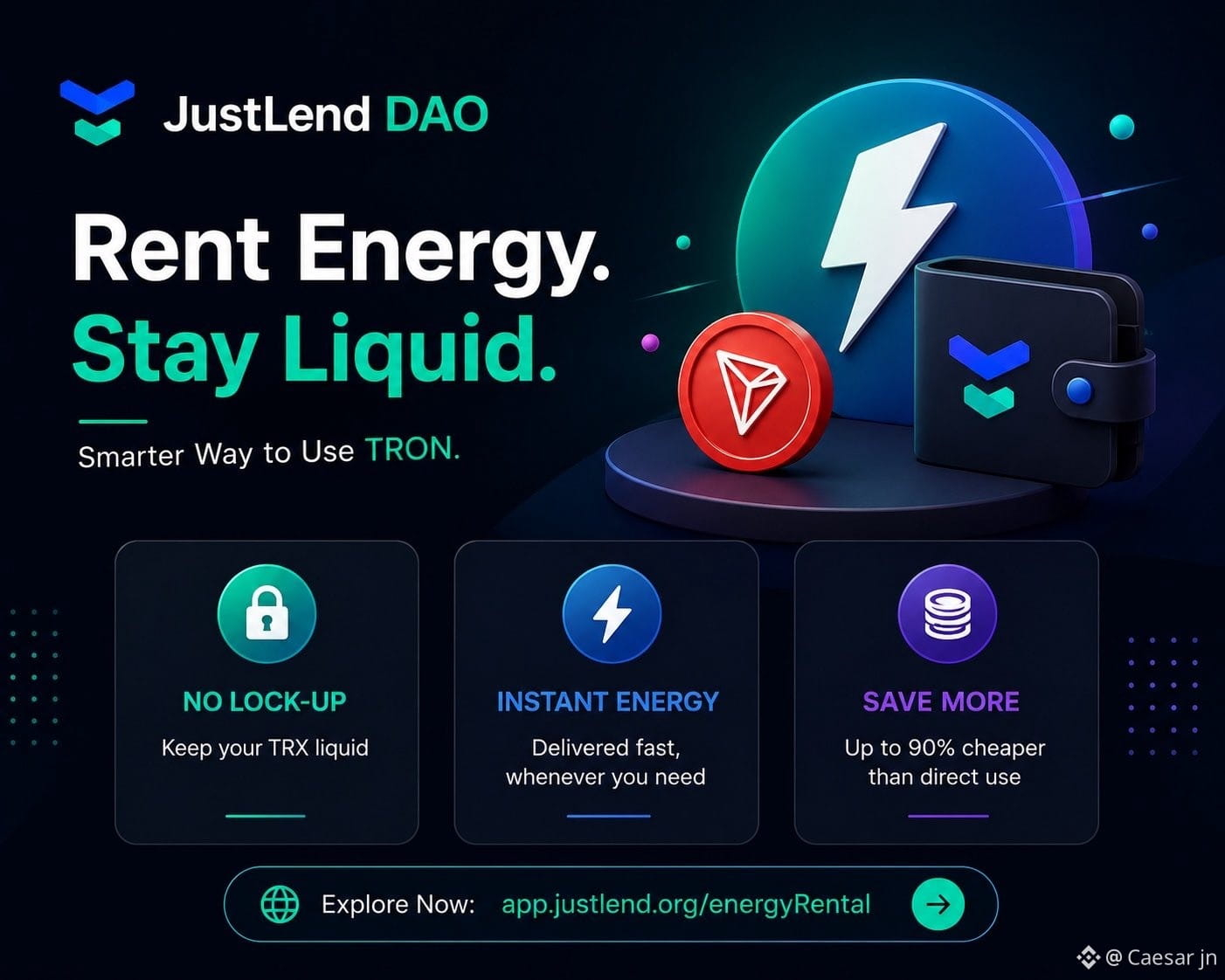
𝐖𝐡𝐲 𝐄𝐧𝐞𝐫𝐠𝐲 𝐌𝐚𝐧𝐚𝐠𝐞𝐦𝐞𝐧𝐭 𝐌𝐚𝐭𝐭𝐞𝐫𝐬 𝐎𝐧 𝐓𝐑𝐎𝐍
Blockchain transactions are not all equally demanding.
A simple transfer and a complex smart contract interaction can require different amounts of network resources. On TRON, Energy is one of the resources involved in executing smart contracts.
This makes Energy management an important consideration for users who interact frequently with decentralised applications.
There are different ways to approach the requirement.
A user can obtain Energy through mechanisms available to them, including staking TRX to access network resources or using an Energy Rental service when appropriate.
The difference between buying or obtaining Energy through staking and renting Energy is worth understanding.
Staking involves committing TRX under the network’s resource model, subject to the relevant rules and unfreezing conditions. Energy Rental, on the other hand, provides access to Energy for a specified arrangement or period without requiring the user to stake the same amount of TRX themselves.
For developers, businesses and frequent smart contract users, this distinction can influence how they plan operational costs.
For occasional users, renting may be more convenient than committing capital. For users with recurring resource needs, staking may be worth evaluating.
Neither option is automatically cheaper in every situation. The best approach depends on usage frequency, rental prices, staking conditions, available resources and the user’s liquidity requirements.
This is where JustLend DAO’s Energy-related services become relevant to the wider TRON experience.
The bigger lesson is that blockchain efficiency is not only about transaction speed. It also involves understanding how network resources are obtained, allocated and consumed.
@Justin Sun孙宇晨 @JUST DAO #TRONEcoStar