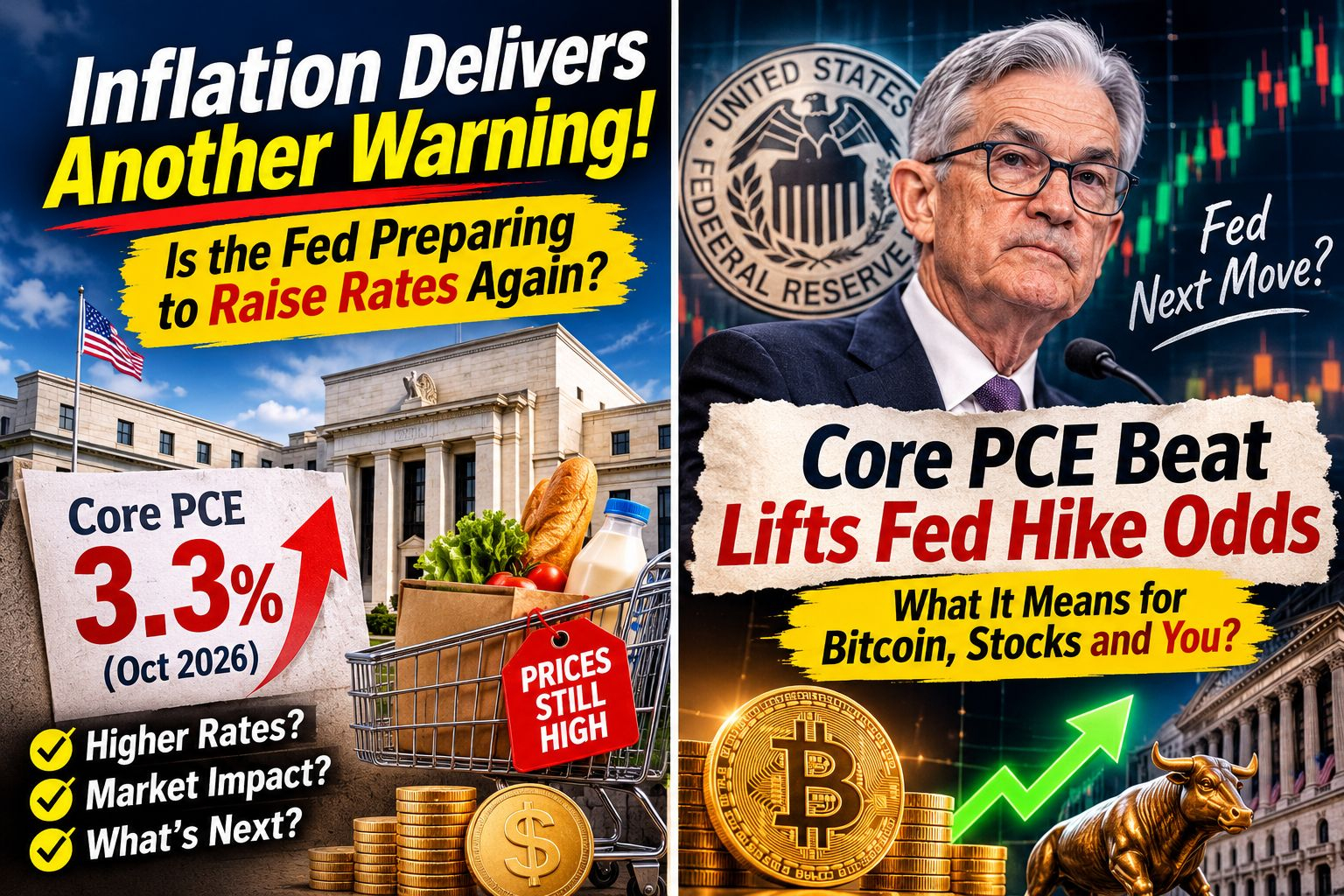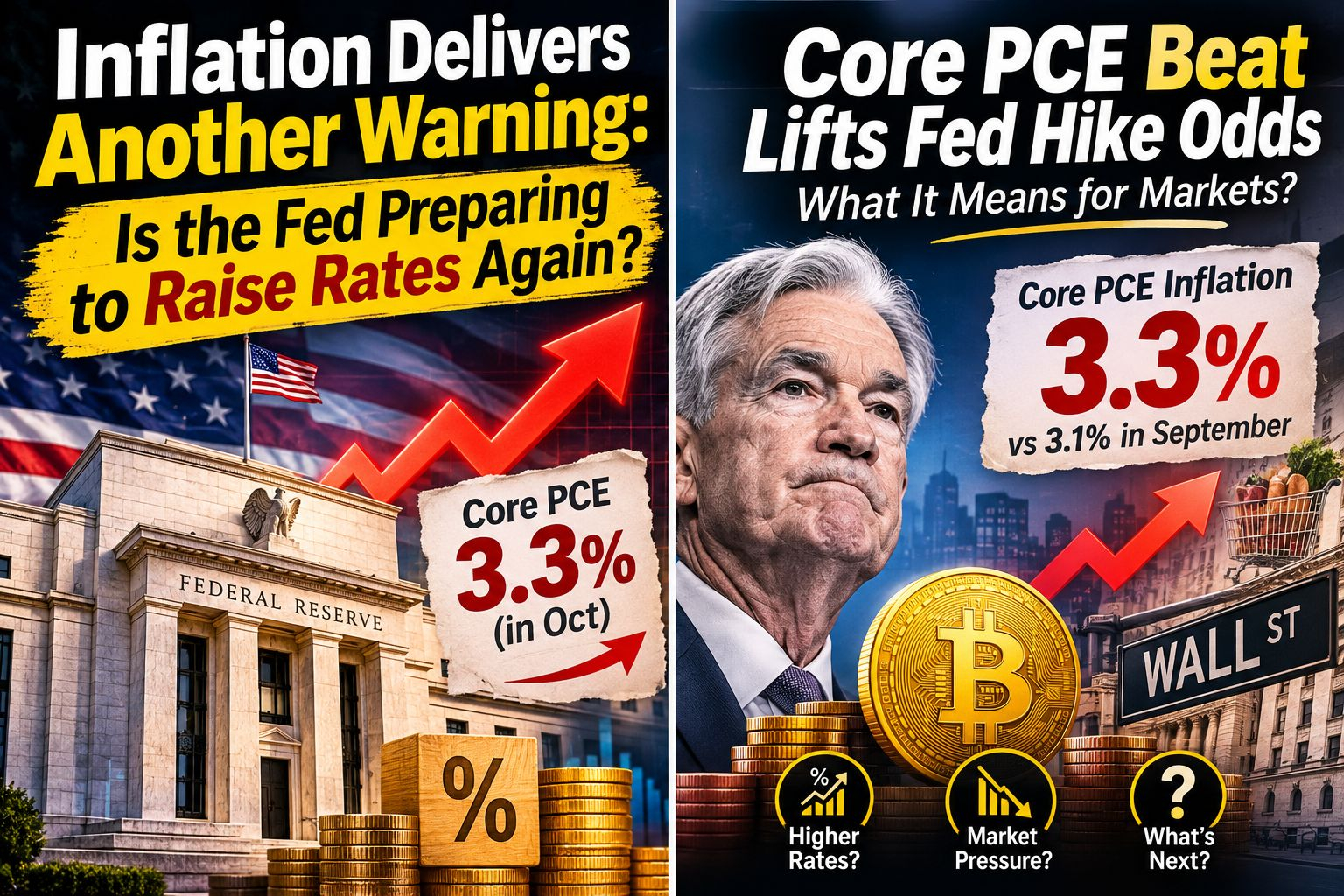

The latest US inflation report has given financial markets another reason to worry. Core Personal Consumption Expenditures (PCE), the Federal Reserve's preferred measure of underlying inflation, came in hotter than economists expected in October. And that could make the Fed's next interest rate decision even more complicated.
According to the latest data, annual core PCE inflation climbed to 3.3% in October, compared with 3.1% in September and above the 3.2% forecast. On a monthly basis, core PCE increased by 0.3%, matching expectations.
At first glance, a 0.1 percentage-point difference might not seem particularly important. But for the Federal Reserve, it sends a clear message: inflation is not cooling as quickly as policymakers would like.
Why This Inflation Report Matters
The Fed has been trying to bring inflation back toward its 2% target without putting too much pressure on economic growth. However, the latest figures suggest that price pressures remain persistent.
Headline PCE inflation also increased to 3.8% annually, up from 3.6% in September. This creates another challenge for policymakers who must decide whether the economy needs tighter monetary policy.
The concern is not simply that prices are rising. It is that inflation could remain elevated for longer than expected, forcing the central bank to maintain a more aggressive approach.
Could Another Interest Rate Hike Be Coming?
Investors are increasingly preparing for another rate increase. Market expectations now heavily favor a 25-basis-point hike at the Federal Reserve's December 8-9 meeting.
Higher interest rates make borrowing more expensive for consumers and businesses. They can also reduce investment appetite and put pressure on stock market valuations.
However, raising rates too aggressively carries its own risks. If borrowing costs rise while household spending weakens, economic growth could lose momentum.
That leaves the Fed facing a difficult decision: fight inflation more aggressively or give the economy additional time to adjust.
What Could This Mean for Bitcoin and Stock Markets?
The impact could extend well beyond traditional financial markets.
For Bitcoin and other cryptocurrencies, expectations of higher interest rates can create additional selling pressure. Investors may become less willing to take risks when safer assets offer more attractive returns.
Technology stocks could also face challenges because higher interest rates tend to reduce the present value of future earnings. Companies whose valuations depend heavily on future growth may feel the pressure more than established businesses.
The US dollar could receive support if markets continue pricing in tighter monetary policy, while gold may struggle if Treasury yields and the dollar move higher.
Of course, none of these reactions is guaranteed. Market movements will also depend on employment figures, economic growth and future Fed communication.
The Bigger Question: How Much Tightening Is Enough?
One inflation report does not determine the Fed's entire policy direction. But the latest core PCE reading makes it harder to argue that inflation has been brought under control.
Investors now have to consider a market environment where interest rate cuts may remain distant and additional increases are becoming a serious possibility.
The next few weeks could be particularly important for Bitcoin, stocks, gold and the US dollar.
My take: The biggest risk for markets is not necessarily one more rate hike. It is the possibility that investors have underestimated how long restrictive monetary policy may last. If inflation refuses to cool, the market could face another period of uncertainty.
**What do you think? Will the Federal Reserve raise rates again in December, or could a more aggressive approach eventually hurt the US economy more than it helps control inflation?
#CorePCE #fomc #CryptoMarketMoves