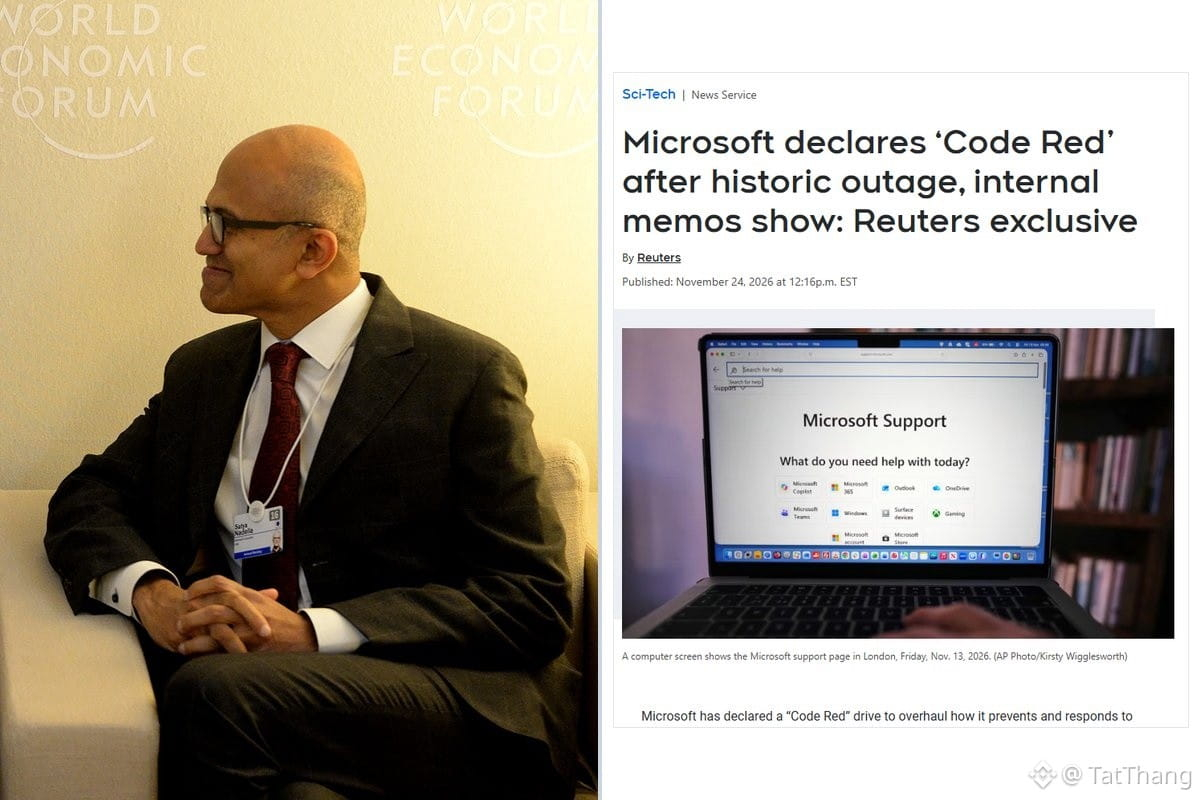
Microsoft burned 10 years of acceptable failures in one Exchange Online outage.
The blackout lasted 23 hours and 50 minutes. It hit governments, airlines, and banks worldwide.
It began at 16:20 UTC on November 12, 2026. Recovery took until 16:10 UTC on November 13.
Leaked memos reported by Reuters show what happened inside Microsoft. It wasn't a hack. A latent July Windows bug collided with a Teams failover. Peak North American traffic hit the same gateways.
Automated health checks pulled servers offline in a death spiral.
Executives put hard numbers on the damage:
- M365 Core President Jason Henderson called EX1550543 the worst incident in Exchange Online history
- CVP Amanda Silver counted 11,000 messages across 11 Teams chats in a fog of war
- EVP Charles Lamanna said one component absorbed 10 years of acceptable failures
Satya Nadella apologized publicly. Microsoft declared Code Red. It ordered 1 hour global outage recoveries using AI agents.
That mandate lands beside Microsoft's October 26 buyout memo. The company is paying 60,000 workers, roughly 27% of staff, to exit by December 31. Meanwhile, AI spending hits $175 billion.
Phishing crews even hijacked the EX1550543 code to bait locked out users.
Engineers sent 11,000 messages to fix a July bug. Microsoft's Code Red answer cuts 60,000 jobs and bets the next crash on AI agents.
I broke down the CapEx vs. OpEx math behind this outage on November 14.
AI agents can scan 11,000 log lines faster than any human responder.
They still can't tell which alert is noise when an undocumented legacy gateway hits a death spiral. When a tech giant buys out senior engineers to fund AI CapEx, who audits the AI agent during the next global blackout?