𝗦𝗨𝗡.𝗜𝗢'𝗦 𝗣𝗦𝗠: 𝗖𝗔𝗡 𝗣𝗥𝗘𝗗𝗜𝗖𝗧𝗔𝗕𝗟𝗘 𝗦𝗧𝗔𝗕𝗟𝗘𝗖𝗢𝗜𝗡 𝗦𝗪𝗔𝗣𝗦 𝗜𝗠𝗣𝗥𝗢𝗩𝗘 𝗖𝗔𝗣𝗜𝗧𝗔𝗟 𝗘𝗙𝗙𝗜𝗖𝗜𝗘𝗡𝗖𝗬 𝗢𝗡 𝗧𝗥𝗢𝗡?
Stablecoins were designed to simplify digital value transfers, yet exchanging between them can still introduce unnecessary costs and execution uncertainty.
For businesses, liquidity providers and active DeFi participants, these inefficiencies become particularly relevant when capital moves repeatedly between different financial applications.
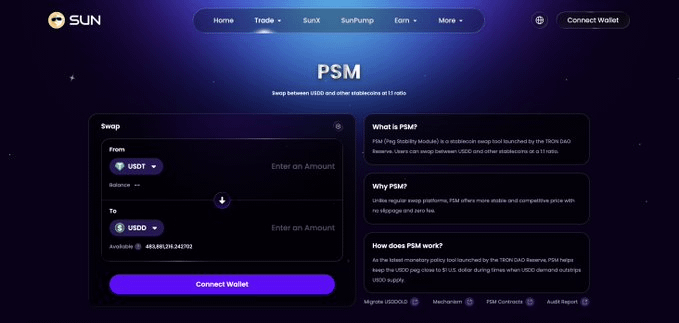
SUN.io's Peg Stability Module (PSM) addresses this problem by providing a dedicated conversion mechanism between USDD and supported stablecoins, making capital allocation more predictable.
𝗧𝗛𝗘 𝗡𝗨𝗠𝗕𝗘𝗥𝗦 𝗕𝗘𝗛𝗜𝗡𝗗 𝗭𝗘𝗥𝗢-𝗙𝗘𝗘 𝗖𝗢𝗡𝗩𝗘𝗥𝗦𝗜𝗢𝗡𝗦
According to SUN.io's official announcement, PSM provides:
• Exchange ratio: 1:1.
• Price slippage: 0%.
• Swap fees: 0%.
• Network: TRON.
• Supported conversions: USDD and eligible stablecoins.
Consider a hypothetical business that converts $50,000 in stablecoins twenty times per month:
• Monthly conversion volume: $1 million.
• Assumed conventional swap cost: 0.1%.
• Estimated monthly conversion expenses: $1,000.
• Estimated annual conversion expenses: $12,000.
• PSM swap fees for equivalent eligible conversions: $0.
This illustrative calculation excludes blockchain transaction costs and assumes sufficient PSM liquidity. The 0.1% comparison rate is hypothetical, not an independently verified market quotation.
Source: SUN.io official PSM announcement.
Explore: https://sun.io/?lang=en-US#/psm
𝗠𝗬 𝗣𝗘𝗥𝗦𝗢𝗡𝗔𝗟 𝗩𝗜𝗘𝗪: 𝗣𝗥𝗘𝗗𝗜𝗖𝗧𝗔𝗕𝗜𝗟𝗜𝗧𝗬 𝗜𝗦 𝗔𝗡 𝗨𝗡𝗗𝗘𝗥𝗥𝗔𝗧𝗘𝗗 𝗙𝗜𝗡𝗔𝗡𝗖𝗜𝗔𝗟 𝗔𝗗𝗩𝗔𝗡𝗧𝗔𝗚𝗘
I consider predictable execution potentially more valuable than zero swap fees alone.
When businesses manage working capital, uncertainty surrounding the final amount received can complicate accounting, treasury planning and automated financial operations.
A fixed 1:1 conversion mechanism reduces this uncertainty for eligible transactions.
For example, a business receiving payments in a supported stablecoin could convert part of its working capital into USDD before allocating those funds to suitable DeFi applications.
This creates a more straightforward connection between payments, stablecoin liquidity and decentralized financial services.
However, a fixed conversion ratio does not eliminate reserve limitations, smart contract risks or potential price deviations in external markets.
I would evaluate PSM through several practical indicators:
• Available liquidity in both conversion directions.
• Daily conversion volumes.
• Transaction success rates during market volatility.
• Reserve asset quality.
• Actual user savings after network transaction costs.
These metrics would help establish whether PSM delivers sustainable financial efficiency beyond its advertised conversion parameters.
𝗙𝗥𝗢𝗠 𝗦𝗧𝗔𝗕𝗟𝗘𝗖𝗢𝗜𝗡 𝗦𝗪𝗔𝗣𝗦 𝗧𝗢 𝗜𝗡𝗧𝗘𝗚𝗥𝗔𝗧𝗘𝗗 𝗗𝗘𝗙𝗜 𝗜𝗡𝗙𝗥𝗔𝗦𝗧𝗥𝗨𝗖𝗧𝗨𝗥𝗘
SUN.io's strategic opportunity extends beyond conventional decentralized exchange services.
By facilitating predictable stablecoin conversions, PSM can potentially strengthen the economic connections between USDD, JustLend and TRON's broader payment infrastructure.
For USDD, reducing conversion friction could encourage greater circulation and practical adoption. For SUN.io, it could reinforce its position as an important liquidity gateway within the ecosystem.
Nevertheless, sustainable adoption must ultimately be demonstrated through recurring usage, reliable liquidity and genuine transactional demand.
In my assessment, the next stage of DeFi competition will increasingly focus on how efficiently capital moves between applications rather than simply how much capital each protocol holds.
The real value of PSM is not merely making stablecoin swaps cheaper. It is making capital movement more predictable, accessible and economically efficient.
That is the kind of financial infrastructure that can remain useful regardless of market sentiment.
@OfficialSUNio @USDD - Decentralized USD