


Thanksgiving is arriving at a time when financial markets could really use some good news. After several uncomfortable trading sessions, investors are hoping the holiday brings a break from the selling pressure. Technology stocks have been struggling, cryptocurrencies remain under pressure, and uncertainty surrounding interest rates continues to influence market sentiment.
But can Thanksgiving actually bring buyers back, or will another temporary recovery end with even more selling?
Monday's strong rebound showed that buyers haven't completely disappeared. Unfortunately, Tuesday's weakness in technology stocks reminded everyone how fragile market confidence remains. Investors are still uncomfortable with expensive AI valuations, elevated borrowing costs and the uncertain economic outlook.
What makes Thanksgiving week interesting is the change in trading behavior. Many institutional investors reduce their activity before the holiday, while some traders close existing positions to avoid unnecessary exposure. This can ease selling pressure and create room for a short-term recovery.
Historically, Thanksgiving has often been a favorable period for US equities. However, I wouldn't rely entirely on historical patterns, especially considering the challenges markets are currently facing.
US stock exchanges will remain closed on November 26, followed by a shortened trading session on Friday. Lower trading volumes could make price movements more unpredictable. Even a relatively small amount of buying or selling could produce a surprisingly large reaction.
Another major factor is inflation. Investors are looking for evidence that price pressures are cooling and that the Federal Reserve may have less reason to maintain restrictive monetary conditions.
A softer inflation reading could bring buyers back into technology stocks, cryptocurrencies and other risk assets. However, stronger inflation could quickly reverse that optimism and increase concerns about further monetary tightening.
Bitcoin is particularly interesting heading into Thanksgiving. The $60,000 psychological region discussed in recent market analysis remains an important reference point. After experiencing considerable selling pressure, Bitcoin could benefit from improving sentiment across traditional financial markets.
What I want to see, however, is genuine spot buying rather than a rally fueled entirely by short liquidations. There is a meaningful difference between investors accumulating Bitcoin and leveraged traders being forced out of their positions.
Unlike Wall Street, cryptocurrency markets don't close for Thanksgiving. Bitcoin, Ethereum, XRP and Solana will continue trading while traditional exchanges remain closed. This could create unexpected volatility, particularly if liquidity becomes thinner.
The technology sector also deserves close attention. Nvidia and other major AI companies have become important indicators of broader market confidence. Investors are increasingly questioning whether massive investments in artificial intelligence can deliver enough revenue and profitability to justify expensive valuations.
If technology stocks stabilize, confidence could gradually return across the Nasdaq and the wider financial market. But another wave of AI-related selling could make a Thanksgiving recovery difficult to sustain.
Something else worth watching is Black Friday. Consumer spending during Thanksgiving, Black Friday and Cyber Monday could reveal how American households are responding to current economic conditions.
Strong retail sales would suggest consumers remain financially resilient despite higher borrowing costs. That could improve expectations for corporate earnings and encourage investors to reconsider their defensive positions.
Weak spending would tell a different story, potentially increasing concerns about slowing economic growth.
For me, the most important part of this Thanksgiving week isn't how aggressively markets recover. It's whether they can hold those gains.
We've seen plenty of sharp recoveries during difficult market conditions. Prices jump, traders become optimistic, and social media suddenly starts talking about the next bull market. Then normal selling pressure returns, leaving late buyers trapped.
A genuine recovery should show improving trading volume, broader participation across different sectors and consistent demand. Without those signs, a Thanksgiving rally could remain nothing more than a temporary reaction to oversold conditions.
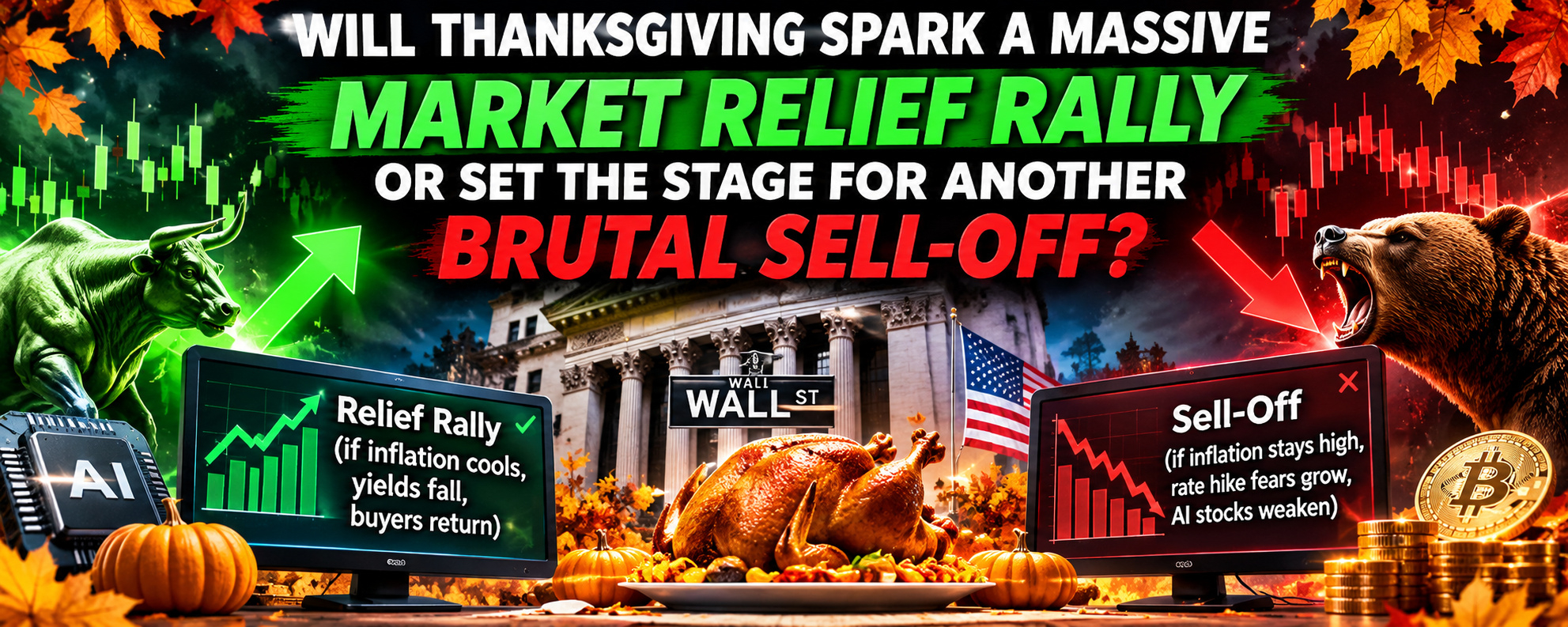
If inflation cools, Treasury yields decline and buyers return, markets could experience a welcome recovery heading into December. Bitcoin and major altcoins could also benefit from that improvement in risk appetite.
However, if inflation remains stubborn, the dollar strengthens and institutional selling continues, the holiday recovery could disappear just as quickly as it arrived.
I'm cautiously optimistic about a Thanksgiving relief rally, but I'm not ready to call it the beginning of a new bullish trend. The market still has several problems that a holiday cannot solve.
The most revealing moment may actually come after Thanksgiving, when institutional investors return and normal trading activity resumes.
If markets continue climbing under normal liquidity conditions, that would be a much stronger indication that confidence is returning.
Thanksgiving might give investors something to celebrate, but December will reveal whether the recovery has genuine strength behind it.
For now, patience matters more than excitement. A few green candles can change sentiment, but sustained buying is what changes a market trend.
These are conditional market expectations, not guaranteed predictions. Market figures have not been independently reverified for this rewrite.