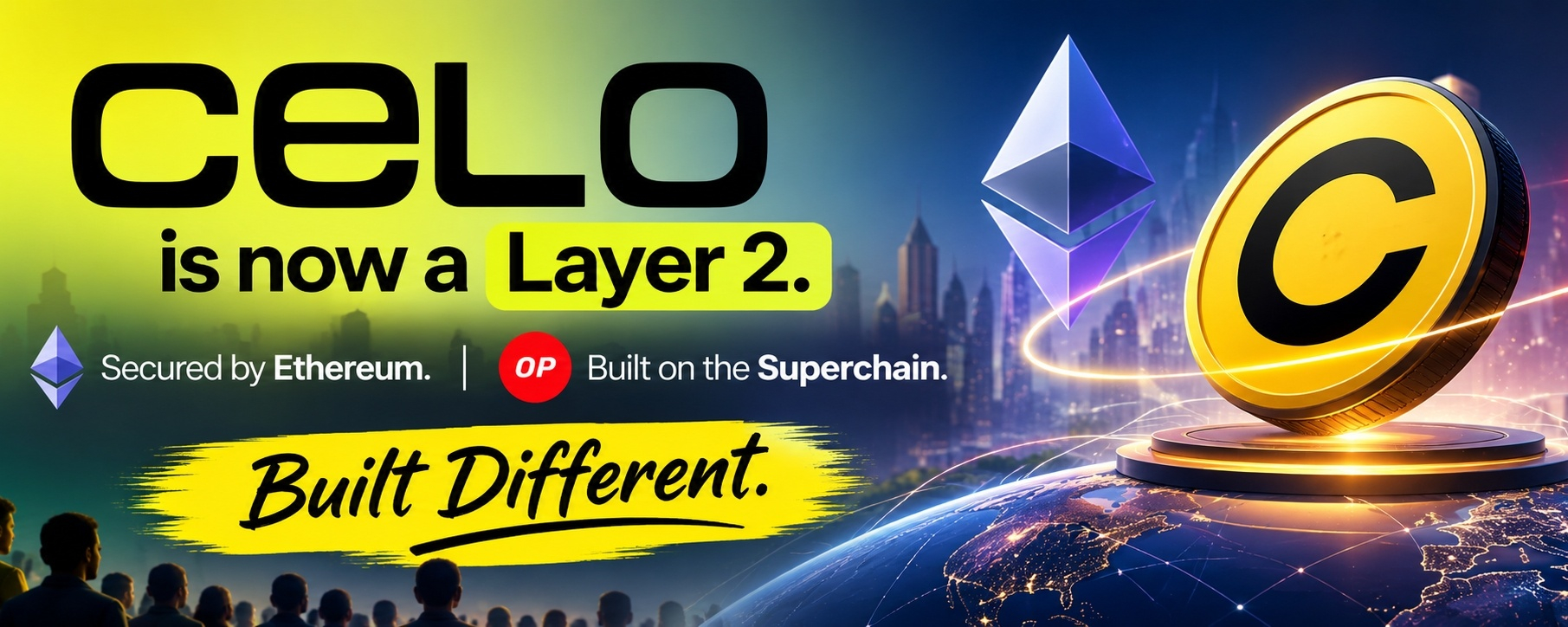

Celo's move from an independent Layer 1 to an Ethereum Layer 2 is one of those changes that deserves a closer look. At first, it might sound like another blockchain changing its architecture to follow the growing Layer 2 trend. But when I look at what Celo has been building over the years, I think there is a much bigger story behind this decision.
Celo was never just trying to create another network for crypto trading. Its original vision was centered around something much more practical: making financial services accessible through mobile devices, reducing the cost of sending money, and giving people easier access to digital currencies. That focus on everyday financial activity has been a consistent part of its identity since its mainnet launch in 2020.
For a long time, Celo operated as an independent Layer 1 with its own validators, consensus mechanism, and infrastructure. This gave the network independence, but it also meant maintaining a separate security environment while trying to grow alongside a much larger Ethereum ecosystem. As blockchain infrastructure continued evolving, the question became increasingly relevant: would Celo benefit more from continuing independently or becoming part of Ethereum's scaling environment?
The decision eventually led to a major transformation. After the migration proposal, technical development, testing, and community approval, Celo officially transitioned to an Ethereum Layer 2 on March 26, 2025. The migration took place at block 31,056,500, marking the end of its independent Layer 1 architecture and the beginning of a new chapter built using the OP Stack.
What makes this interesting is that Celo did not abandon its original purpose to make this transition. Instead, it changed the infrastructure supporting that purpose. The network now uses Ethereum as its settlement foundation while maintaining its own execution environment for applications and transactions. This creates a different relationship with Ethereum. Rather than operating as a completely separate blockchain, Celo can benefit from Ethereum's established infrastructure, developer ecosystem, and security model.
Of course, being an Ethereum Layer 2 does not mean every part of the network automatically inherits identical security guarantees. Sequencing, data availability, bridging, and proof systems still matter. Understanding those details is important because a blockchain's security depends on more than simply attaching the Ethereum name to its architecture.
One of the biggest parts of this transformation is the OP Stack. Developed within the Optimism ecosystem, the OP Stack provides an open-source framework for building Ethereum Layer 2 networks. Instead of developing every component from scratch, Celo can use shared infrastructure while maintaining features that are important to its existing ecosystem. This also makes the network more familiar to developers already working with Ethereum tools, smart contracts, and applications.
Another important element is Celo's participation in the Superchain. I think this is where the longer-term strategy becomes particularly interesting. The Superchain is built around the idea that multiple OP Stack networks can share infrastructure and move toward better interoperability rather than developing completely isolated environments. Networks such as OP Mainnet, Base, World Chain, and Celo are part of this broader direction.
For Celo, joining this ecosystem creates opportunities beyond technical compatibility. It opens the door to closer relationships with developers, applications, liquidity, and infrastructure across other networks. However, being part of the Superchain does not automatically mean that every network shares the same liquidity or offers instant communication between chains. Interoperability still depends on the underlying bridges and messaging systems. The real value will come from how effectively these connections develop over time.
The technical changes are also worth understanding. Celo moved from approximately five-second blocks to one-second blocks, making transactions feel more responsive. Its architecture also uses EigenDA for data availability, helping the network pursue lower-cost transaction processing. Data availability is especially important for a rollup because users and independent participants need access to the information required to verify the network's state. Using an external data availability layer brings its own security assumptions, so scalability and verification need to develop together.
Celo has also continued working on its fault-proof infrastructure. The Jello hardfork was an important milestone in its technical development, introducing zero-knowledge-based fault-proof capabilities. This matters because rollups need reliable ways to verify execution and challenge incorrect state transitions. I find this part of the development particularly important because building a faster network is only one side of the equation. Making that network independently verifiable is equally important for its long-term credibility.
But infrastructure alone does not explain why Celo is worth following. Its strongest identity still comes from its focus on payments and stablecoins. While many blockchain ecosystems have grown around trading and speculative activity, Celo has consistently explored how digital assets can become useful in everyday financial situations.
Stablecoins are central to that approach. They offer a way to transfer and hold digital value without taking the same direct exposure to price movements associated with volatile cryptocurrencies. For someone sending money across borders, receiving payments, or accessing digital financial services, that difference can be meaningful.
This is also where Mento becomes important. Mento has helped develop stable assets connected to different local currencies, including the Kenyan shilling, Brazilian real, Colombian peso, and Philippine peso. The broader idea is simple but interesting: digital finance should not be limited to dollar-based transactions. Local currencies matter because people earn, spend, and manage their daily lives in different economic environments.
If these assets become integrated into useful payment applications, they could help connect blockchain infrastructure with real financial activity. The opportunity is not simply about creating more tokens. It is about making those tokens useful enough that people have a reason to use them repeatedly.
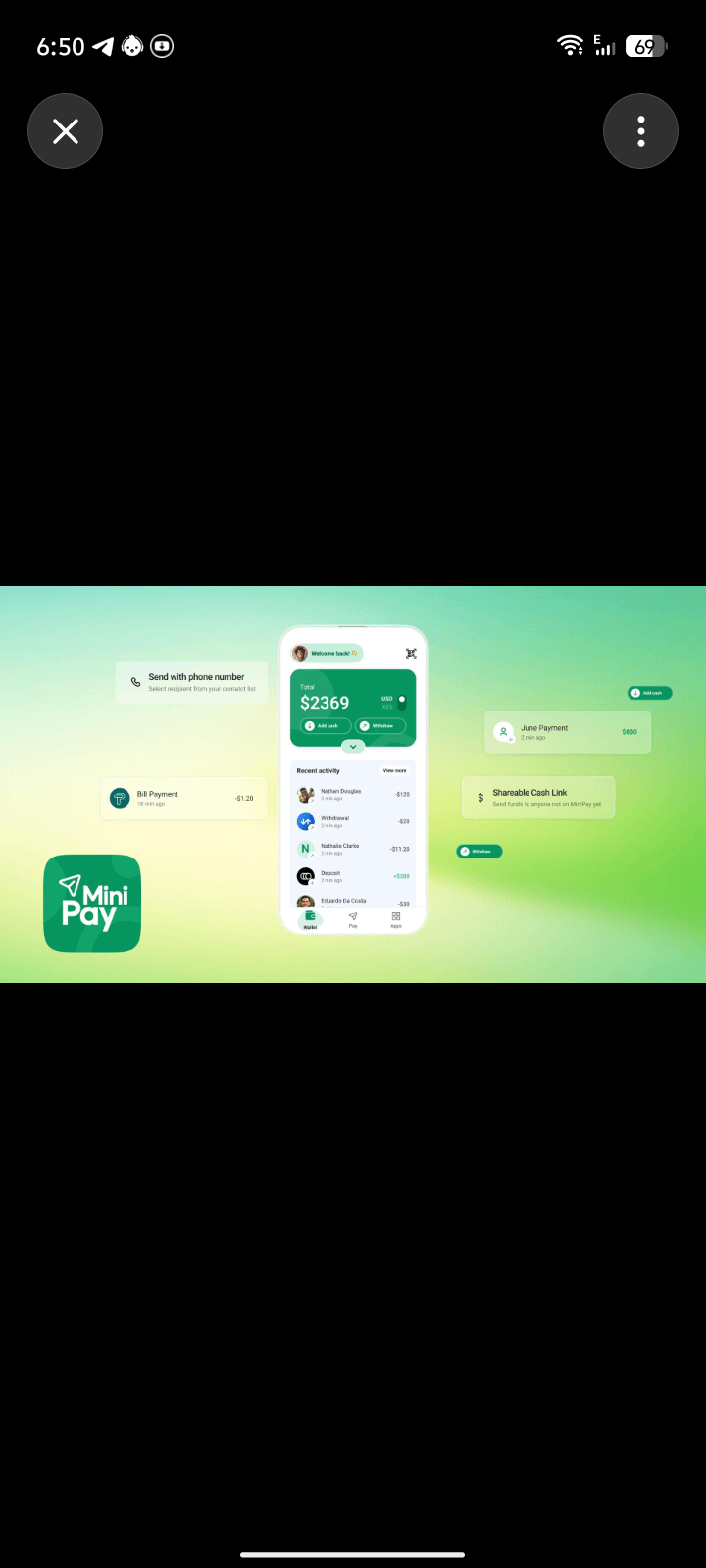
MiniPay is another example that reflects Celo's original vision. Developed by Opera, MiniPay is a mobile-focused stablecoin wallet designed to make sending and receiving digital assets easier. It removes some of the complexity that often makes blockchain applications difficult for newcomers. Users do not necessarily need to understand validators, rollups, or smart contract execution to use a wallet for basic payments.
The November 19, 2026 announcement about MiniPay's integration with Privy adds another interesting development. The announcement highlighted more than 20 million activated wallets across over 70 countries and more than 600 million transactions. The integration aims to simplify wallet access through familiar options such as email, social accounts, and passkeys while maintaining self-custody. These figures are encouraging, although activated wallets should not automatically be treated as 20 million unique active individuals. Actual recurring usage is a more meaningful measure of adoption.
Celo's ecosystem is also expanding beyond payments. Integrations involving Aave, Uniswap, and Velodrome bring additional decentralized finance infrastructure to the network. This matters because a stablecoin ecosystem needs more than transfers. Users may eventually want to exchange assets, access liquidity, borrow, lend, or explore other financial services without leaving the network.
I see an interesting possibility here. Payments could become an entry point, while DeFi provides additional financial services around the same assets. If these activities begin supporting each other naturally, Celo could develop a more connected economy rather than relying on isolated applications.
The CELO token also remains an important part of the ecosystem, particularly through governance and network-related functions. However, its role needs to be understood in the context of the new Layer 2 architecture. The old independent Layer 1 validator model should not be confused with the current sequencing and settlement arrangements. Celo has also introduced changes to its token economics, including the Great Celo Halvening in March 2025, which reduced epoch rewards by 50%. This changed the rate of new token issuance, although reduced issuance alone does not guarantee stronger market performance.
There are still challenges that I would not overlook. Sequencer decentralization, data availability assumptions, bridge security, developer retention, and competition from other Layer 2 networks all deserve attention. Base, Arbitrum, and Optimism already have established ecosystems, and Celo will need to demonstrate why developers and users should continue choosing its environment.
More importantly, network activity needs to translate into sustainable usage. Transaction counts and wallet activations can provide useful signals, but they do not tell the entire story. I would rather see consistent stablecoin transfers, recurring payment activity, meaningful liquidity, and applications that people actually depend on.
This is ultimately what makes Celo's transition interesting to me. It is not simply trying to become another Ethereum scaling network. It is bringing an existing payment-focused identity into a larger infrastructure ecosystem. Ethereum provides the settlement foundation, the OP Stack provides the technical framework, EigenDA supports data availability, and the Superchain creates opportunities for collaboration with other networks.
The bigger question is whether all these pieces can work together to solve problems outside the crypto industry itself.
Can Celo make stablecoin payments more practical? Can MiniPay turn wallet growth into everyday financial activity? Can Mento make local-currency digital assets more useful? And can the network maintain strong security and decentralization while continuing to scale?
I do not think those questions have been fully answered yet, but they are exactly why Celo deserves attention beyond the usual Layer 2 conversation.
The transition from Layer 1 to Layer 2 changed the way Celo operates, but its original ambition remains recognizable. It still wants to make financial infrastructure more accessible. The difference is that it is now pursuing that ambition with Ethereum behind it and the Superchain around it.
Celo is now an Ethereum Layer 2, built on the Superchain. The technology has changed, the ecosystem has expanded, but the real test will be much simpler: can it make blockchain useful in the everyday movement of money?