
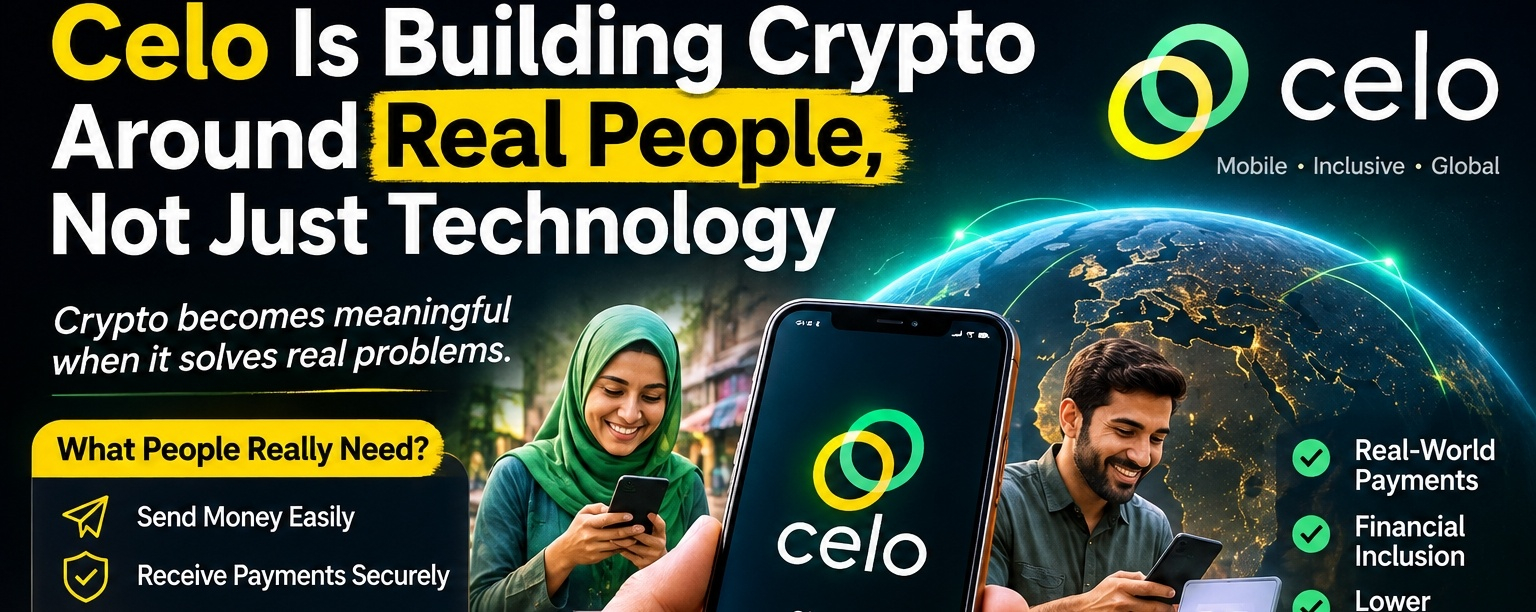

One of the biggest misconceptions in crypto is that adoption means more transactions, faster block times, lower fees, or bigger ecosystems. These metrics matter, but they don't necessarily tell us whether crypto is becoming useful in people's everyday lives.
Most people don't care about blockchain infrastructure. They care about sending money without delays, receiving payments reliably, protecting their savings from volatility, and transferring funds across borders without unnecessary costs or complexity.
That's the difference between building technology and building something people actually need.
This is where @celo stands out to me.
Rather than treating adoption as a competition of technical specifications, Celo has been focused on making blockchain technology more accessible, particularly for everyday payments, stablecoins, and mobile-first financial experiences. Its direction is built around a simple idea: crypto becomes meaningful when it solves problems people already have.
The real opportunity isn't convincing everyone to become a blockchain enthusiast. It's making the technology work quietly in the background so people can use it without needing to understand wallets, networks, gas mechanics, or complicated infrastructure.
If sending money becomes easier, if stablecoin payments become more practical, and if financial access improves for people underserved by traditional systems, that's meaningful adoption.
Crypto doesn't need every user to understand the technology behind it. It needs to make their lives easier.
And that's why I think Celo's approach deserves more attention. The next phase of blockchain adoption may not be driven by the loudest technology narrative, but by the networks that make crypto feel simple, useful, and accessible in the real world.
The best infrastructure is the kind people use without even thinking about it.