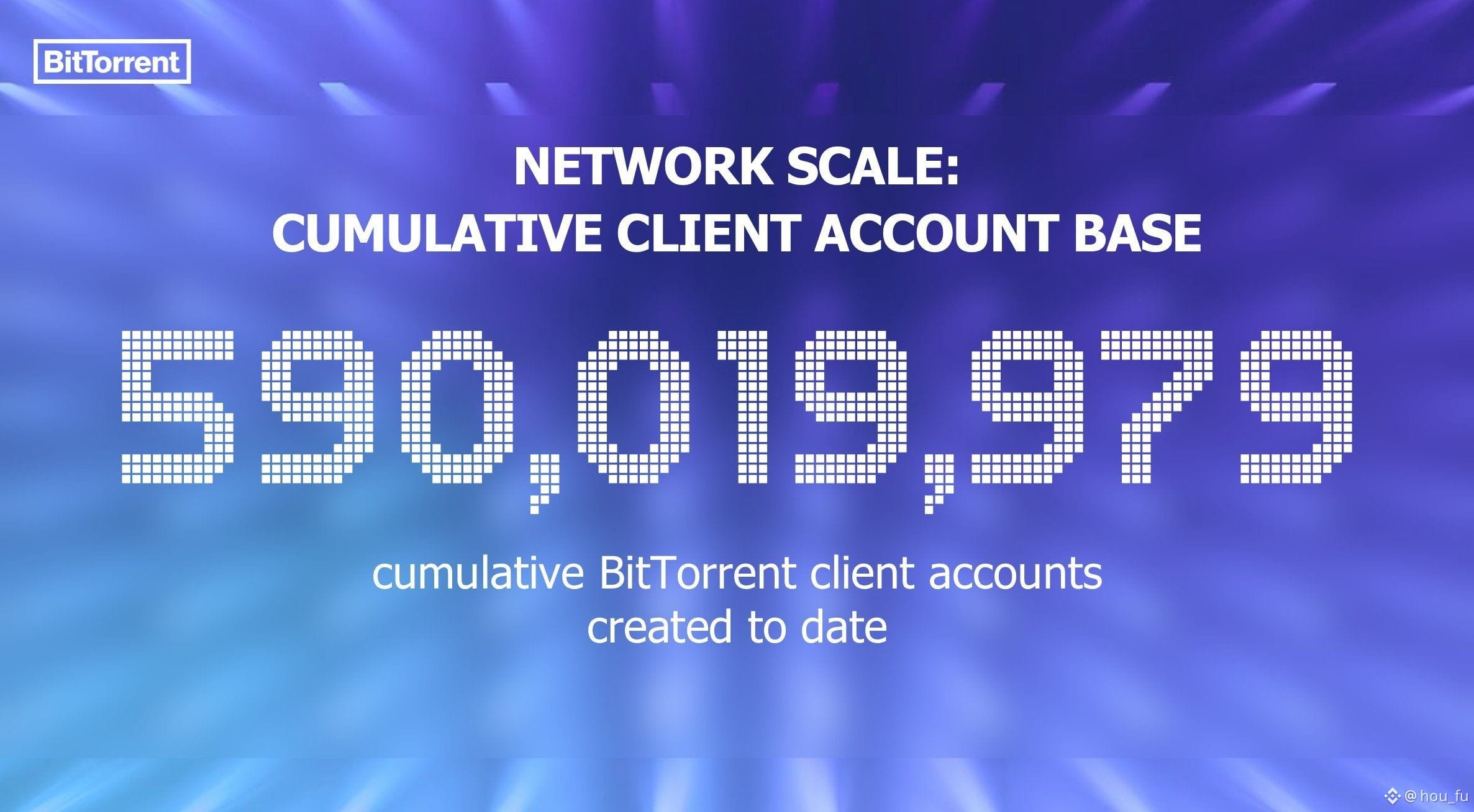
590,019,979 CLIENT ACCOUNTS AND DISTRIBUTED ROUTING ON BITTORRENT
Passing 590,019,979 client accounts across the BitTorrent network is a striking reminder of scale, yet the real test of any distributed system is whether it keeps routing traffic smoothly when millions of peers connect at once.
Instead of funneling everything through one fragile hub, distributed capacity shares the load across a global mesh that keeps moving data day after day.
➤ What Distributed Routing Delivers At Scale
A wide peer footprint only helps if routing stays dependable under real-world traffic:
Resilient paths: Distributed routing finds alternative peer routes when individual nodes drop or slow down. Shared load: Capacity spreads across participating clients instead of piling pressure onto a single server. Global reach: Users across different regions can connect and transfer files without relying on one central bottleneck. Ongoing growth: Over 590 million generated client accounts reflect a network built up over years of continuous use.
Scale gives the mesh breadth, while distributed routing gives it day-to-day durability.
➤ Why This Matters
Centralized networks often look fine on quiet days and struggle the moment traffic surges or regional routes hiccup.
Distributed routing spreads risk across many participants, making file delivery steadier for everyday users. It shows how peer-to-peer infrastructure stays useful precisely because no single point carries the entire weight alone.
➤ My Personal Perspective
I find milestones like 590,019,979 client accounts most interesting when paired with routing reliability, because numbers alone do not move a single byte.
Knowing the distributed capacity keeps paths open worldwide makes the scale feel grounded rather than just a big counter ticking upward.
What matters more to you in a network: massive historical scale or steady routing when connections get crowded?
@Justin Sun孙宇晨 @BitTorrent_Official #TRONEcoStar