
A Bitcoin treasury strategy differs fundamentally from a short-term trading position: companies hold BTC on the balance sheet for multi-year horizons, which means survival during sharp drawdowns comes down to how the reserve is financed and custodied.
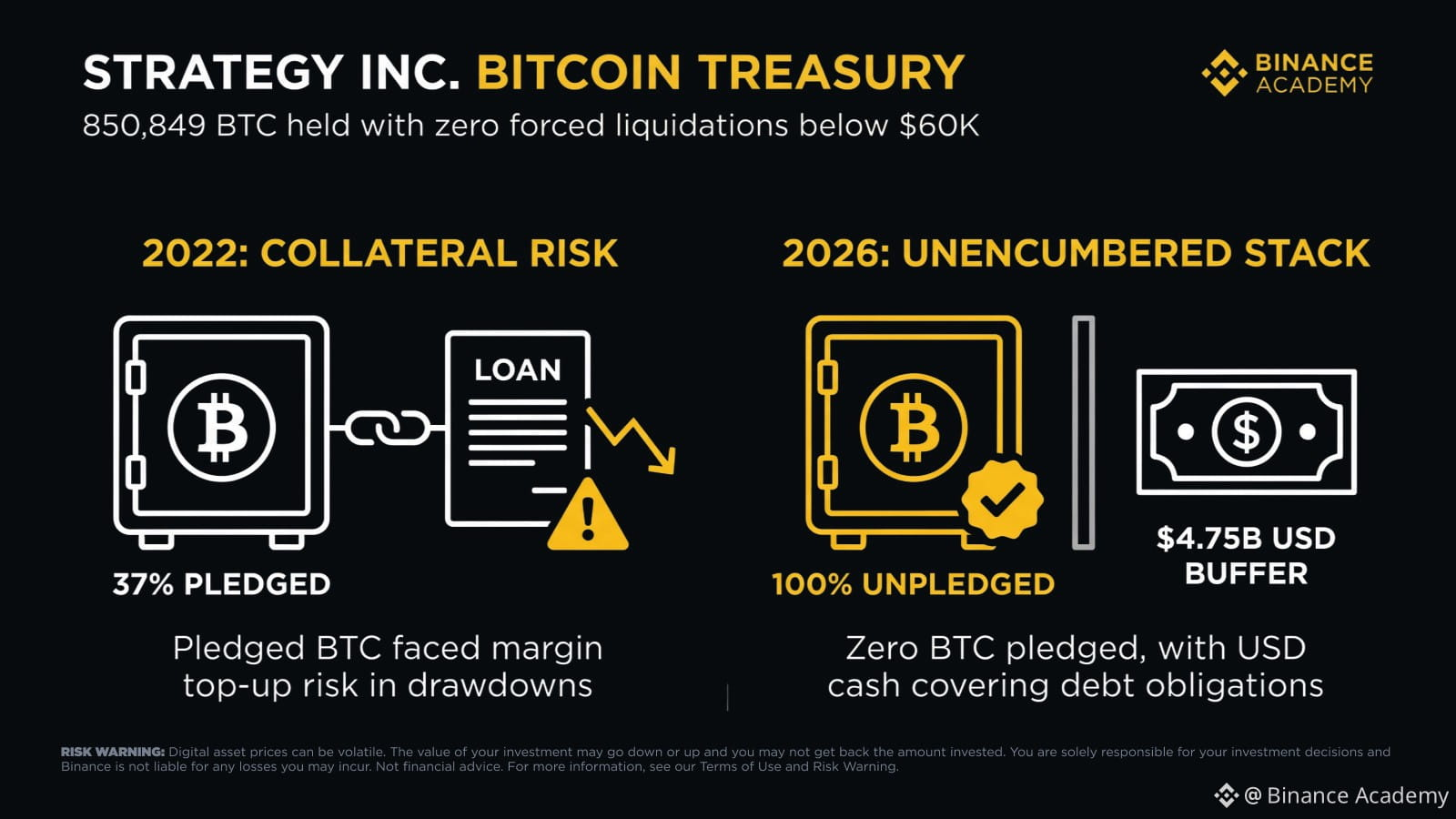
Per Strategy Inc.’s November 16 SEC Form 8-K and November 20 reserve update, the largest corporate Bitcoin holder now holds 850,849 BTC (4.05% of maximum supply) acquired at an average price of $75,452. Even as November’s pullback below $60,000 pushed unrealized paper losses past $12.5 billion, zero coins faced forced liquidation. Unlike 2022—when roughly 37% of Strategy’s BTC was pledged as loan collateral with top-up triggers—100% of its Bitcoin stack is now unencumbered, while a dedicated $4.75 billion U.S. dollar reserve covers ongoing interest and dividend obligations on its unsecured debt and preferred shares.
Holding volatile reserves on a corporate balance sheet still carries real market, financing, and custody risk—which is why separating long-term reserve custody from collateralized debt is central to institutional treasury design.
👉 [Explore why corporations and governments hold Bitcoin reserves and the key risks involved.](https://www.binance.com/en/academy/articles/what-is-a-bitcoin-treasury-strategy?utm_source=binanceacademysquare&utm_medium=social&utm_campaign=article)