$XLM: Intention Before Entry
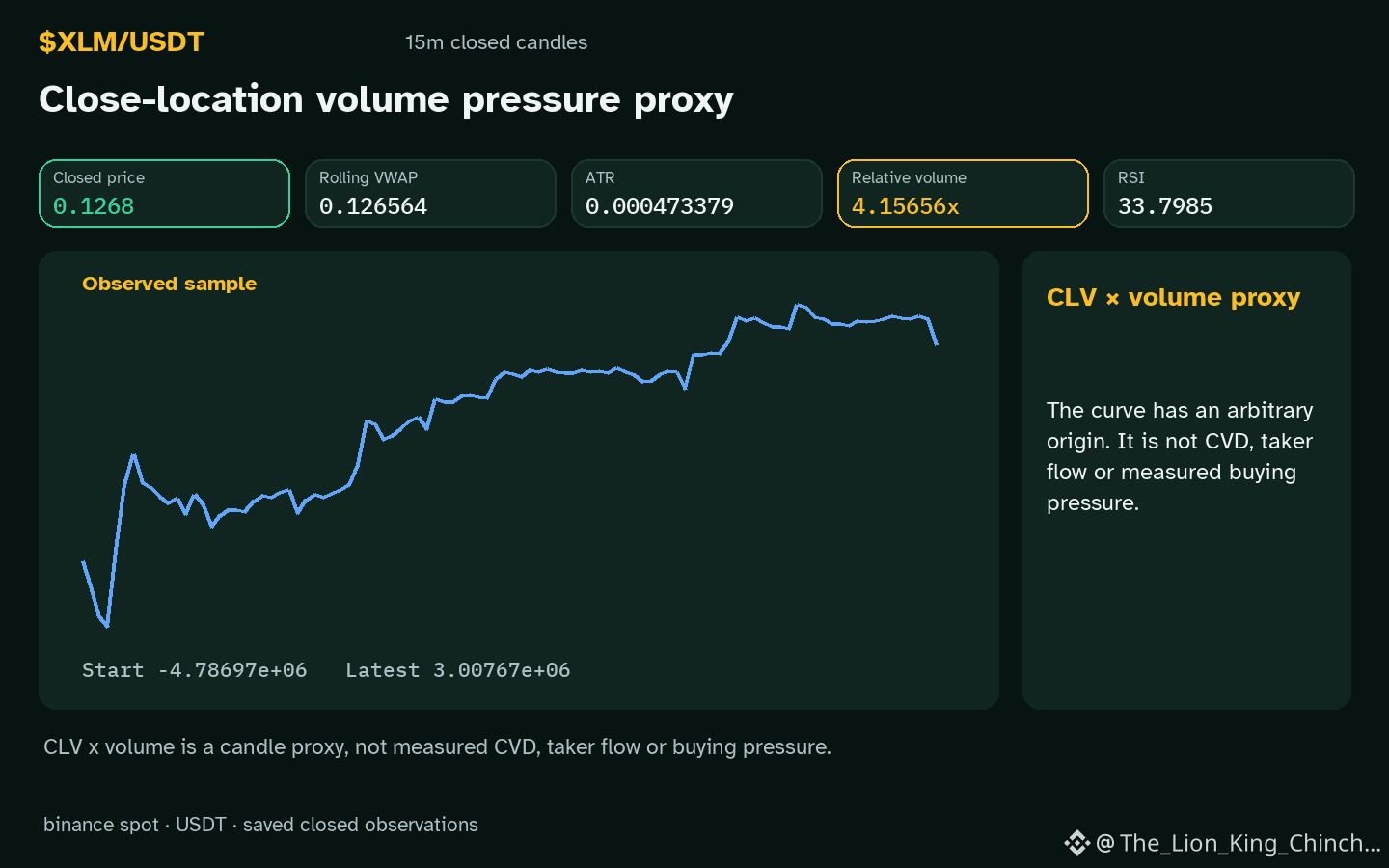
Does pre-session intention clarify why $XLM moves or just mask noise? The hourly direction is down and volume sits above baseline.
The Tension
Opening a chart with a fixed outcome can bias how you read observations. If you expect a breakout near 0.1294, you might ignore the downward hourly drift. This creates a gap between what the data shows and what you want to see.
Choosing Entry Quality
Chasing a move often comes from excitement rather than evidence. A clearer alternative is to define a meaningful invalidation level first. If price closes below 0.1264, the setup is weak. Waiting for that confirmation trades immediacy for accuracy. It avoids entering on a dip that might keep falling.
Thought Experiment
Imagine entering a position because the daily change is 5.14096%. You feel confident. But the hourly direction is down. If you skip the invalidation check, you might hold through further losses without a clear exit rule. Pre-session intention setting forces you to write down your reason before the candle closes. This reduces emotional overrides.
Counterexample
Suppose you set an intention based only on relative volume 4.16x baseline. Higher volume can mean many things, not just momentum. If the RSI 33.8 is already extreme, volume might mark exhaustion instead of continuation. Relying on one metric ignores context.
Self-Check
Ask yourself: did I pick this entry because the evidence aligned, or because I wanted action? Reassess the interpretation if price tests 0.1264 or 0.1294 and fails to follow the intended direction. This check keeps the focus on observable data rather than hoped-for outcomes. Limits include the fact that candles alone do not reveal trader motives or hidden order flow.
Probabilistic market research, not a recommendation or guaranteed return.
#XLM #RiskManagement