

Brent settled at $92.57 a barrel on Friday, November 20, 2026, up $0.59, or 0.64%, on the day. Not much of a rally. The contract still finished 3.41% below its $95.84 close of November 13, its third straight weekly loss.
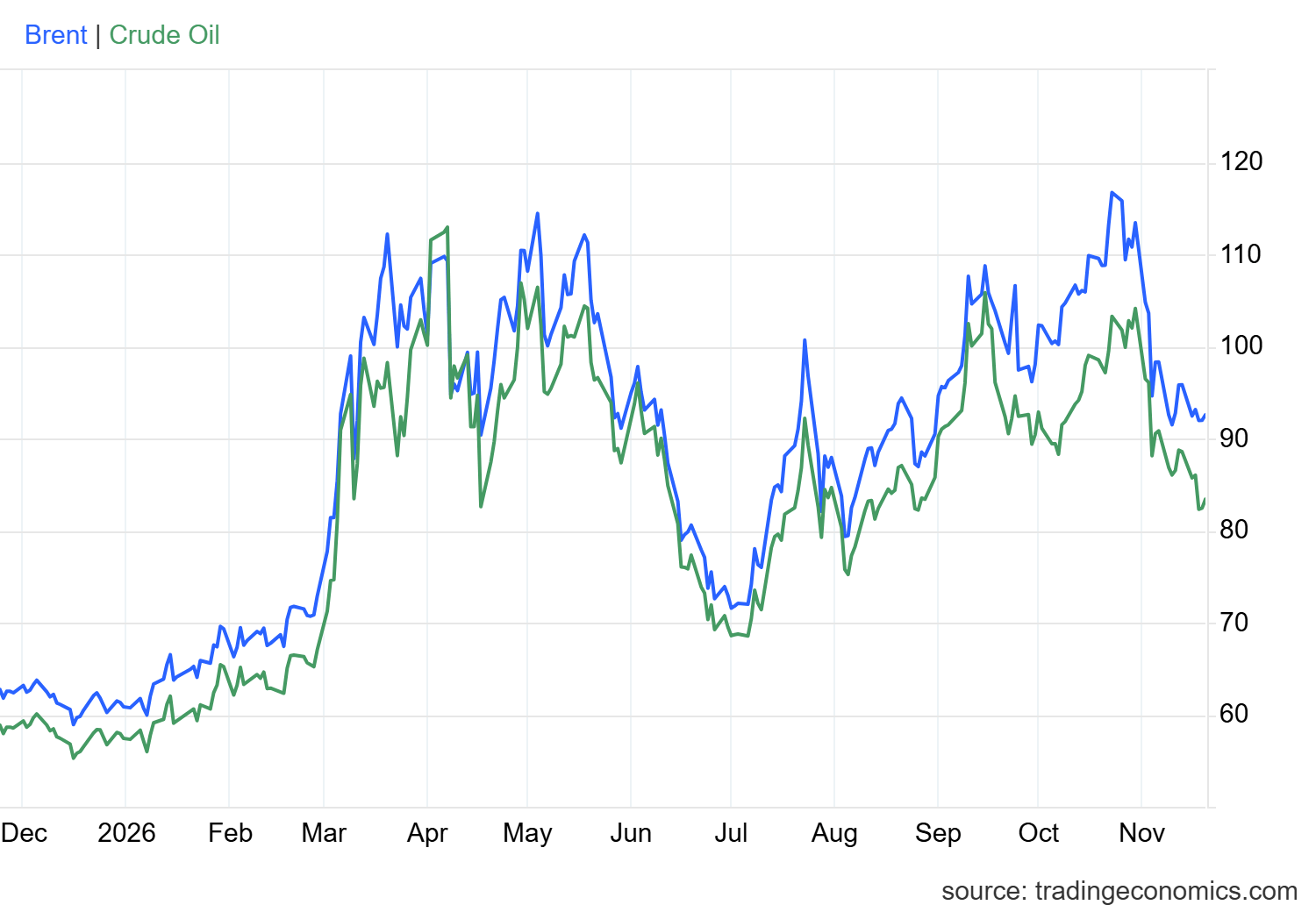
US crude had the rougher week. December WTI ended Friday at $83.98, a gain of $0.77, or 0.93%, yet it shed 5.17% over the week from $88.56. That was its third consecutive weekly decline.
Alerts in Riyadh, Smoke Over Qeshm
Saudi Arabia's Civil Defence issued several warnings of possible threats in Riyadh and As Sulayyil governorate. One witness in Riyadh reported hearing a loud explosion, and authorities later said the danger had passed in both places. The episode looks like a Houthi answer to the group's earlier warning that the Shuqaiq Power Plant would be hit within hours, payback for strikes on the Saada and Mocha power stations.
Iran's semi-official Tasnim news agency reported that a missile struck Qeshm Island, in the south near the Strait of Hormuz. There was no immediate word on damage. Iranian media later quoted an official who said the blast and smoke came from ordnance disposal.
Fire on a Tanker Off Khasab
UKMTO warning 214-26 covers an attack at 1500 UTC on November 20, 2026, about 8 nautical miles north of Khasab, Oman. A tanker on an outbound transit of the Strait of Hormuz was hit on the port bow by an unknown projectile, and the vessel's company security officer reported a fire on board. No casualties or environmental impact have been reported. UKMTO told vessels to transit with caution and report anything suspicious while authorities investigate.
Tehran Eyes a Run at the Blockade
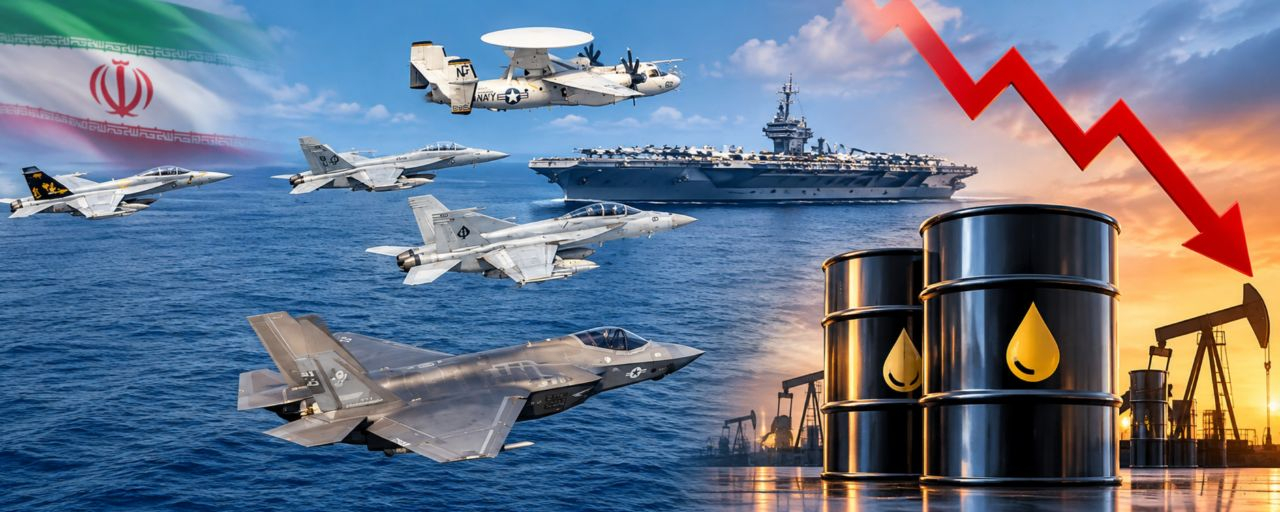
Iranian state-affiliated media, official statements and maritime tracking data all point to pushback against the US naval blockade. No convoy plan has been formally confirmed, though. The IRGC-affiliated Fars News Agency ran commentary urging a tanker convoy to sail toward China and test the blockade, and it gave the idea a name: Operation Fereydoun.
Foreign Minister Abbas Araghchi said the blockade "must be broken" and that Iran would look to export oil while pursuing negotiations. Commentary in Iranian media also warned that US intervention, or attacks on vessels trying to break the blockade, could bring strikes on energy infrastructure in Persian Gulf states, among them Saudi Arabia, the UAE and Qatar.
What the Trackers Say
Tehran faces steep revenue pressure after months of restricted crude exports. TankerTrackers.com says Iran appears to be preparing to ship oil again, yet it pushed back on talk of an imminent mass convoy transit. It called some of the reports "wishful thinking."
Washington Closes the Gap
The US military has tightened its naval blockade of Iran and warned that vessels taking Iranian cargo through ship-to-ship transfers will face military action. In an advisory on Wednesday, US Central Command said ships receiving cargo from vessels loaded at Iranian ports or along the coastline could be treated as "evading the blockade." The move targets a loophole that has let some Iranian petroleum products reach international markets even after the blockade on Iranian ports and oil exports was reimposed in mid-July. It lands as Tehran looks for ways to restart exports and the IRGC keeps warning of retaliation for attacks on Iranian vessels.
Araghchi Keeps the Door Ajar
Araghchi said Tehran remains hopeful that diplomacy can end the conflict with the US, and indirect exchanges of messages through mediators continue. Before any talks, he said, Washington must declare its intent to reach a deal and take confidence-building steps. Hormuz will reopen once Iran's seven conditions are met. Iran also wants assurances that Washington won't resume military strikes, he added, and President Donald Trump must explicitly signal his commitment to an agreement.
A Uranium Red Line and a Dead Memorandum
Tehran's two-day proposal, which offered the US a reopening of the Strait of Hormuz along with talks, remains on the table if Washington is serious about a deal. On uranium, Araghchi said Iran's 60%-enriched stockpile will stay in the country, with its use tied to needs, and that a compromise is possible only as part of a package. The Islamabad Memorandum is no longer on the table or operational, he said. Even so, he believes a fair agreement is achievable.
Russia's Barrage and a Polish Alarm
Russia carried out one of its largest air assaults on Ukraine, firing more than 110 missiles, 27 of them ballistic, and over 400 drones, according to President Volodymyr Zelenskyy. The attack came hours after US President Donald Trump called Vladimir Putin a friend and suggested the Russian leader wanted to end the war.
Polish Prime Minister Donald Tusk accused Moscow of deliberately sending two missiles and a jet-powered drone into Polish territory near military exercises involving troops from 11 countries, calling it an apparent provocation. Warsaw pushed for stronger air defences along NATO's eastern flank. The incident is raising tensions between Russia and NATO and feeding concern about a broader regional confrontation.