A database can return a number that looks reasonable. The harder question is whether anyone can verify how it was produced.
That distinction is where Space and Time caught my attention.
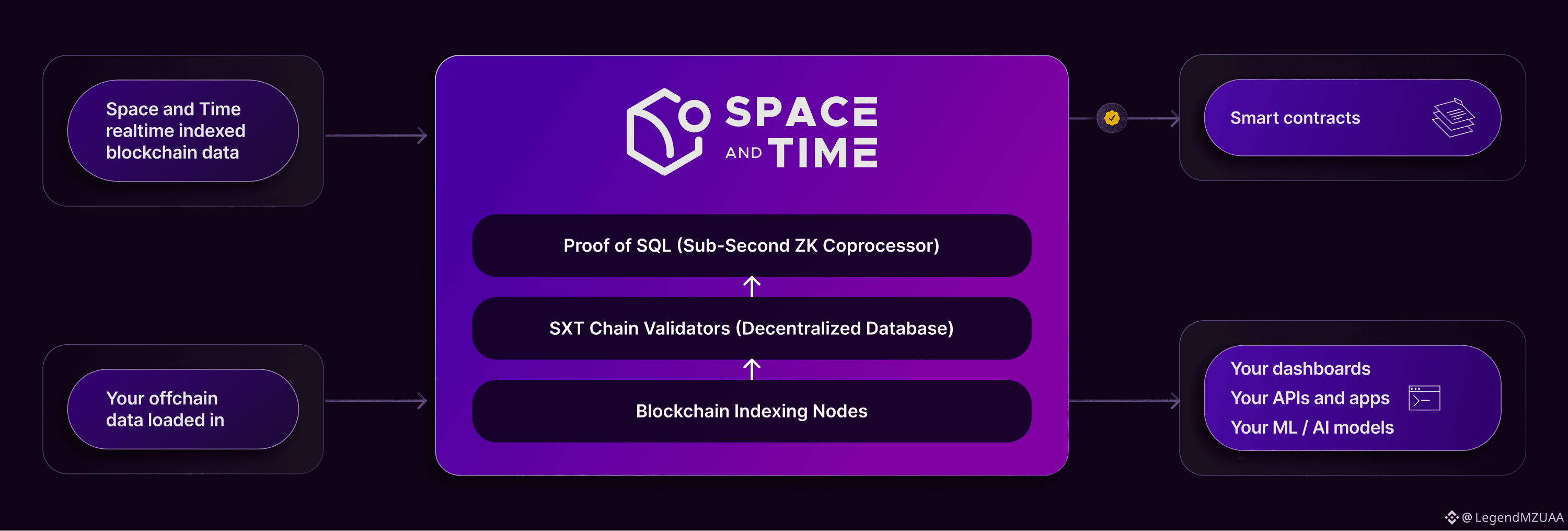
A DeFi contract may need historical activity, cross-chain records, or information from outside its own blockchain. An AI agent faces a similar issue: it can generate an answer or trigger an action, but its output is only as dependable as the data and calculations behind it.
Space and Time approaches this through Proof of SQL.
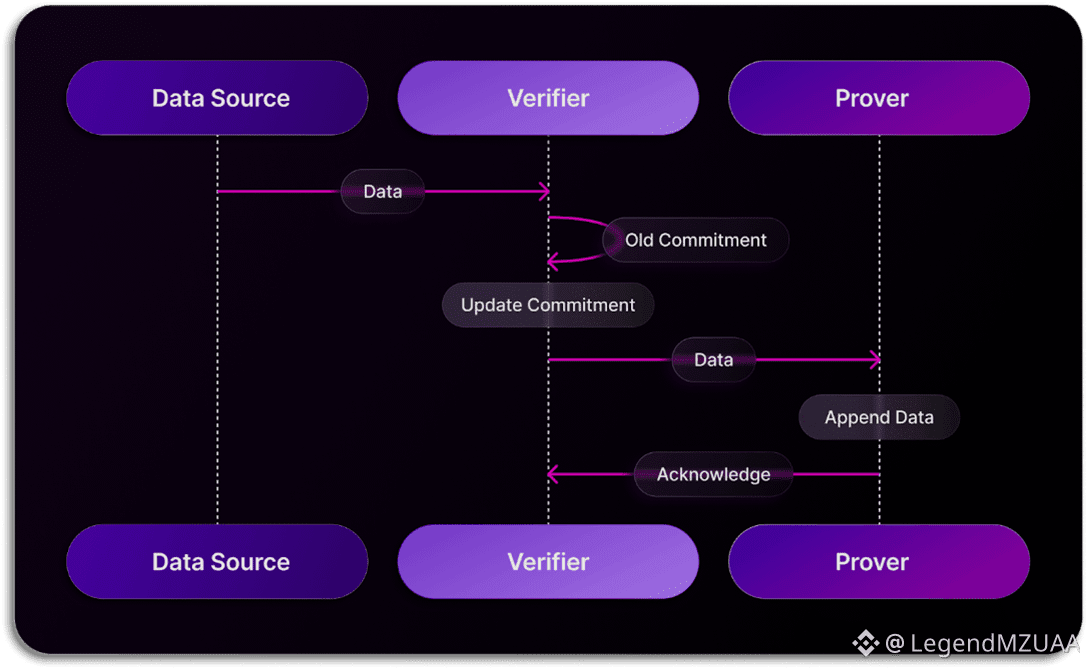
The network organizes data into relational tables. Validators witness updates and sign cryptographic commitments representing each table’s state. When a query runs, Prover nodes perform the SQL computation and generate a zero-knowledge proof. A smart contract or off-chain application can check that the query was executed correctly against committed data, without processing the full dataset itself.
A dashboard can display a collateral figure. A lending contract can consume it. But if the calculation behind it cannot be checked, both still rely on whoever produced the answer. With Space and Time, an application can query relevant data and verify the computation before using the result.
This matters for tokenization too. Tokenized assets and financial applications depend on records and calculations such as balances, activity, and reserves. AI systems need data they can substantiate, especially when an output feeds an automated workflow.
The heavy query work happens offchain, while verification can happen onchain. The application receives a result and its proof, rather than moving an entire database into a smart contract.
As AI agents and tokenized assets make more decisions from data, will verifiability become a basic requirement of the data layer?
That is the problem Space and Time is building around.
Purchasing SXT is risky. You are encouraged to DYOR and to consult professional advice before buying SXT or any other cryptocurrency.
#sxt $SXT @SpaceandTime #SXT $EVAA $ICNT