$ZAMA: Effort Justification Bias
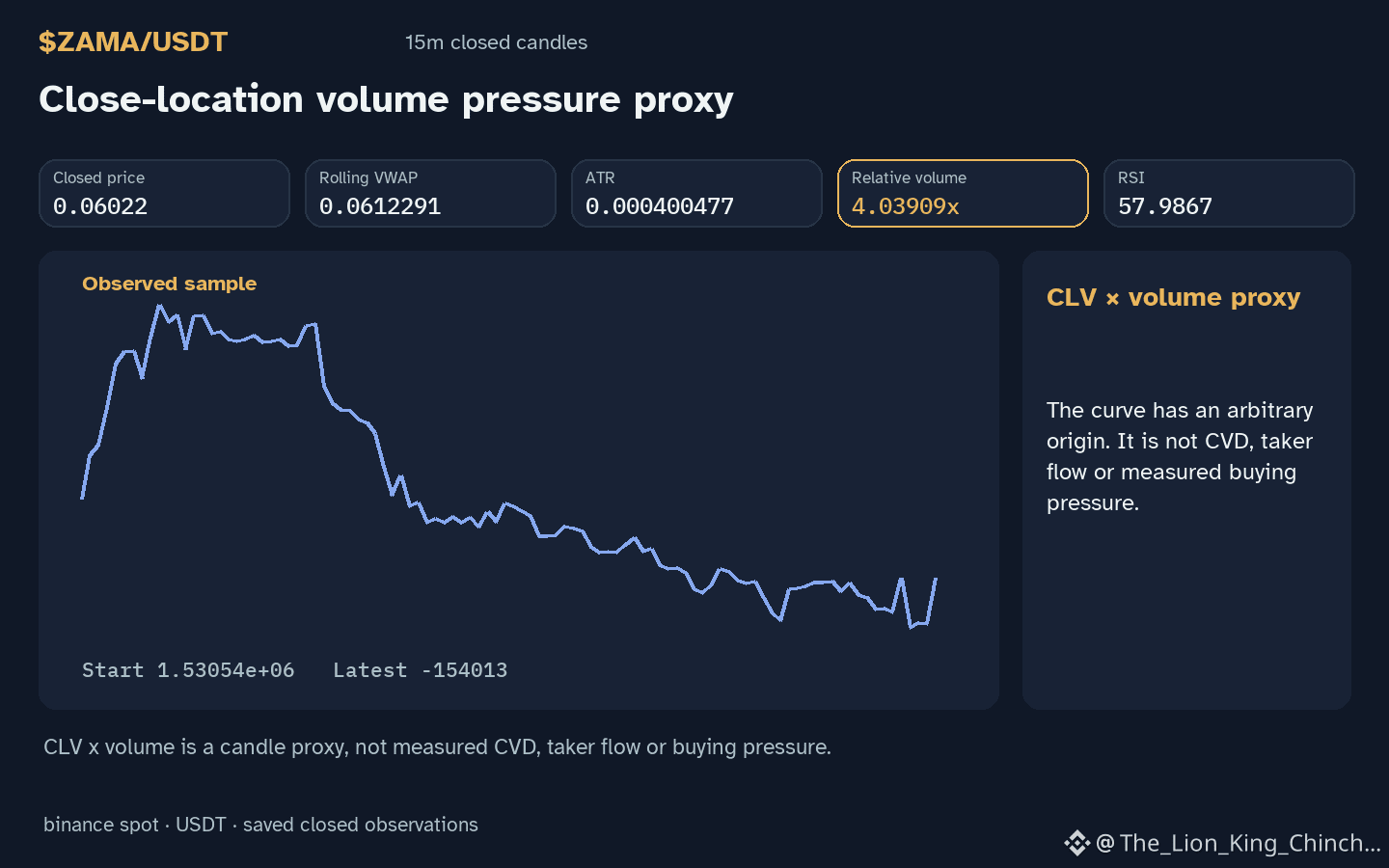
Does $ZAMA volume data justify extra effort? The saved observation shows price below the local support level 0.05895 with an hourly direction down. Relative volume is 4.04x baseline. This setup invites a hypothetical question about decision bias. Effort justification bias suggests that people who spend significant time or energy on a choice may overvalue it to reduce cognitive dissonance. In a trading context, a trader who spent many hours researching a specific setup might feel compelled to keep the rule even after new data emerges. This is a thought experiment, not a claim about actual market participants or order flow. The analogy helps explain why reassessment can feel uncomfortable. If a trader invested heavily in analyzing a support hold, seeing price close below that level may trigger a desire to defend the original thesis rather than update it. However, the analogy fails when we assume causation. Candlesticks and volume metrics do not reveal trader motives. High relative volume does not prove absorption, initiative demand, or panic. It only indicates trading activity relative to a prior baseline. RSI reading 58.0 provides context on momentum but does not guarantee reversal or continuation. The key limit is that data describes past closed candles, not future psychology or intent. To counter this bias, use a practical self-check. Ask: If I had zero prior conviction in this setup, would I enter now based solely on current data? If the answer is no, the rule should be revised. Weakness in the interpretation appears if future closed candles show price refusing to hold above 0.05895 despite elevated volume. A reassessment condition is simply aligning the mental model with observed prices without forcing the narrative to fit previous research time. Focus on data points, not sunk effort.
Probabilistic market research, not a recommendation or guaranteed return.
#ZAMA #TradingPsychology #CryptoLearning