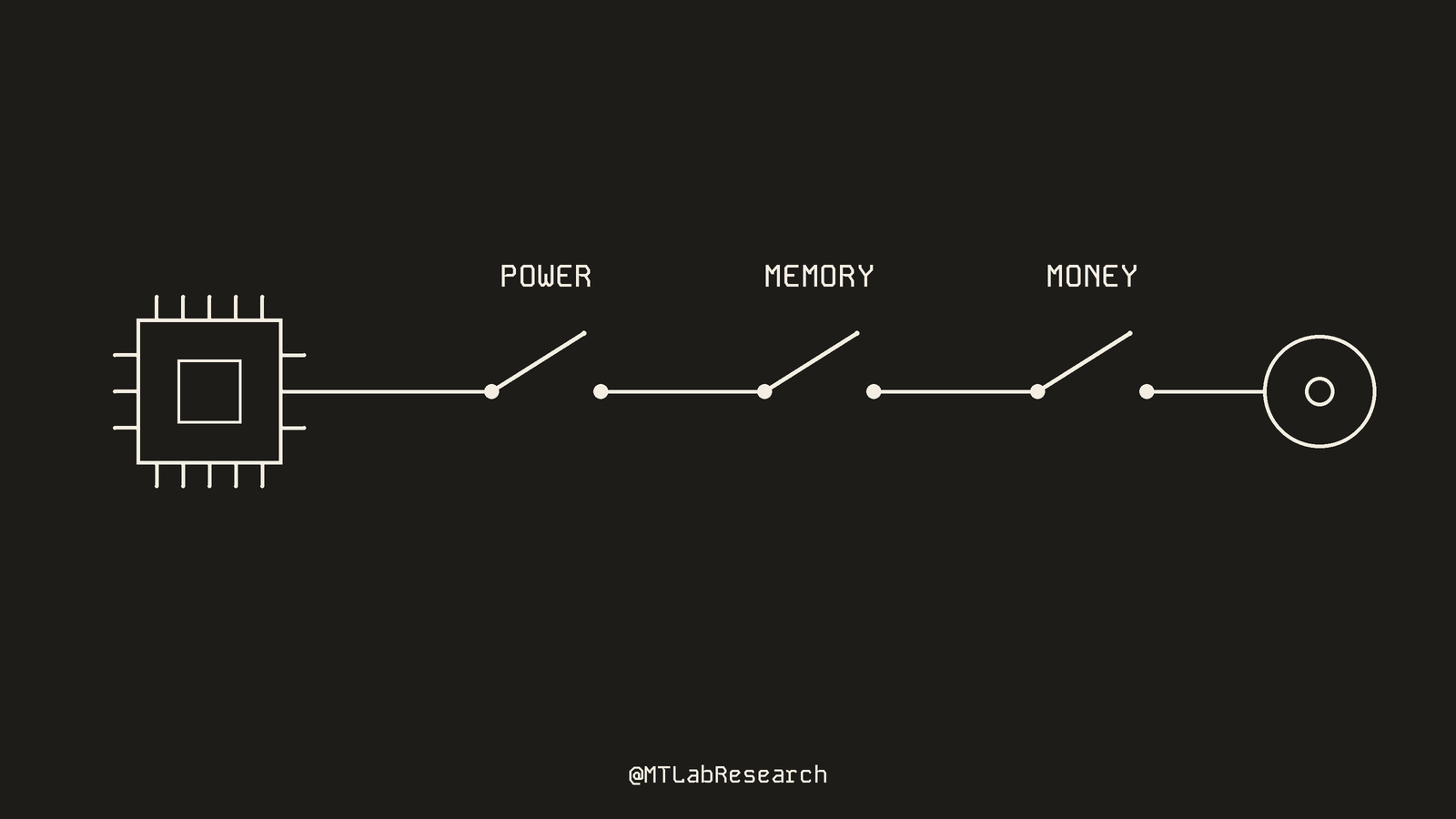
Nvidia has the chips. Does the world have the power, memory and money?
Its data center sales (AI chips and the gear around them) hit $107.6B in the quarter ending Oct 25, up 110% from a year ago. It guided to $130B in total sales next quarter (one extra week included) and has pointed to roughly 70-75% growth next year.
So can it keep going? Demand is not the shaky part. In August Nvidia itself said supply, not customers, was the cap on its growth. What decides the next quarters happens after the chip ships. Nvidia books the sale at shipping, but customers only reorder if the last batch is up and earning.
Three things have to hold:
1. Power. AI racks draw far more electricity than old servers and grids connect slowly. Gartner expects 40% of AI data centers to be power-limited by 2027, and one Seaport analyst (via Barron's) guesses nearly half of the capacity announced for 2027 won't get built. Power on time means orders become running machines. Late means chips wait.
2. Memory. Each AI chip needs scarce, pricey memory. Nvidia guided its gross margin (what it keeps from each sales dollar after costs) to 71-72% next quarter, down from about 75%, and blamed memory costs in August. If memory loosens, growth can run. If not, it caps the climb.
3. Money. Microsoft, Alphabet, Amazon and Meta spent a combined $201.9B on data centers and equipment in the Sept quarter, about double a year ago (Walnut's tally of their filings), and more of it is now paid with borrowed money. If lenders keep funding, orders hold. If funding tightens, the next order slips first.
The quarter ended before this month's CEO change, so that is not in these numbers either.
Next time an Nvidia headline hits, ask:
- Is the power there?
- Is the memory there?
- Who is paying?
Sold is not switched on.
Which one slows it first, power, memory or money?
Experience, not financial advice.
#CanNvidia’sDataCenterGrowthContinue?
Its data center sales (AI chips and the gear around them) hit $107.6B in the quarter ending Oct 25, up 110% from a year ago. It guided to $130B in total sales next quarter (one extra week included) and has pointed to roughly 70-75% growth next year.
So can it keep going? Demand is not the shaky part. In August Nvidia itself said supply, not customers, was the cap on its growth. What decides the next quarters happens after the chip ships. Nvidia books the sale at shipping, but customers only reorder if the last batch is up and earning.
Three things have to hold:
1. Power. AI racks draw far more electricity than old servers and grids connect slowly. Gartner expects 40% of AI data centers to be power-limited by 2027, and one Seaport analyst (via Barron's) guesses nearly half of the capacity announced for 2027 won't get built. Power on time means orders become running machines. Late means chips wait.
2. Memory. Each AI chip needs scarce, pricey memory. Nvidia guided its gross margin (what it keeps from each sales dollar after costs) to 71-72% next quarter, down from about 75%, and blamed memory costs in August. If memory loosens, growth can run. If not, it caps the climb.
3. Money. Microsoft, Alphabet, Amazon and Meta spent a combined $201.9B on data centers and equipment in the Sept quarter, about double a year ago (Walnut's tally of their filings), and more of it is now paid with borrowed money. If lenders keep funding, orders hold. If funding tightens, the next order slips first.
The quarter ended before this month's CEO change, so that is not in these numbers either.
Next time an Nvidia headline hits, ask:
- Is the power there?
- Is the memory there?
- Who is paying?
Sold is not switched on.
Which one slows it first, power, memory or money?
Experience, not financial advice.
#CanNvidia’sDataCenterGrowthContinue?