
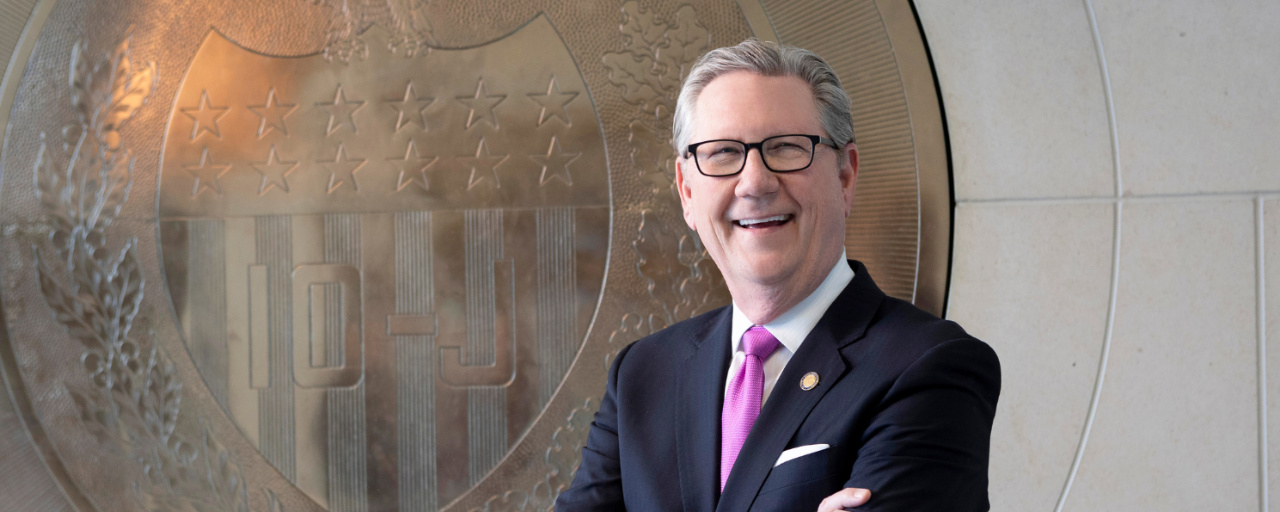

Jeffrey Schmid, President of the Federal Reserve Bank of Kansas City, who is not a voting member of the Federal Open Market Committee (FOMC) in 2026 because Kansas City is not one of this year’s four rotating regional seats, delivered a blunt message on inflation: it has been running too hot, and the Fed’s job has only gotten harder.
Speaking at the National Credit Union Management Association’s 2026 conference in Kohala Coast, Hawai’i, he put PCE inflation at 3.6% in the latest data, well above the 2% target and heading the wrong way. CPI prices rose at a 5.7% annualized rate over the previous three months, a pace he called far too high.
The labor market is not driving it. Schmid saw little evidence that jobs or wages are feeding inflation, with wage growth around 3% and roughly one available job per person looking for work.
Energy matters more. Strip it out and inflation would run at 3%, still too high but closer to target, while oil prices since the start of the conflict in Iran have pushed gasoline and diesel up even faster, with limited refinery capacity and depleted inventories adding to the run-up. Tariffs add to the squeeze.
Schmid then pushed back on the idea that inflation lies beyond the Fed’s reach. Inflation always reflects an imbalance between supply and demand, he said, and he cautioned against assuming that higher oil or tariff costs will lift inflation only temporarily.
He also questioned whether AI investment will keep its pace if interest rates rise, at least at the margin. The Fed has the tools and the responsibility to address inflation, he stressed, echoing Chairman Kevin Warsh’s Jackson Hole message that the Fed has work to do.
Key Quotes:
Inflation
Inflation has been running too hot. By the Fed’s preferred measure, PCE inflation was 3.6% in the most recent data, uncomfortably above the 2% price stability target, and moving in the wrong direction.
Over the previous three months, CPI prices have been increasing at a 5.7% annualized rate. Far too high.
Monetary Policy
The Fed’s congressionally determined mandate is not just employment, but also price stability.
As Chairman Kevin Warsh said at the Kansas City Fed’s Jackson Hole Economic Symposium in August, the Fed has some work to do on inflation, and, unfortunately, our work has only gotten harder since then.
Relative prices have to change, that is how market economies work. The Fed’s role is not to affect the price of any one good or service, but rather to maintain the aggregate purchasing power of the dollar relative to all goods and services in the economy.
Both narratives—that inflation is being driven by either supply shocks or by demand that is impervious to higher interest rates—have a common core. Mainly, that inflation is somehow beyond the Fed’s power to control. I don’t believe this to be true.
Labor Market
Right now, there is little evidence that the labor market or wages are contributing meaningfully to inflation. The labor market appears to be largely in balance.
Wage growth, at around 3%, is within the range of recent norms, and the vacancy ratio, or the number of available jobs per person looking for work, has been about 1, a sign of a balanced job market.
Growth & Economy
By many measures the economy is doing well. Activity is growing at a solid pace, and the unemployment rate is low and close to what many observers consider to be full employment.
Energy & Geopolitical Risks
If we set aside energy prices, inflation would be running at 3%. Still too high, but closer to target.
Higher oil prices since the start of the conflict in Iran have fed through into even larger increases in the price of gasoline and diesel.
Limited refinery capacity, continued strong demand, and depleted inventories have all contributed to the run-up in petroleum product prices.
Financial markets suggest a more prolonged increase in oil prices, perhaps on the expectation of a period of inventory rebuild following this year’s disruptions.
Durable Goods & Tariffs
Prices of long-lasting durable goods increased 2.9% in September, below the pace of overall inflation, but far above historical norms, in part, because of higher tariffs.
Outside of a spike during the pandemic, durable goods prices are increasing at the fastest rate since 1987.
The uncomfortable reality is that with relatively rapid increases in prices for labor-intensive services, we need durable goods prices to decline a couple of percent every year if the Fed is ever going to hit its 2% inflation objective.
Prices for durable goods, which are often imported, fell steadily from 1995 to 2020 during a period of sustained increases in trade and global integration. I could conjecture that reversing these trends might lead to a permanent increase not just in the level of prices, but also in the pace of inflation for these goods.
AI & Productivity
Spillovers from the buildout of AI infrastructure are pushing up the prices for some goods and services. For example, prices for consumer electronics have moved up sharply over the last year. PC prices are up 10%. Some of the upward pressure on these prices is coming from the strength of AI demand.
We are also hearing about competition for skilled construction labor, steel, and other materials contributing to higher building costs across the economy.