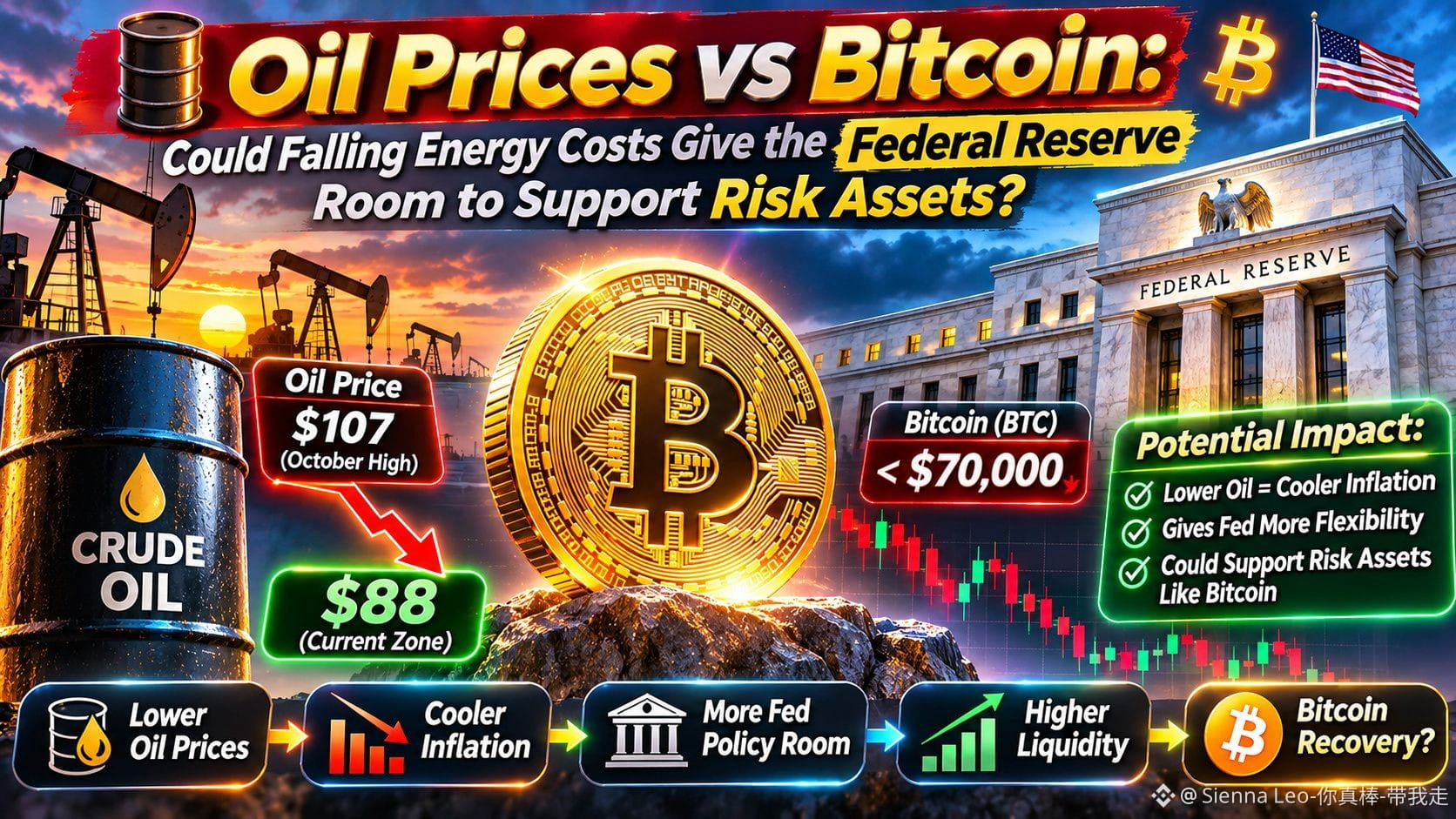

🛢️ Oil Prices vs Bitcoin: Could Falling Energy Costs Give the Federal Reserve Room to Support Risk Assets? ₿
⛽ Picture a late-night freight driver watching digital fuel numbers tick downward after months of painful spikes. Across the globe, macro traders stare at those exact same energy charts, waiting for the chain reaction to hit crypto.
📉 Crude oil has recently pulled back from its October highs above $107 toward the upper $80s, even as Bitcoin slid below $70,000 amid stubborn inflation fears and rising bond yields.
🏦 Why does a barrel of crude dictate crypto liquidity? Because energy sits at the root of shipping, manufacturing, and consumer prices. When oil stays elevated, inflation remains sticky, forcing the Federal Reserve to keep interest rates restrictive and draining capital from risk assets.
💡 My take is clear: falling energy costs act as a silent pressure-release valve for macro liquidity. If crude stabilizes or trends lower, headline inflation cools, giving Fed policymakers breathing room to pause hawkish rhetoric and eventually ease financial conditions.
⚖️ However, one dip in oil is not an instant green light. Geopolitical tensions and core inflation stickiness can still delay rate cuts, meaning Bitcoin needs sustained disinflation and cooling Treasury yields before a true liquidity wave returns.
🧭 Smart investors track crude oil and bond yields alongside crypto charts, because macro liquidity always moves first.
💬 Do you think cooling oil prices will give the Fed enough room to spark a Bitcoin recovery, or will high interest rates keep pressure on crypto?
⚠️ Disclaimer: This content is for informational purposes only and does not constitute financial advice. Always conduct your own research before trading.
#Bitcoin #Macro #GrowWithSAC $BTC $OSMO $STO