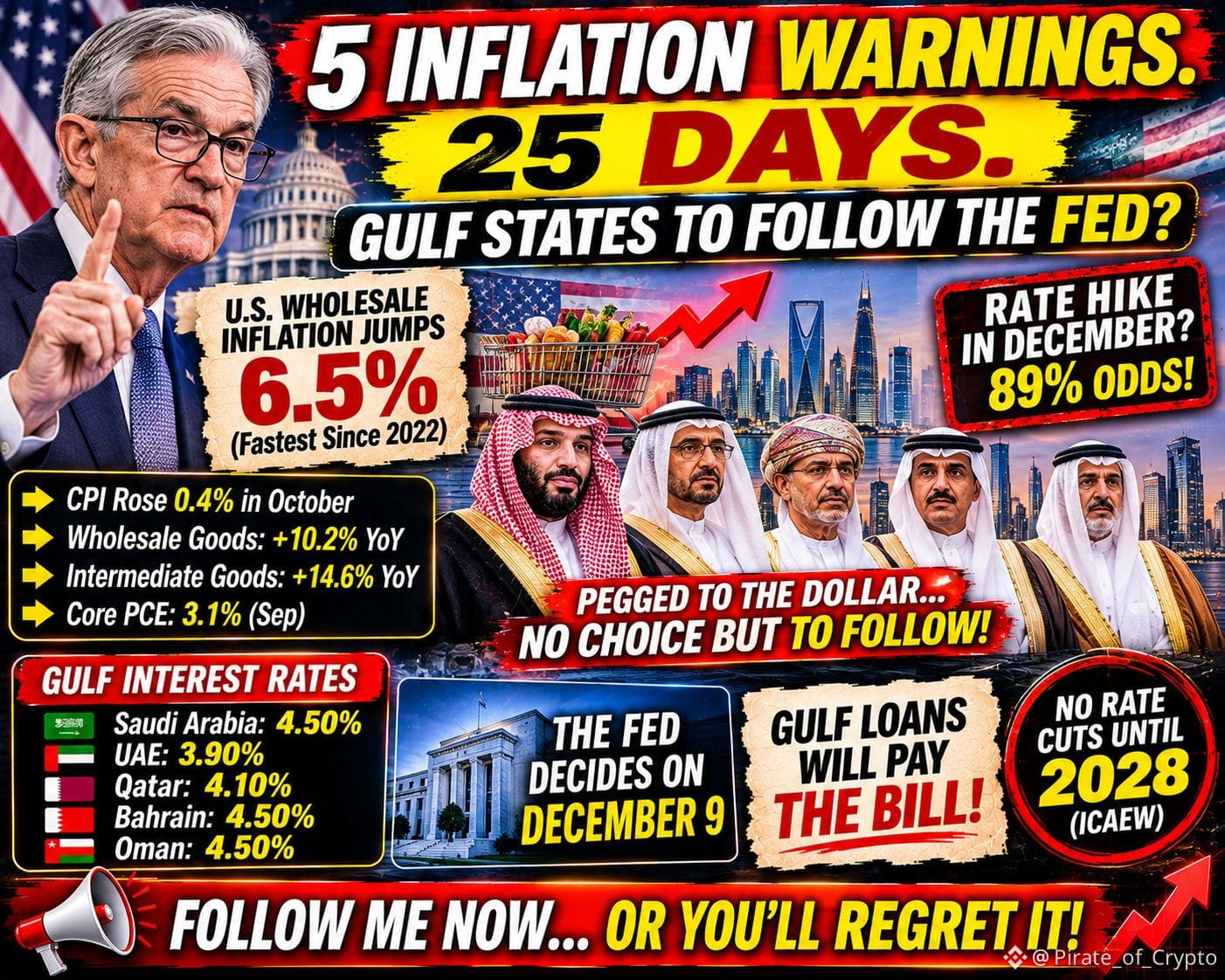
5 inflation warnings. 25 days. The dollar peg is dragging 5 Gulf states into another rate hike.
U.S. wholesale prices just jumped 6.5% over the year, the fastest since November 2022. And every variable-rate loan from Riyadh to Muscat is next in line.
→ Tuesday: U.S. consumer prices rose 0.4% in October, above expectations
→ Today: Wholesale inflation hit 6.5%, up from 6.3%. The forecast was 6.6%. Core inflation: 5.0%, exactly as expected
→ Wholesale goods prices: up 10.2% over the year, the biggest jump since October 2022
→ Intermediate goods that factories buy: up 14.6% over the year, the biggest since July 2022
→ The Fed's preferred measure, core PCE: rose to 3.1% in September
Stock futures jumped in the first 10 minutes after the data came out: S&P 500 +0.43%, Nasdaq +0.72%. Then almost all of that evaporated.
Odds of a 25-basis-point rate hike in December: 76% before Tuesday's inflation data. 89% now.
Last time, in mid-September, the Fed raised rates for the first time since July 2023. Saudi Arabia, the UAE, Qatar, Oman and Bahrain followed within hours.
Every signal points to the same place:
🇸🇦 Saudi repo rate: 4.50%
🇦🇪 UAE base rate: 3.90%
🇶🇦 Qatar deposit rate: 4.10%
🇧🇭 Bahrain: 4.50%
🇴🇲 Oman: 4.50%
Pegging currencies to the dollar ties all five to the Fed. The Gulf doesn't choose. The Gulf follows.
Personal loans account for about 42.6% of all credit from Saudi banks. And variable-rate mortgages pass every Fed move straight through to household budgets.
Chicago Fed President Austan Goolsbee said today: "Recently, we're not making any progress; in fact, things are moving in the wrong direction."
The ICAEW already expects Gulf central banks to follow the Fed in December, with no rate cuts until 2028.
The Fed decides on December 9, and loans in the Gulf pay the bill. Follow me now, or you'll regret not doing so.
$BARD
$INJ
$DODO