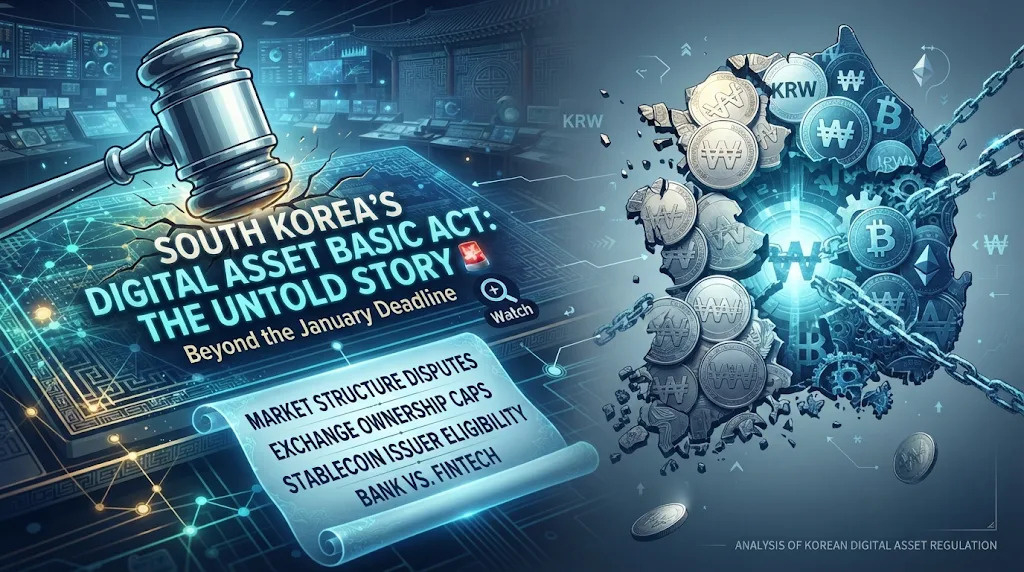
🚨South Korea's Digital Asset Basic Act is not simply a “final draft in January” story.
As of November 8, the Financial Services Commission was in final consultations and targeting a government bill within the month.
On November 13, lawmaker Min Byung-deok said concentrated parliamentary discussions could begin the following week or shortly after, with a political push to complete the legislation before January 18, 2027. That is a legislative timetable — not proof that a final bill has already been locked.
The biggest disputes concern market structure.
One leading proposal would cap major shareholders' stakes in crypto exchanges at 15%–20%, with a grace period of about three years. An alternative being discussed is restricting voting rights rather than ownership itself.
Stablecoin issuance is another unresolved issue. The expected approach is bank-centred consortiums, as the Bank of Korea has argued, but eligibility for non-bank fintech businesses remains contentious.
This matters beyond Korea. The law will help determine whether won-based stablecoin infrastructure is controlled mainly by banks or opened to a wider range of issuers.
Watch the actual draft text, especially issuer eligibility and exchange ownership rules — not just the deadline.
Not financial advice.
$BNB $SOPH $AGT
#KoreaDigitalAssetBasicActFinalDraftExpectedEarlyJanuary #USCryptoETFsLose$1.48BInFiveDays #JaneStreetNearlyOctuplesFidelityBitcoinETFHoldings #KoreaCryptoRegulations