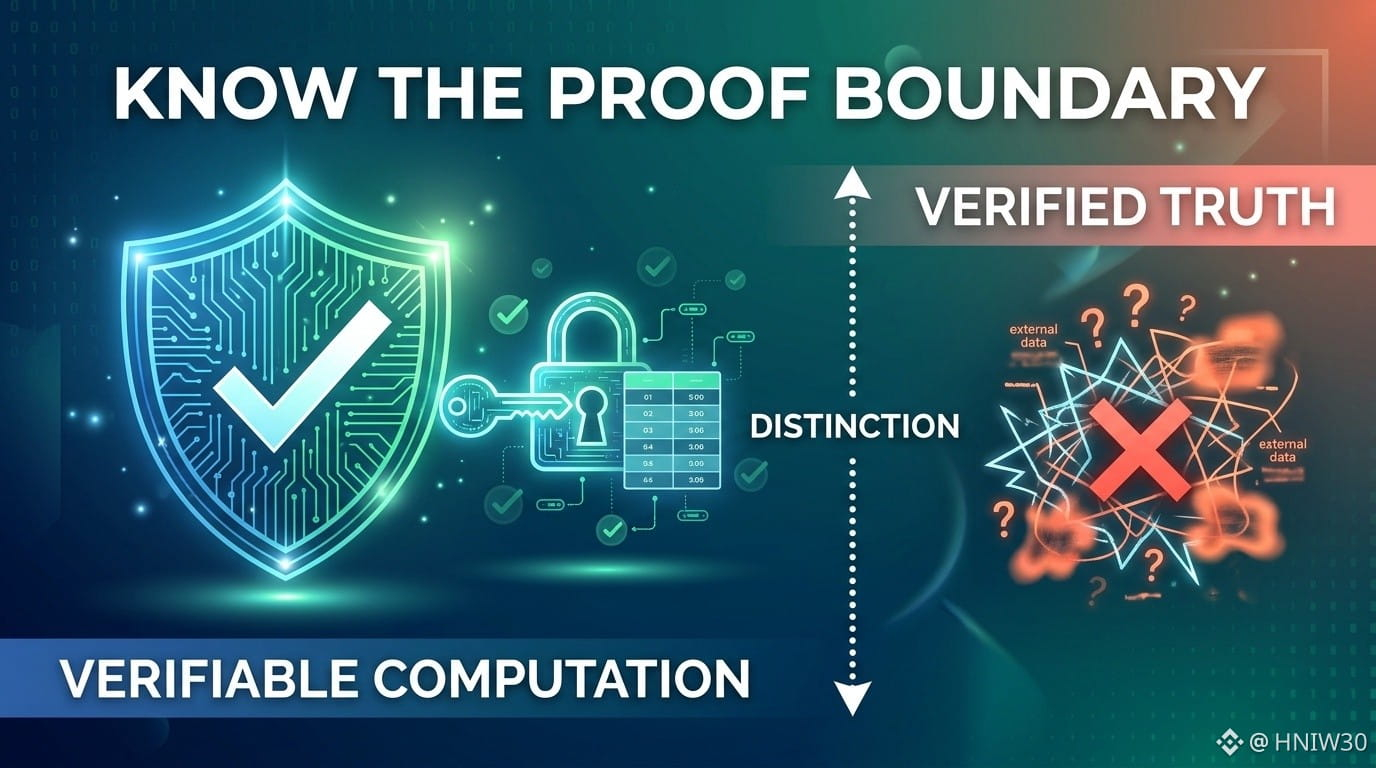
Verifiable computation and verified truth are not the same thing, and that distinction matters more than most people realize.
Space and Time developed Proof of SQL, a zero-knowledge proof system where a prover executes a SQL query against cryptographically committed data and generates a proof. A verifier, whether an on-chain smart contract or an off-chain client, can then check that the result matches the specified query and committed dataset without re-running it. That closes a real trust gap at the computation layer.
Here's a hypothetical to illustrate the boundary: imagine a tokenized real-estate fund stores reserve figures in a Space and Time table. In this example, Proof of SQL could verify a query that totals the reserves recorded for the fund. It cannot establish whether those entries match the real assets held off-chain. The proof covers computation integrity, not whether external inputs reflect reality.
This matters across AI, tokenization, and DeFi because all three depend on data retrieval at scale. An AI agent querying on-chain analytics gets assurance results weren't tampered with between database and delivery. A DeFi protocol checking collateral ratios gets the same. The data-entry layer remains a separate challenge for oracles, audits, or other mechanisms to address. Understanding where the proof boundary starts and stops is what separates informed analysis from hype.
#sxt $SXT @SpaceandTime