
At first I assumed Space and Time was mainly focused on proving that database queries produce correct results.
But looking deeper into its architecture, I found another detail worth appreciating.
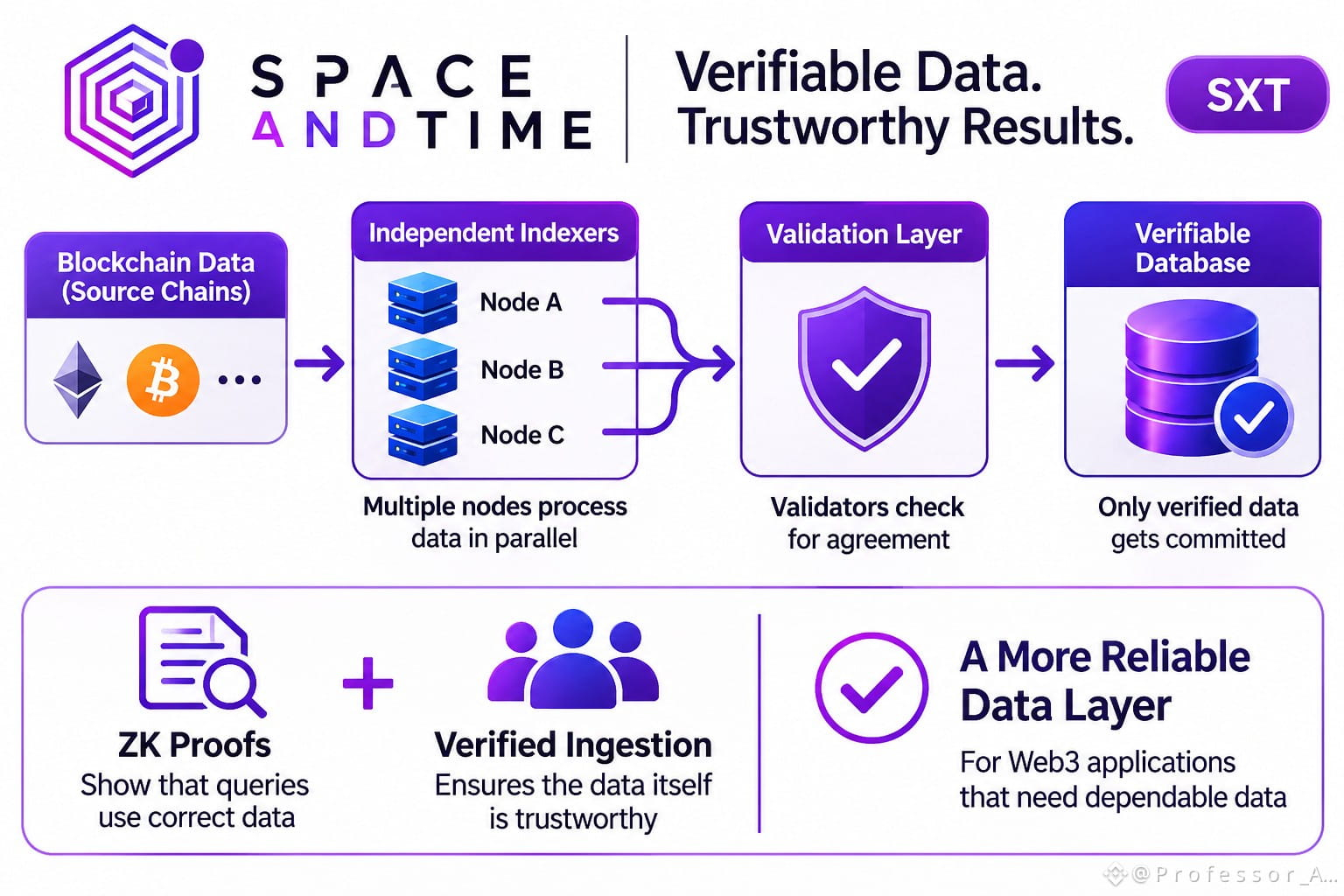
Its indexing process allows multiple independent nodes to process blockchain data and submit their results for validation before records are committed. I like this approach because it doesn't treat data collection as something that should simply be trusted.
There is an additional verification step before that information becomes part of the database. Combined with ZK proofs, this creates a way to check not only the results of a query but also the integrity of the data being used.
What stands out to me is how Space and Time approaches a practical problem:
blockchain applications need access to structured, useful data without relying entirely on blind trust in a single source.
The architecture still has coordination requirements, but that seems like a considered part of building verifiable data infrastructure.
Makes me wonder how many applications could benefit from this kind of data accountability.
#sxt $SXT @SpaceandTime