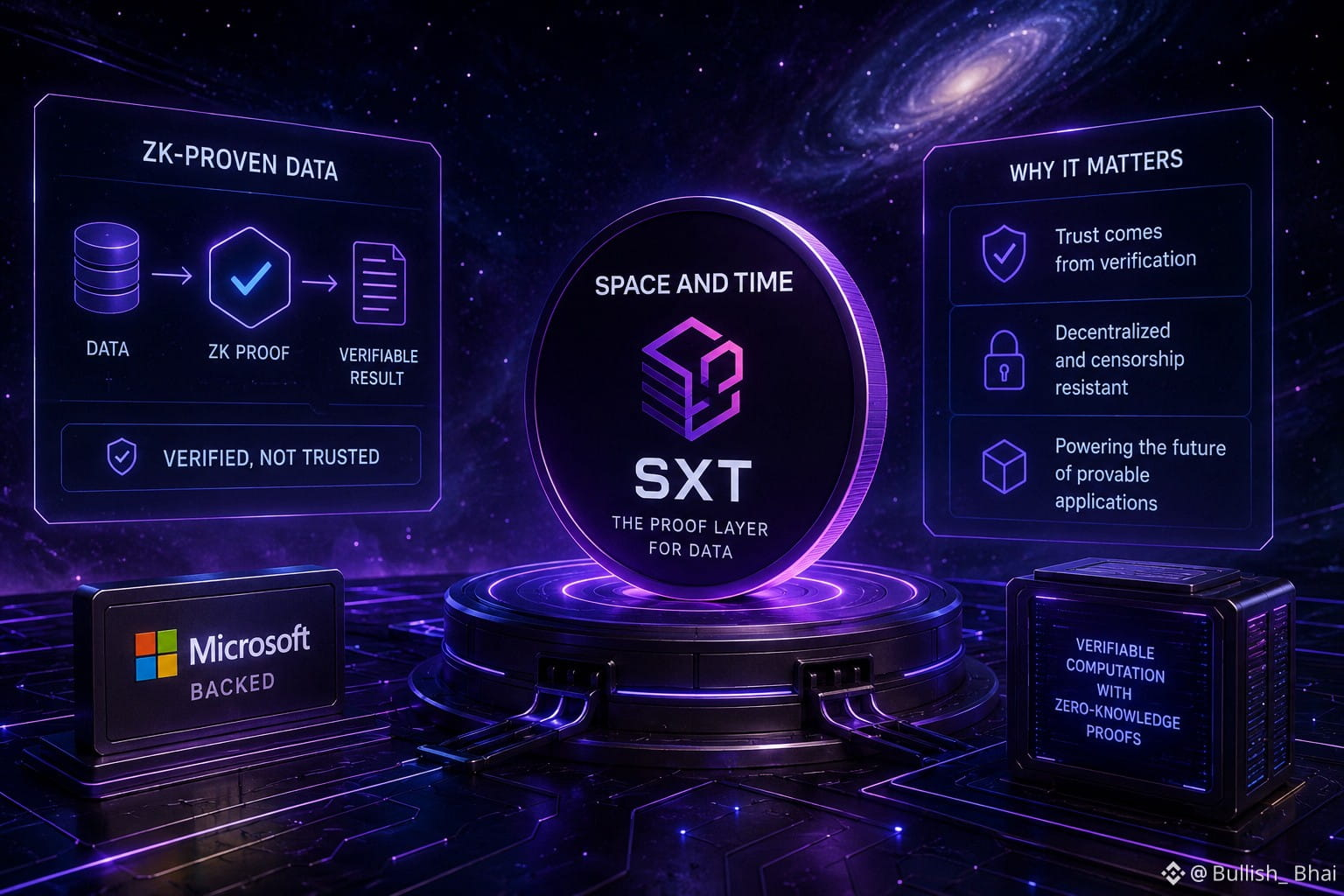

I was looking at Space and Time ($SXT), and one detail kept pulling my attention back: the idea of making data provable with zero-knowledge proofs instead of simply asking users to trust where the data came from. At first, I thought this was mostly about making blockchain data easier to query. But the more I looked at the design, the more I saw the real difference in the verification layer.
In normal DeFi, we often consume numbers from dashboards, APIs, indexers, or smart contracts and assume the data has been processed correctly. That works until the calculation itself becomes important. With Space and Time, the interesting part is that a result can come with cryptographic proof showing that the underlying computation was performed correctly. That is a different experience from simply receiving an answer and trusting the system behind it.
What I think can be overlooked is that proof does not automatically make every piece of data meaningful or useful. The quality of the source, the query being made, and how applications interpret the result still matter. So I wouldn’t treat ZK-proven data as some magic solution.
Still, I find the approach interesting because it moves trust away from “believe this database” toward “verify what was actually calculated.” The bigger question for me is whether developers will find enough practical reasons to use that extra verification layer in everyday applications.
@SpaceandTime $SXT #SXT