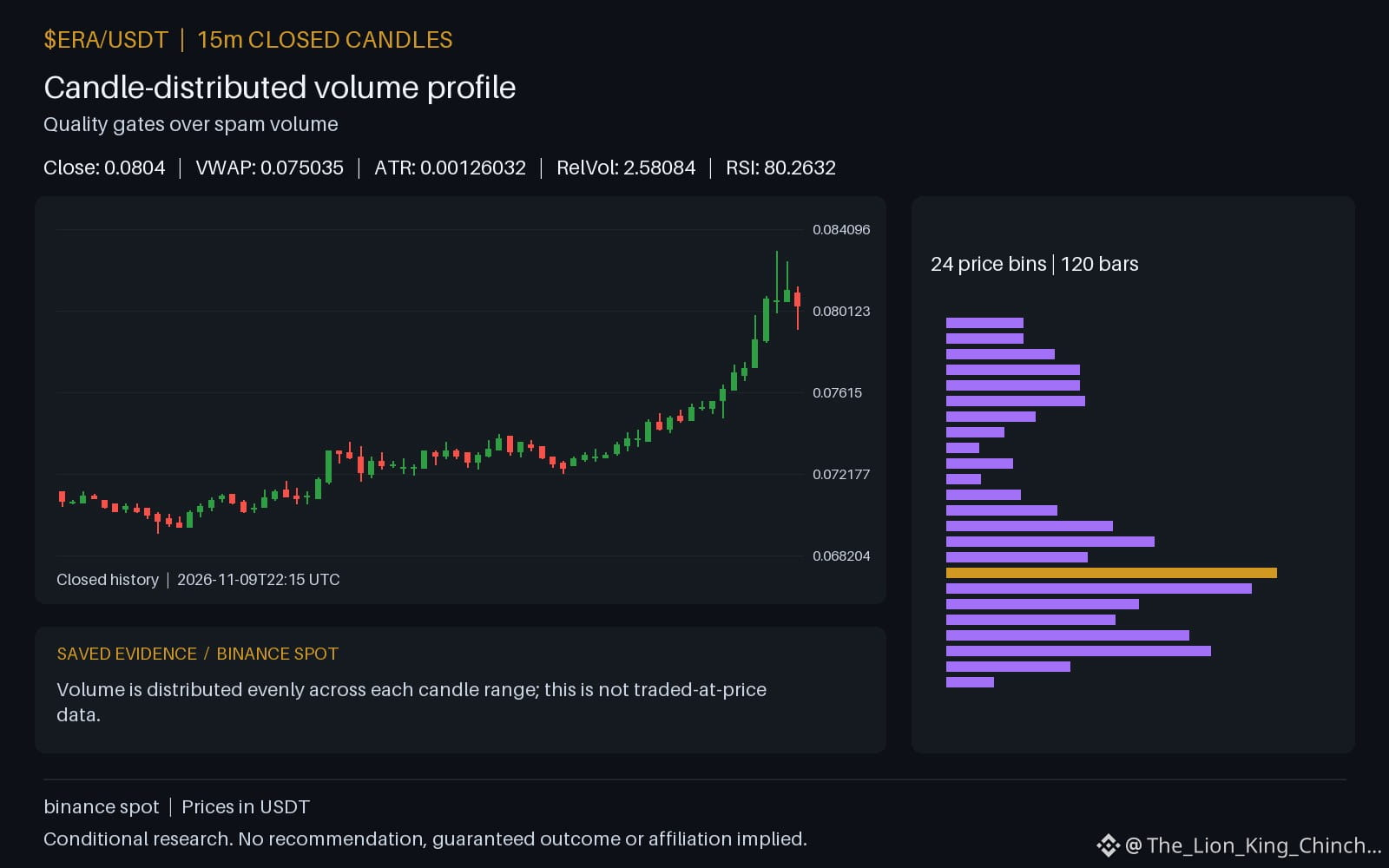
$ERA : ERA: Quality Gates Over Spam Volume
A common assumption
Frequent posting often mistakes noise for insight. In crypto content, this creates a dilemma between visibility and trust. Readers receive many updates that add little value. The goal is to separate evidence from persuasion.
The counterexample to consider
Imagine an account that posts only when key metrics shift meaningfully. For $ERA , price is 0.0804. Relative volume is 2.58084. If an analyst waits until volume confirms direction, the signal may carry more weight. Constant updates dilute attention. This hypothetical mechanism respects the reader’s need for clarity. It assumes that silence during quiet periods is not a failure but a quality gate.
What could change the reading
Sometimes waiting hides real changes. If $ERA moves sharply, immediate context might be useful. However, without new data, repetition becomes spam. A self-check asks: does this update add unique information or just fill space? If the answer is the latter, hold back. This approach helps distinguish genuine observations from incentive-driven noise. Think carefully about what you share.
Probabilistic market research, not a recommendation or guaranteed return.
The comparison to keep in mind: $ETH has hourly direction down and volume not above its baseline; $SOPH has hourly direction up and volume above its baseline. This alone does not establish correlation.
Do you prefer accounts that flood your feed every five minutes with filler, or accounts that post when a meaningful observation actually occurs?
#ERA #ETH