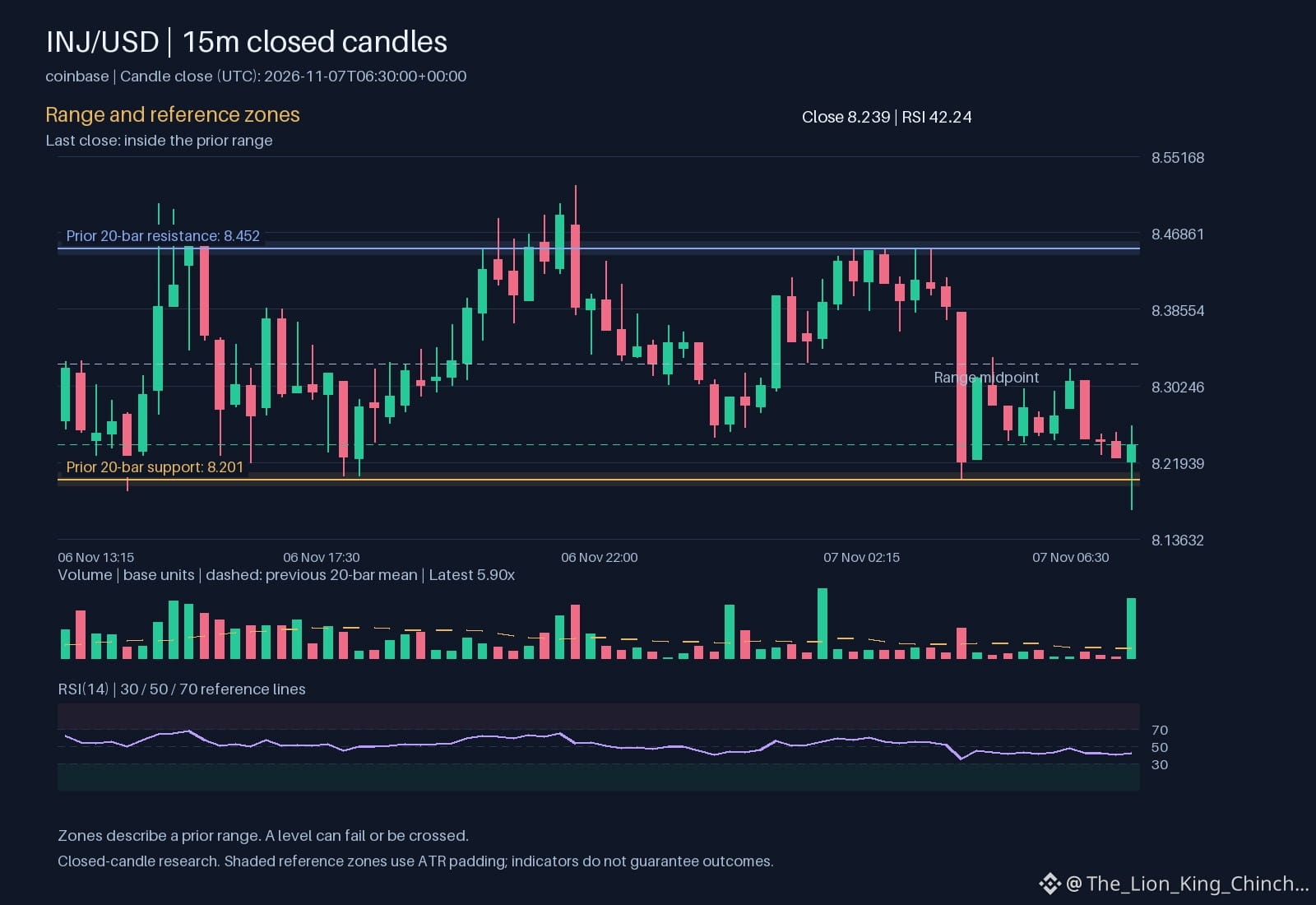
$INJ: Balancing Entry Quality and Chasing in a Downward Move
**Practical Trade‑off**
When the hourly candle points down and volume sits above baseline, the temptation to jump in early is strong. A thought experiment can illustrate the tension. Imagine two traders who notice the same signal. Trader A waits for the price to respect the recent support level before entering, accepting a later entry but a cleaner risk profile. Trader B rushes in as soon as the down move begins, hoping to capture a quick gain but exposing the position to a wider stop because the price has not yet shown a clear floor.
**When the Assumption Fails**
If the market continues to slide, Trader A may miss the initial move while Trader B faces a larger drawdown. Conversely, if the price rebounds and honors support, Trader A benefits from a tighter stop and a higher probability of a short‑term reversal, whereas Trader B may be stopped out early. The key risk stems from the current volume strength, which can fuel rapid price changes and widen the gap between entry and stop.
**Decision Checklist**
- Confirm that volume remains above baseline before committing.
- Identify a clear support or resistance level to anchor a stop.
- Ask whether the entry price offers a reasonable risk‑reward compared with the distance to the stop.
- Consider waiting for a confirming candle that respects the level before acting.
A disciplined pause lets the trader align entry quality with the observed aggressive volume, reducing the chance of being caught in a false breakout.
Probabilistic market research, not a recommendation or guaranteed return.
Would you wait for clearer structure or reassess the risk first?
#INJ #RiskManagement