🏛️
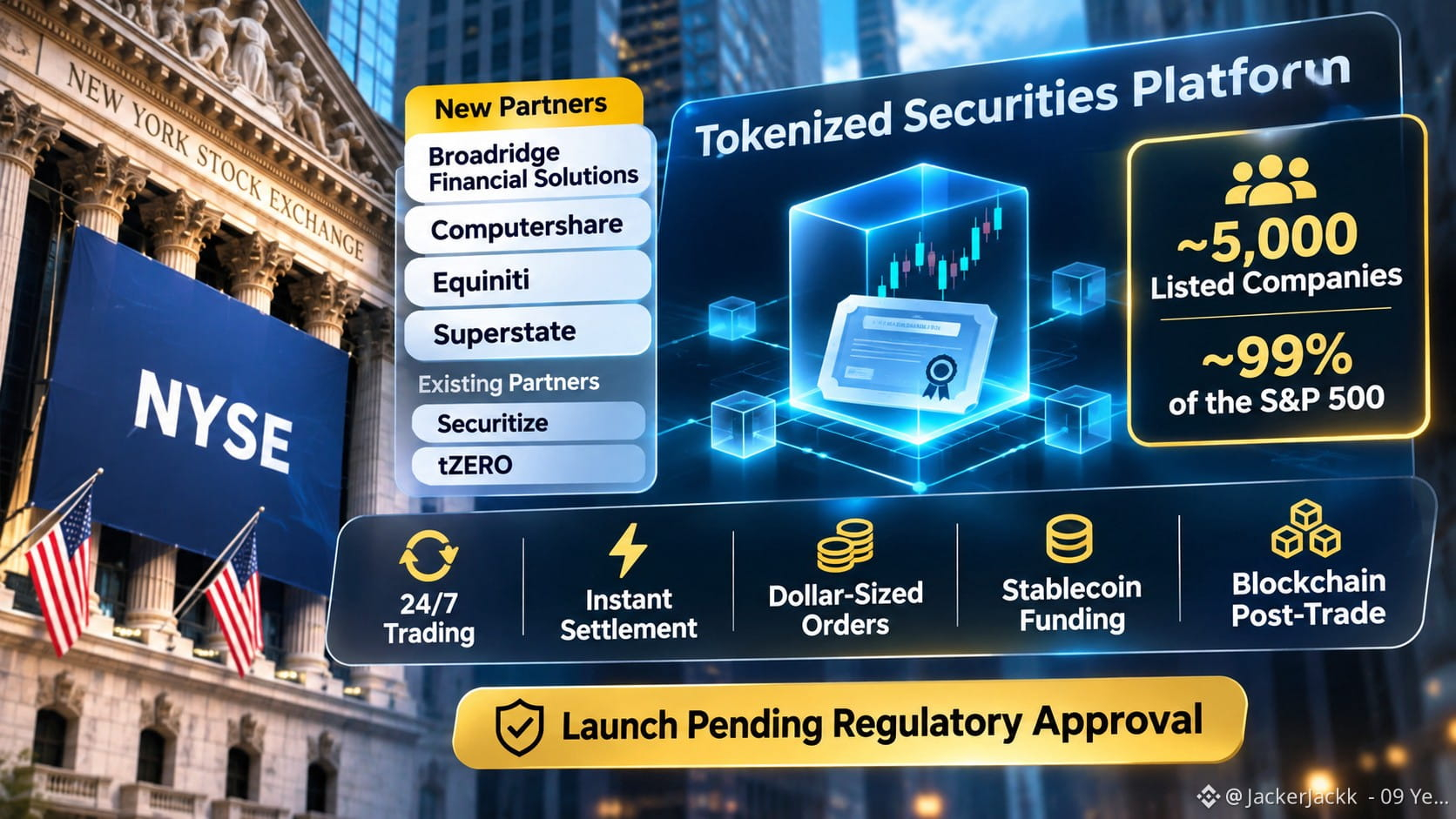
On November 2, the New York Stock Exchange (NYSE) announced four new partners for its planned tokenized securities platform: Broadridge Financial Solutions, Computershare, Equiniti and Superstate.
They join Securitize and tZERO.
Here's why this matters: Broadridge, Computershare and Equiniti collectively serve nearly 5,000 listed companies, including almost 99% of the S&P 500.
These firms help maintain shareholder records and manage ownership changes. Bringing them into blockchain infrastructure could make tokenized shares easier to integrate with existing financial markets.
A platform designed to support:
• Trading around the clock, including weekends.
• Instant settlement instead of waiting for traditional processing.
• Dollar-sized orders.
• Stablecoin funding.
• Blockchain-based post-trade operations.
The important distinction: Its launch still requires regulatory approval.
If approved and implemented as planned, it could bring blockchain-based ownership and settlement into mainstream stock-market infrastructure.
The bigger story isn't simply putting stocks on a blockchain. It's connecting that technology to the institutions already responsible for managing ownership across Wall Street.