
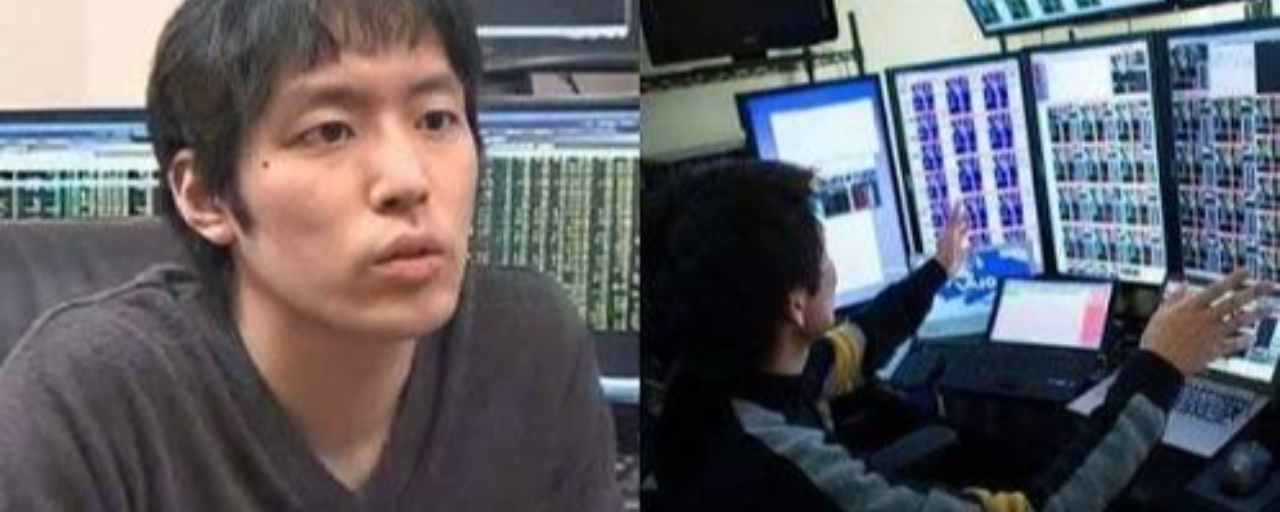

Takashi Kotegawa, known as BNF, and the discipline of staying small enough to survive
The Inheritance
In the early 2000s, a young man in Japan sat down with roughly 1.6 million yen ($13,000–14,000), much of it reportedly inherited after his mother's death. He had no connections, no firm, no famous mentor. He had a computer, a lot of free hours, and an almost unnatural patience for looking at screens.
His name was Takashi Kotegawa. The online forums knew him by a handle: BNF.
Over the next several years, that small account grew into a fortune widely reported to be in the neighborhood of 20 billion yen ($150–200 million), depending on the exchange rate of the day. He did it from his apartment, as an individual retail trader, with no team and, for the most part, no public profile.
And unlike many of the traders who earn a mythic reputation, he never became a cautionary tale.
What He Actually Did
The popular image of a legendary trader is someone with a secret. Kotegawa's secret, as far as anyone has been able to piece together, was that there wasn't one.
His approach, described in the few interviews and profiles that exist, was built around mean reversion and relentless screening. He would hunt for stocks that had fallen too far, too fast, usually measured by how far they had dropped below their moving average, and buy them when panic had pushed prices past what the fundamentals could justify. Then he sold when the rebound came. Often within days. Sometimes within hours.
He reportedly watched hundreds of stocks a day. He studied the charts, the order flow, the sentiment. He did this for something like fifteen hours daily. It wasn't glamorous. It was repetitive, tedious, and brutally disciplined.
Where many traders look for the big idea, he looked for a large number of small, repeatable edges, and he executed them with the consistency of a machine.
The Day the Market Made a Mistake
Every legend has a moment, and BNF's came in December 2005.
A trader at a Japanese brokerage meant to sell one share of a recruiting company, J-Com, at 610,000 yen ($5,500). Instead, the order was entered as 610,000 shares at one yen each (under a cent). A catastrophic typo. The market went wild.
Kotegawa spotted the anomaly almost instantly. He bought aggressively, then sold into the chaos once the mistake was corrected, and walked away with a reported profit of around 2 billion yen ($17 million) in a single episode. It remains one of the most famous trades in Japanese market history.
There is an important detail here: he didn't get lucky by accident. He got lucky because he was already sitting there, already watching, already prepared to act at the exact moment when other people would freeze. Opportunity came to the person who had spent thousands of hours being ready for it.
Then came the Livedoor shock in early 2006 and the global financial crisis in 2008. These periods were a bloodbath for most investors. For Kotegawa, they were harvest seasons. Panic created the very dislocations his strategy was designed to exploit.
The Quiet Life
Here is where BNF diverges from nearly every other story of extraordinary trading success.
He did not spend like a king. He reportedly lived modestly, ate cheap meals, and avoided publicity. When he did buy something big, it was a building in Tokyo's Akihabara district, a commercial property reportedly purchased for around ten billion yen ($110 million), which he treated as an income-producing asset, not a trophy.
He avoided the spotlight, the parties, the media, the lifestyle that so often poisons winners. When he did speak, his tone was understated. He said, in essence, that he did not see himself as a genius, only as someone who did the work.
In a world full of loud winners, BNF's greatest feat may have been staying quiet.
What the Story Teaches
1. Compounding favors the consistent, not the spectacular. He turned a small account into a vast fortune not through a single bold bet, but through thousands of modest, repeated wins. Most traders chase a home run. He built an engine. If you take one thing away, let it be this: your goal is not the greatest trade ever. It is the thousandth good trade.
2. Do the unglamorous work. Long hours. Constant screening. Endless review. There is no shortcut around it, and anyone who sells you one is selling something else. Edge is built in the boring hours, not in the dramatic ones.
3. Panic is a product, and you can learn to buy it. He made his money by being the calm person in a room where everyone else was afraid. That does not mean fearlessness. It means preparation. Know your plan before the crash, so that when it arrives, you are acting from a script rather than from your nervous system.
4. Be ready, because luck visits the prepared. The J-Com error is a famous story because it looks like luck. It was luck, but luck that landed in the lap of someone who had trained for exactly that kind of moment. You cannot control when chaos shows up. You can control whether you are in a position to use it.
5. Keep your life small, and your discipline large. When money arrives, lifestyle tends to expand to swallow it, and ego tends to follow. BNF kept his needs modest and his habits steady. A trader who is not trying to prove anything to anyone is a trader who can make rational decisions at the worst moments.
6. Keep a low profile. There is real power in not being known. No audience to perform for, no brand to protect, no pressure to maintain a persona. Not everyone can disappear like he did, but you can resist the urge to turn your trading into a performance.
For the Trader Reading This
I want to speak plainly to the person who is reading this and feeling small.
Maybe you started with a few thousand dollars, or less. Maybe your account feels laughable next to the numbers online. BNF began with about the price of a used car and no one watching. He did not need a huge start. He needed a repeatable process and the stubbornness to stick with it. Your small account is not a disadvantage to be ashamed of. It is the same starting line he stood on.
Maybe you have been grinding for months or years and it feels like nothing is happening. Progress in trading is quiet before it is loud. Most of what looks like success from the outside is a long stretch of invisible effort. If you are showing up, reviewing your trades, learning from your mistakes, you are doing the thing that matters, even on days when the numbers say otherwise.
But I will also say this gently. Fifteen-hour days in a room alone is a way of working that works for some people and wears down many others. Do not copy the hours without asking what they cost. A trader who never rests is not disciplined. They are depleted. Sleep, movement, sunlight, and people are not a distraction from the craft. They are what let you keep doing it for twenty years instead of two. If isolation has started to feel heavy, if your screens have become your only company, please talk to someone, a friend, a family member, a professional. Needing support does not make you a weaker trader. It makes you a sustainable one.
And if you have taken a big loss lately, know that BNF lost plenty of trades too. A fortune is built out of many losses that were small enough to survive. One bad day is data, not a verdict.
The Lesson Beneath the Lesson
The most mythic traders are usually remembered for how spectacularly they rose or fell. Kotegawa is remembered for something rarer: he didn't. He stayed in the room, kept the process, and let time do the heavy lifting.
There is a kind of greatness that does not look like greatness from the outside. It looks like routine. It looks like ordinary people who decided, day after day, to do the same disciplined thing and to ignore the noise.
You may never hit a trade like the J-Com error. You do not need to. You need to build the habits that would let you take advantage of one if it ever came.
Stay curious. Stay prepared. Stay small enough to survive and consistent enough to compound.