

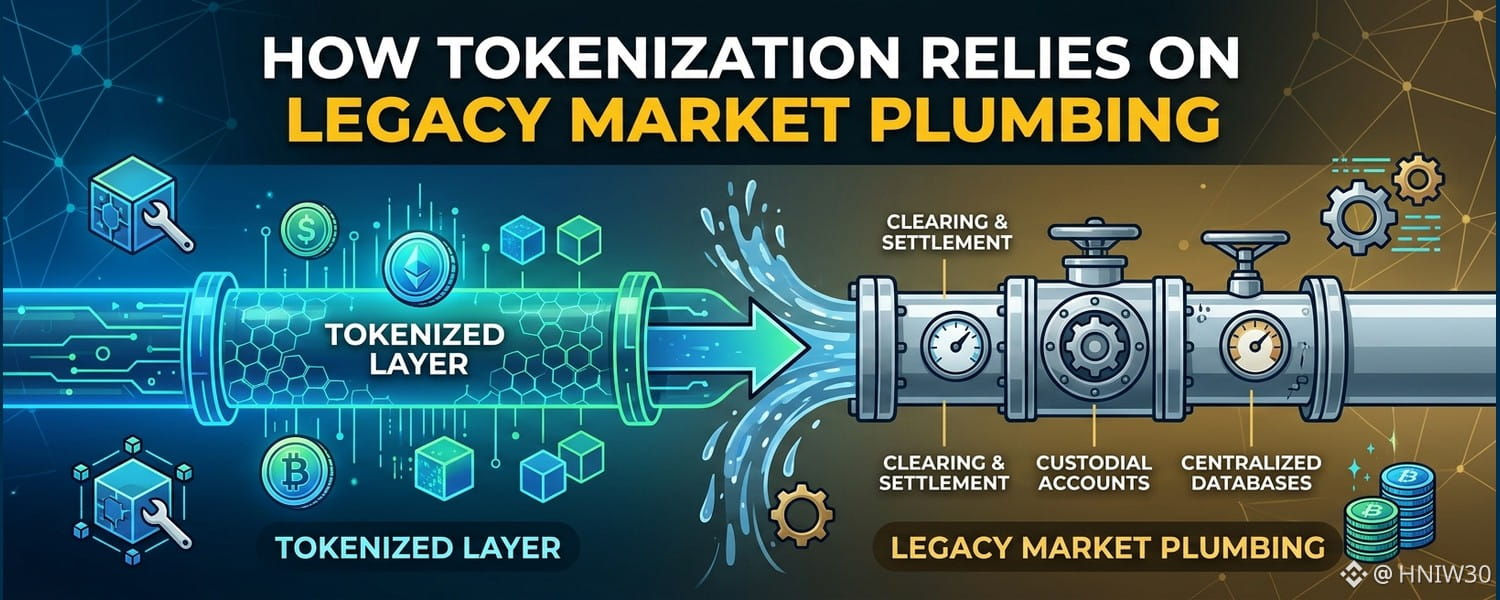

Tokenization is often framed as a complete replacement of legacy clearing and settlement systems, yet the reality of market plumbing reveals deep structural interdependence. Traditional post-trade rails continue to process the legal claims backing digital representations of real-world assets. As institutions adopt distributed ledgers, integration with established operational networks remains unavoidable.
The institutional architecture of equity markets relies on shares held in street name across custodians and broker-dealers. Beneficial owners do not interact directly with company registries, creating a complex operational layer for communications and corporate actions. Broadridge processed communications for more than one billion equity positions in fiscal 2026, highlighting the structural scale required to coordinate corporate governance.
Current tokenized securities reflect this hybrid reality rather than a purely native on-chain ecosystem. Industry data indicates that approximately ninety percent of tokenized stocks are structured as notes backed by shares held in conventional custodial accounts. When digital asset issuers handle shareholder voting for token holders, they aggregate preferences and execute them through traditional intermediaries such as Broadridge.
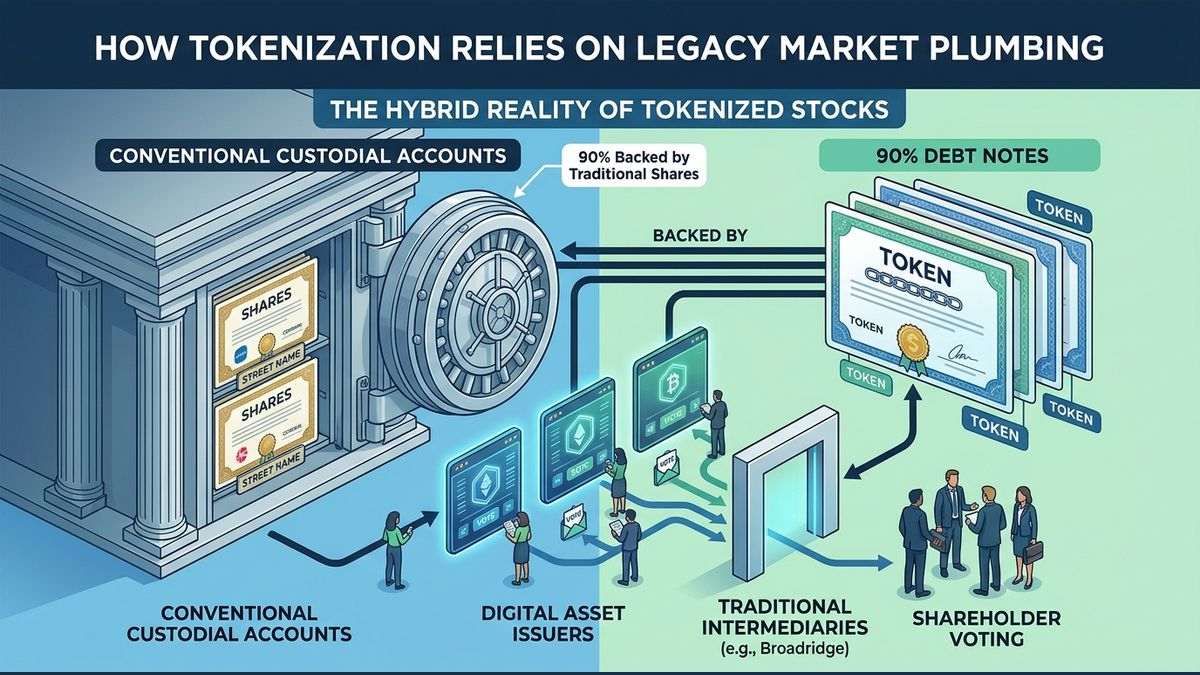
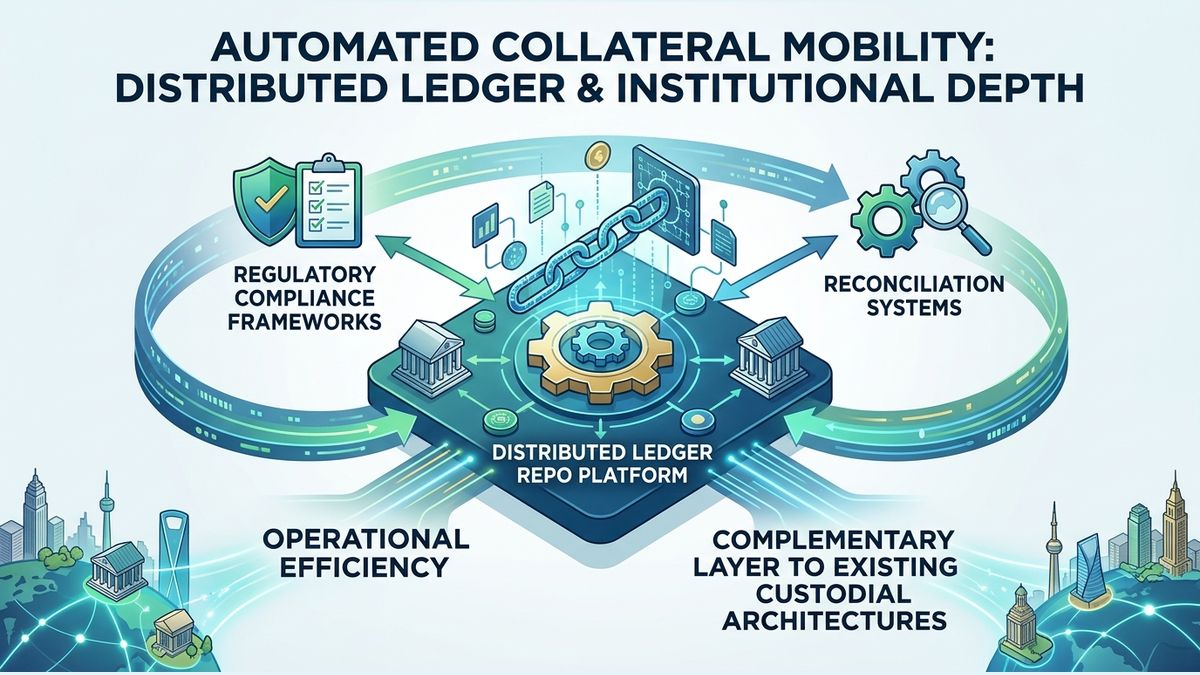
This structural link demonstrates that tokenization does not immediately displace established clearing mechanisms. Instead, financial institutions operate in a parallel environment where books, records, and collateral must reconcile across distributed ledgers and centralized databases. Broadridge has adapted to this shift by deploying its distributed ledger repo platform, which processed roughly 360 billion dollars in tokenized collateral daily in September.
Distributed ledger repo demonstrates how institutional market depth develops through operational efficiency rather than disintermediation. The platform enables automated collateral mobility while preserving regulatory compliance and reconciliation frameworks. Broadridge is expanding these capabilities through its DLX infrastructure, confirming that institutional distributed ledgers function as complementary layers within existing custodial architectures.
Beyond tokenization, institutional infrastructure providers are integrating artificial intelligence to handle exception resolution and trade break investigations. Rather than diminishing the necessity of centralized processing entities, these automated tools reduce friction in legacy workflows. For high-volume market participants, operational continuity and regulatory alignment remain primary constraints when deploying new settlement technologies.
As tokenized assets expand distribution to international venues, the underlying collateral remains anchored in domestic custody networks. This dynamic increases the sheer volume of discrete ownership positions requiring administration. Market depth across both crypto-native protocols and institutional venues will depend on how efficiently intermediaries manage the synchronization between on-chain tokens and foundational off-chain assets.