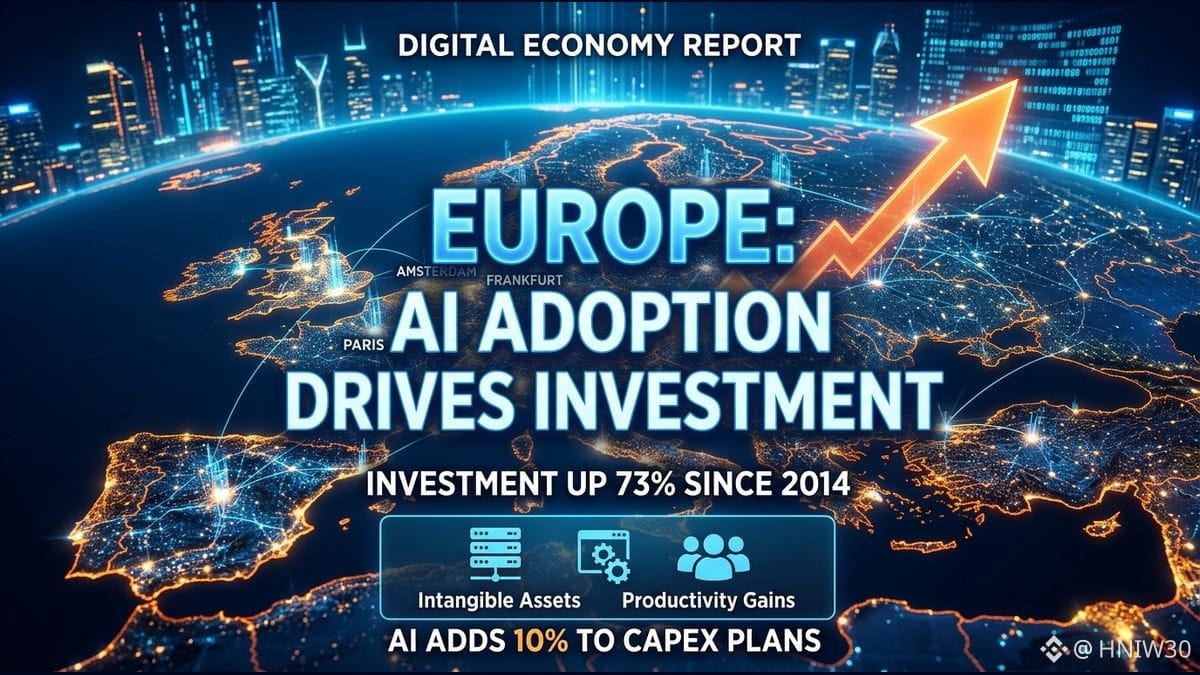
While frontier artificial intelligence development remains concentrated in the United States and China, AI adoption represents a key determinant of future European productivity growth. Digital investment across the euro area has expanded by 73 percent in real terms since 2014, rising from 2.3 percent to 3.3 percent of gross domestic product. Although digital investment has grown at a faster pace in the United States, spending on technology adoption is providing a measurable stimulus to European economic activity.
The composition of European digital investment is primarily concentrated in intangible assets, whereas physical investment in data centres represents a relatively small share. Corporate survey data indicates that artificial intelligence has added roughly 10 percent to business capital expenditure plans this year. Sectoral indicators reflect this uneven momentum, with technology equipment recording stronger output, employment, and new orders than other manufacturing segments. Within services, the software subsector has outpaced peer areas in output, though without matching gains in employment or new orders.
European firms also participate directly in the international technology supply chain, contributing to equipment flows while investors help fund infrastructure expansion through equity, debt, and banking channels. Trade figures show rapid growth in euro area exports and imports of core data centre goods, including hardware deployed for computing, storage, and networking capacity. Whether these adoption trends translate into sustained aggregate productivity gains remains dependent on how broadly firms integrate these tools into existing operations.
#AIAdoption #DigitalInvestment