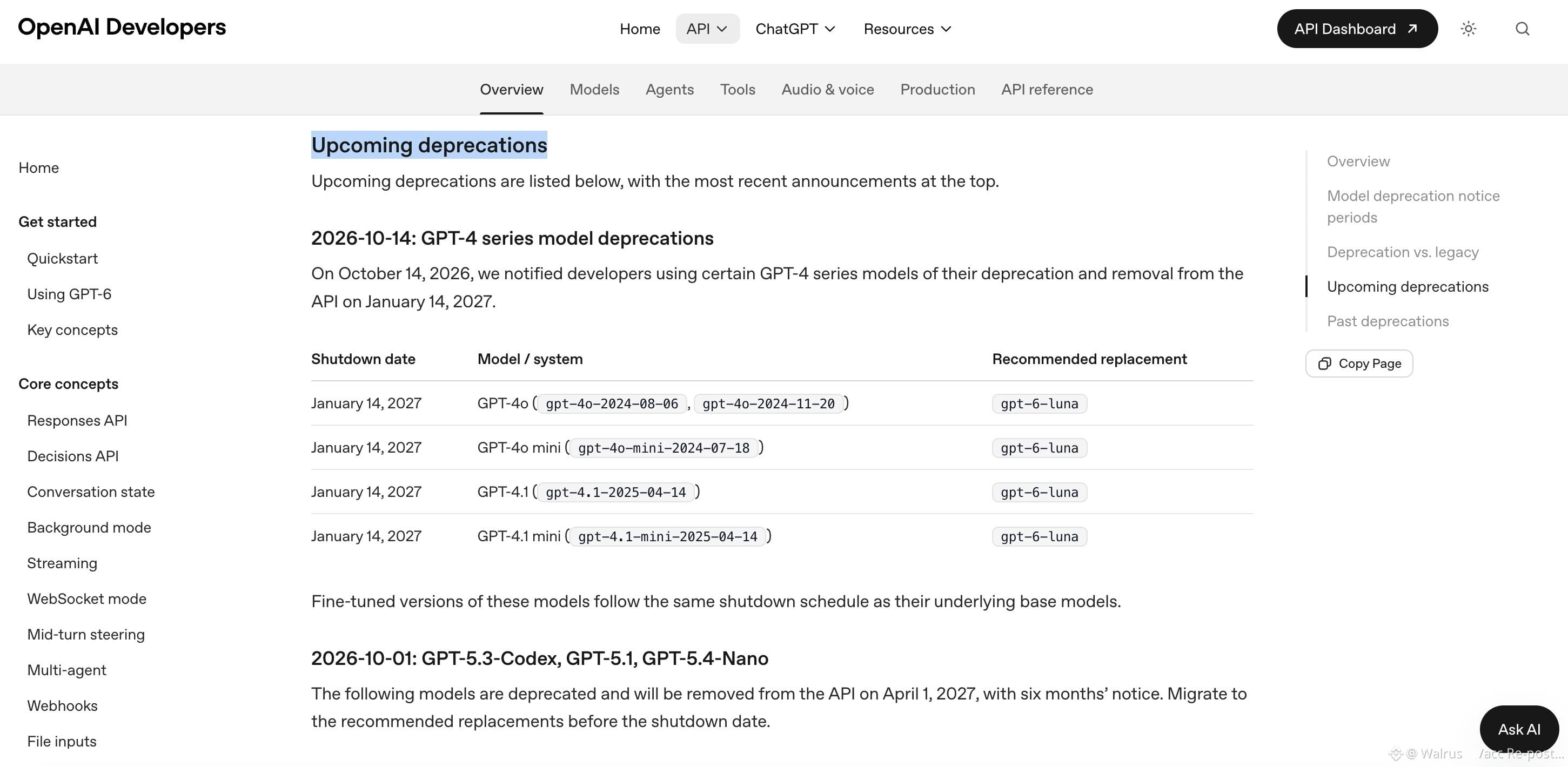
Model lifecycles naturally come to an end, but the memory of your agent does not need to expire alongside them. On October 23, @OpenAI phased out several of its legacy API models, specifically GPT-4, GPT-4 Turbo, o1, o3-mini, and o4-mini. Looking ahead, both GPT-4o and GPT-4.1 are scheduled to follow suit on January 14, 2027.
While these retirements are a routine part of the industry, they highlight the value of maintaining memory independently from the model layer. Storing context externally gives development teams the freedom to switch between models at will. This approach prevents vendor lock-in and ensures you never have to reconstruct your accumulated data from scratch. You can simply upgrade your models while seamlessly retaining your memory.
Walrus Memory provides exactly this kind of stability, keeping your interface completely consistent regardless of the runtime or model you decide to implement next. The process remains straightforward and familiar, requiring only remember() for writing data and recall() for reading it.
You can review the official deprecation schedule here:
https://developers.openai.com/api/docs/deprecations