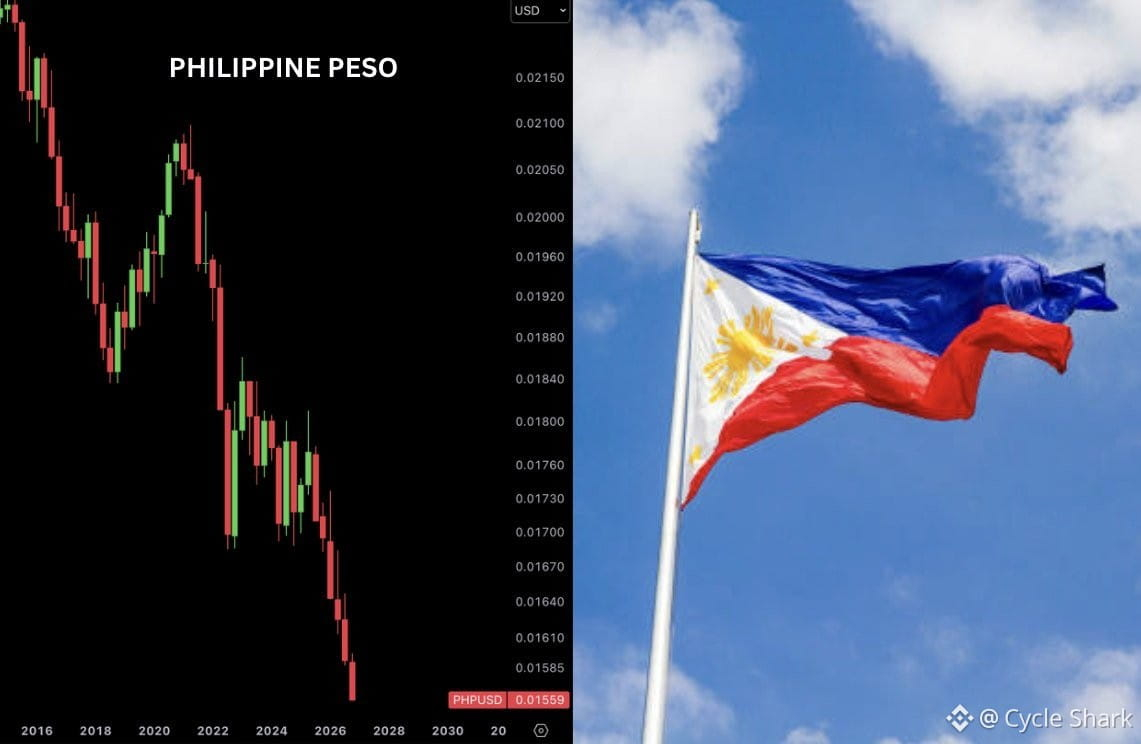
The Philippine Peso just hit an all-time low against the dollar. This isn't just a chart blip—it's the kind of currency breakdown that shows up in textbooks later.
When a currency collapses like this, three things happen fast:
1. Imported goods get expensive overnight. If you're buying anything priced in dollars—fuel, electronics, medicine—your purchasing power just evaporated.
2. Capital flight accelerates. Anyone holding peso-denominated assets is scrambling to convert into harder currencies or dollar-pegged stablecoins. The smart money already left.
3. The central bank faces an impossible choice: defend the currency by hiking rates (killing the economy) or let it slide (importing inflation). They're picking door number two.
This is what macro instability looks like in emerging markets. The exchange rate isn't just a number—it's a real-time vote of confidence in economic policy, debt sustainability, and political stability. Right now, the vote is brutal.
For anyone in the Philippines, this is the moment to think hard about where you store value. Local currency savings accounts are getting destroyed. Dollar accounts, stablecoins, or offshore assets become the only rational hedge when your home currency is in freefall.
This pattern repeats across history. Argentina, Turkey, Lebanon—same script, different cast. When the exchange rate breaks, everything else follows.