

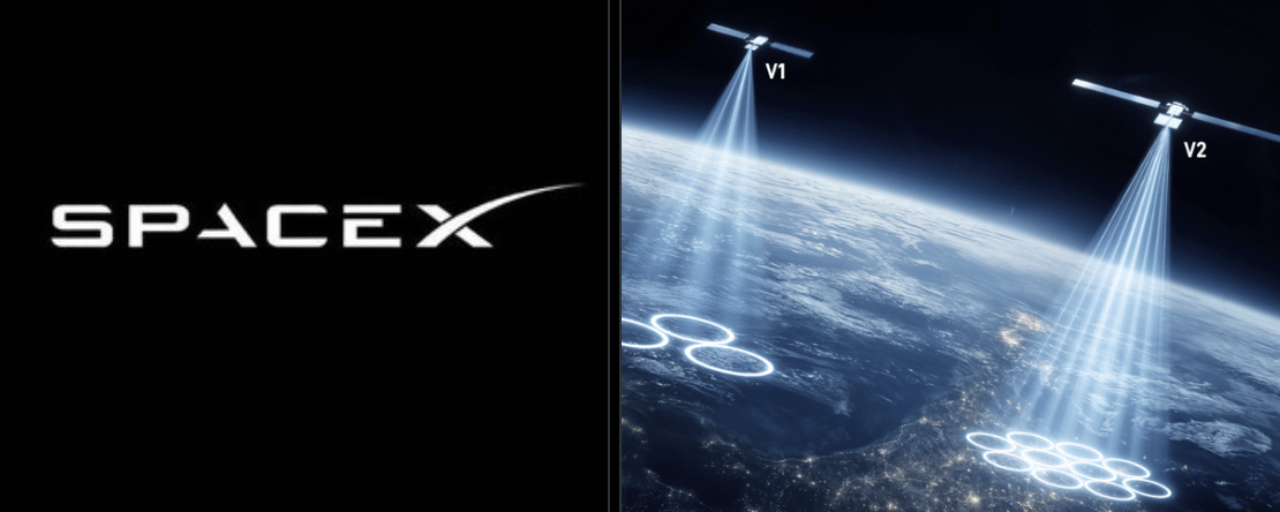

Elon Musk is opening a new front in the U.S. telecom market, putting mounting pressure on AST SpaceMobile.
The news: SpaceX is reportedly negotiating access to 80,000 wireless tower sites across the United States a move that could position Starlink as the country's fourth-largest mobile network operator, competing directly with AT&T, Verizon, and T-Mobile.
To understand why this matters, let's look back.
In 2025, $SPCXB acquired spectrum licenses worth $19.6 billion, then announced plans to develop a communications network combining satellites with ground-based infrastructure.

Now, it's negotiating access to 80,000 sites roughly half the number of specialized cell tower sites in the United States.
Meanwhile, AST SpaceMobile built its investment thesis around delivering broadband and mobile connectivity directly to smartphones via satellites, working alongside traditional telecom operators.
But Musk is pursuing a different strategy: building an integrated network that controls spectrum and satellites while leveraging terrestrial infrastructure to reach customers directly.
In other words, SpaceX is gradually shifting from being a partner to telecom companies to becoming a direct competitor.
That's one factor weighing on $ASTSB .

The stock fell from $60.65 on October 7 to $38.77 at the October 22 close a decline of more than 36% in just 11 trading sessions.
Pressure intensified after Piper Sandler cut its price target from $98 to $54, citing competitive concerns and delays in satellite launches.
But don't be so quick to assume this is the end of AST SpaceMobile.
There's another angle worth considering.
The more SpaceX competes with traditional telecom operators, the greater their incentive may become to work with an independent satellite communications provider outside Elon Musk's control.
That could transform AST SpaceMobile from a company threatened by competition into a more strategically important partner for those operators.
The problem is that markets are pricing in near-term risks today, while the potential opportunity may take years to become clear.
So here's the question:
Will Elon Musk dominate both the satellite and terrestrial communications markets, or could his ambitions create a bigger opportunity for AST SpaceMobile than investors currently expect?