


“Should I buy now or wait for a dip?” It’s the question that freezes new investors and tempts experienced ones into bad timing. In a market that can move 10% in a day, nobody can reliably pick the bottom.
Dollar-cost averaging (DCA) is a simple way to sidestep that question. Here’s how it works, where it shines, and where it falls short.
What Is DCA?
Instead of investing a lump sum all at once, you invest a fixed amount at regular intervals, such as $50 every week or $200 every month, regardless of the current price.
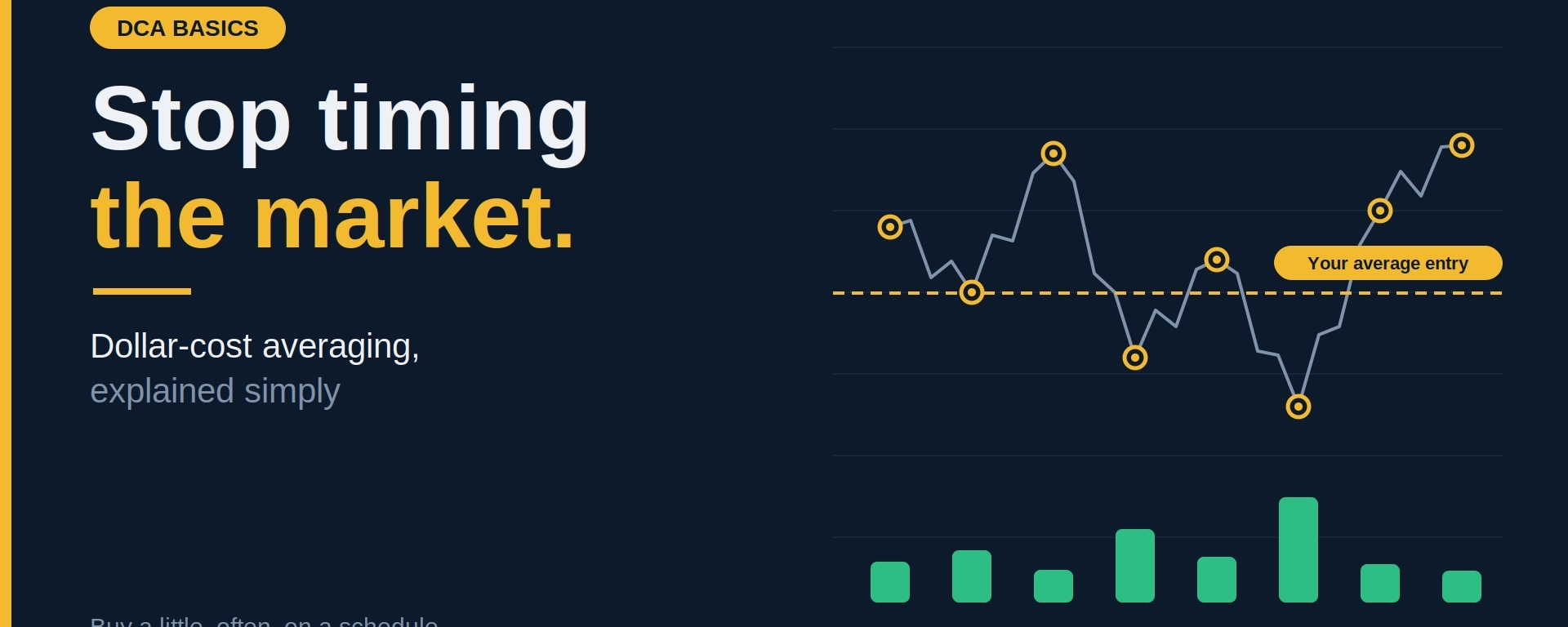
When prices are high, your fixed amount buys fewer coins. When prices are low, it buys more. Over time, your average entry price smooths out.
What Is DCA?
Instead of investing a lump sum all at once, you invest a fixed amount at regular intervals, such as $50 every week or $200 every month, regardless of the current price.
When prices are high, your fixed amount buys fewer coins. When prices are low, it buys more. Over time, your average entry price smooths out.
Why It Works for Many People
It removes the timing pressure. You don’t need to guess the bottom or agonize over today’s candle. The schedule decides for you.
It reduces emotional decisions. Automatic, recurring buys make it harder to panic-sell, or to FOMO into a pump with your whole budget.
It fits real life. Most people earn income monthly. DCA matches how money actually arrives, so you invest what you can afford as you go.
It lowers the regret of bad timing. If you invest everything and the price drops 30% the next day, it hurts. Spreading your entries softens that blow.
The Honest Downsides
DCA isn’t magic, and it’s worth knowing its limits:
It doesn’t guarantee profit. If an asset falls and never recovers, DCA just means you bought more of a declining asset.
It can underperform lump-sum investing in a steadily rising market, because part of your money sits on the sidelines while prices climb. Studies on traditional markets have often found lump-sum investing comes out ahead more often than not, though DCA can feel safer.
Fees add up. Many small purchases can cost more in trading fees than a few large ones, so check your platform’s fee structure.
DCA is a risk-management and behavior tool, not a way to beat the market.
How to Set Up a DCA Plan
Choose assets you’ve researched. DCA into a weak project is still a weak investment. Many people focus on established assets.
Decide on an amount you can afford. It should be money you won’t need soon, and that wouldn’t hurt you to lose.
Pick a frequency. Weekly or monthly is common. Consistency matters more than the exact interval.
Automate it if possible. Many platforms offer recurring buys, which removes the temptation to skip when prices look scary.
Set a review schedule. Check in every few months to see whether your plan and your goals still match.
Combine DCA With a Plan
DCA works best alongside sensible habits:
Keep your overall position sizes reasonable
Decide in advance when you’d stop adding or start taking profits
Store long-term holdings securely
Don’t DCA with borrowed money or money you need for bills
The Bottom Line
You can’t control the market, but you can control your process. DCA turns a stressful guessing game into a steady habit, which is exactly what most people need to stay consistent through ups and downs.
It won’t make a bad asset good or promise gains, but it can help you stay invested without letting emotions drive every decision.
Do you DCA, buy lump sums, or try to time the dips? Tell me in the comments. 👇
Disclaimer: This article is for educational purposes only and is not financial advice. Crypto assets are highly volatile and you can lose your capital. Always do your own research and only invest what you can afford to lose.
#Crypto #DCA #CryptoInvesting #InvestingBasics #BinanceSquare