Day 12/100 — Learning on-chain analysis from zero. 🙌
Today’s question: Who’s selling — new buyers or old holders? 👀
Not every sell-off means the same thing.
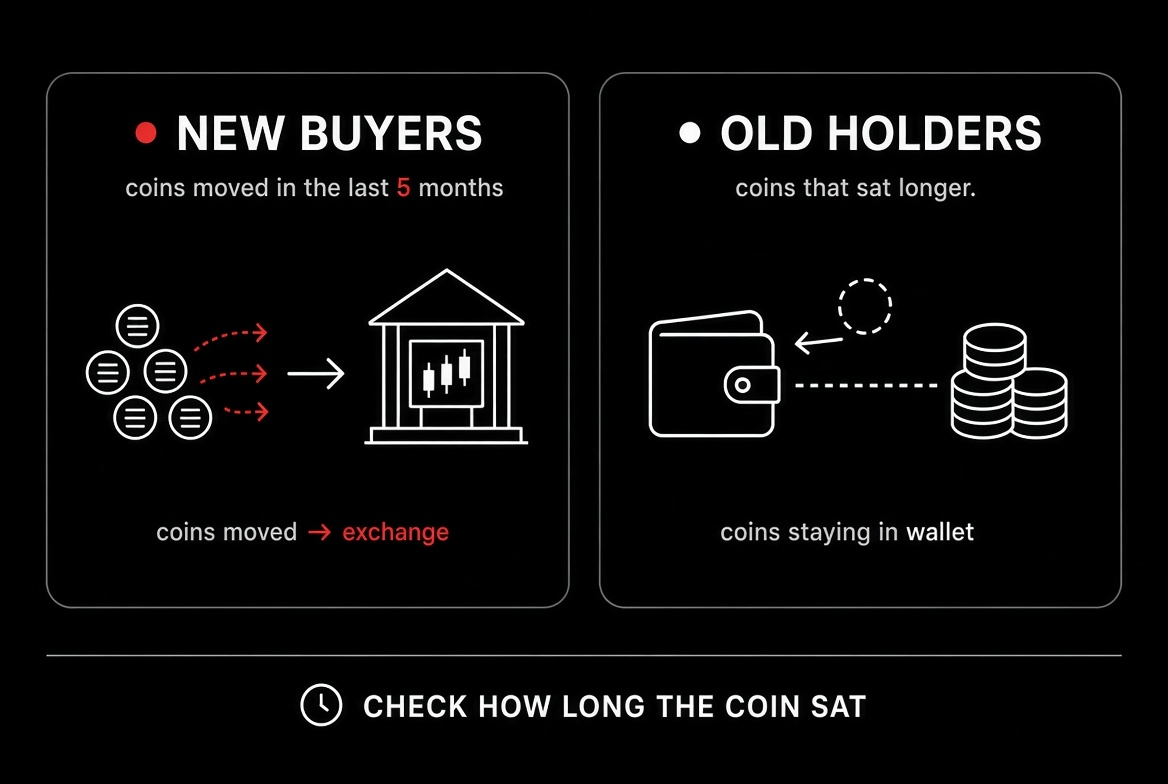
Coins moved in the last ~5 months are generally considered short-term holder supply. Coins held longer fall into the long-term holder category.
Here’s why that matters.
New buyers are more likely to react to a dip or take profit after a quick move.
Old holders have already sat through multiple market cycles. When they start moving coins in size, it’s worth paying attention.
The interesting part?
In an early-October reading, short-term holders sent around 45,600 BTC to exchanges in one day, with a large share reportedly moving at a loss. Long-term holders showed much less exchange activity.
That points more toward newer holders reacting to price than a broad exit by older holders.
But remember: sending $BTC to an exchange doesn’t automatically mean selling. It tells us where the coins moved, not what the owner did next.
Your turn. 👇
Open Arkham, find a BTC transfer to an exchange, and check how long those coins had been sitting still.
Were they relatively young coins or old coins?
Comment NEW BUYER or OLD HOLDER. Let’s see what you find. 😎
Tomorrow: the price new buyers paid — and why it can become an important level to watch.
88 days left. New here? Start today. You can catch up. 👀
$CFX $ACT