$LUNC UNDER THE HOOD
STAGE 08 THE TRANSACTION: WHAT HAPPENS WHEN LUNC MOVES?
As we've looked at the just concluded ORACLE,
We should also note that before LUNC can participate in staking, governance, transfers or ecosystem activity, something fundamental has to happen.
A TRANSACTION MUST BE PROCESSED.
When you send LUNC from one wallet to another, it isn't simply
SEND & RECEIVE.
rather there is an entire process happening underneath.
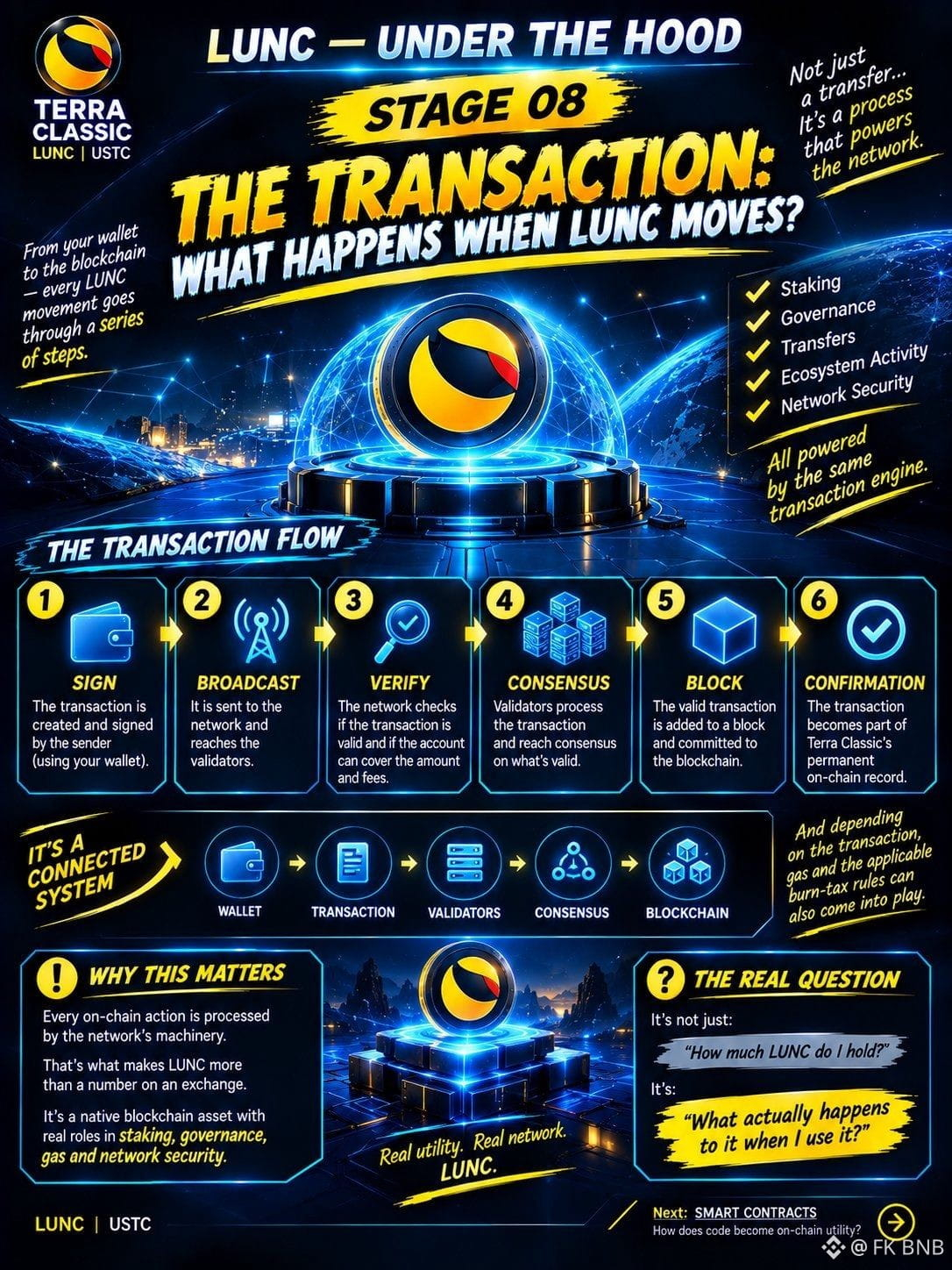
THE BASIC FLOW
SIGN, BROADCAST, VERIFY, CONSENSUS, BLOCK AND CONFIRMATION.
First, the transaction is created and signed by the sender and
then it is broadcast to the network.
The transaction is checked to determine whether it is valid and whether the account can cover the required amount and fees.
Validators then participate in processing and consensus, helping to determine which valid transactions become part of the blockchain.
Once included in a block and committed, the transaction becomes part of #Terra_Classic 's permanent on-chain record.
Now, let's remember the previous stage?
The ORACLE, which can provide on-chain price information used by certain protocol functions.
So the different components aren't isolated, they just connect.
WALLET to TRANSACTION to VALIDATORS to CONSENSUS and to BLOCKCHAIN
And depending on the transaction, additional mechanisms such as gas and the applicable burn-tax rules can also come into play.
And WHY DOES THIS MATTERS?
Every on-chain action is ultimately processed by the network's underlying machinery.
That's what makes LUNC more than a number sitting on an exchange.
It is a native blockchain asset with roles in staking, governance, gas and network security.
The important question isn't just:
How much LUNC do I hold?
But it's
What actually happens to it when I use it?
That's what we're uncovering, champs.
#LUNC #TerraClassic #USTC #crypto
$1000LUNC
STAGE 08 THE TRANSACTION: WHAT HAPPENS WHEN LUNC MOVES?
As we've looked at the just concluded ORACLE,
We should also note that before LUNC can participate in staking, governance, transfers or ecosystem activity, something fundamental has to happen.
A TRANSACTION MUST BE PROCESSED.
When you send LUNC from one wallet to another, it isn't simply
SEND & RECEIVE.
rather there is an entire process happening underneath.
THE BASIC FLOW
SIGN, BROADCAST, VERIFY, CONSENSUS, BLOCK AND CONFIRMATION.
First, the transaction is created and signed by the sender and
then it is broadcast to the network.
The transaction is checked to determine whether it is valid and whether the account can cover the required amount and fees.
Validators then participate in processing and consensus, helping to determine which valid transactions become part of the blockchain.
Once included in a block and committed, the transaction becomes part of #Terra_Classic 's permanent on-chain record.
Now, let's remember the previous stage?
The ORACLE, which can provide on-chain price information used by certain protocol functions.
So the different components aren't isolated, they just connect.
WALLET to TRANSACTION to VALIDATORS to CONSENSUS and to BLOCKCHAIN
And depending on the transaction, additional mechanisms such as gas and the applicable burn-tax rules can also come into play.
And WHY DOES THIS MATTERS?
Every on-chain action is ultimately processed by the network's underlying machinery.
That's what makes LUNC more than a number sitting on an exchange.
It is a native blockchain asset with roles in staking, governance, gas and network security.
The important question isn't just:
How much LUNC do I hold?
But it's
What actually happens to it when I use it?
That's what we're uncovering, champs.
#LUNC #TerraClassic #USTC #crypto
$1000LUNC