BREAKING NEWS: US-Iran Escalation Drives Global Market Volatility
🔴 BREAKING NEWS
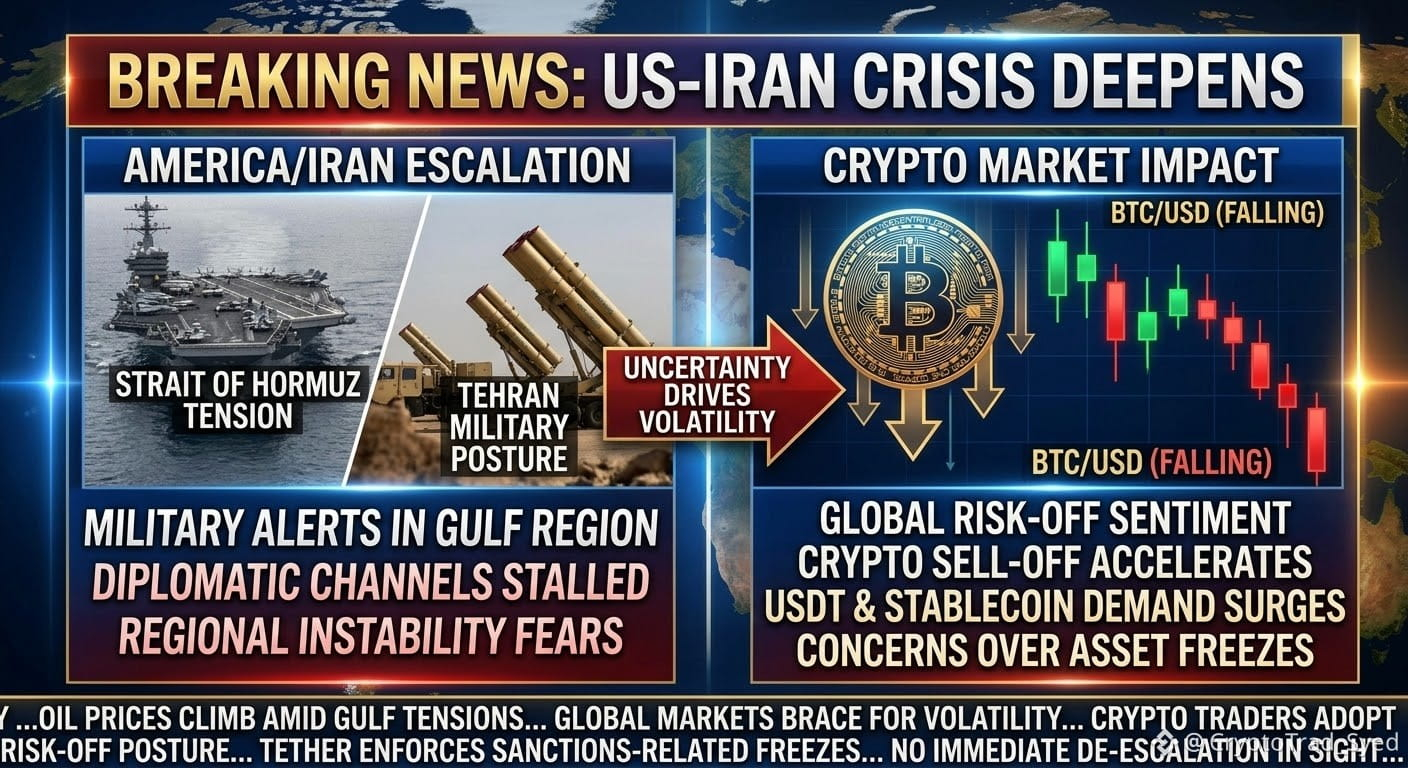
WASHINGTON / TEHRAN: Geopolitical tensions between the United States and Iran have escalated to a critical tipping point following recent military movements and strategic posture changes in the Middle East. With diplomatic channels facing severe friction and security alerts raised near key maritime routes like the Strait of Hormuz, financial markets worldwide are bracing for heightened instability.
📉 Direct Impacts on Crypto Trading
Geopolitical conflicts of this scale trigger immediate chain reactions across the cryptocurrency market:
Short-Term Crypto Sell-Off (Risk-Off Sentiment):
During initial news shocks, institutional and retail traders often adopt a "risk-off" approach. High-beta assets—including Bitcoin (BTC), Ethereum (ETH), and major altcoins—typically experience sudden liquidity drawdowns and localized price drops.
Flight to Capital Preservation (USDT / USDC Inflows):
Traders rapidly exit volatile positions into pegged stablecoins such as USDT or USDC to lock in value and await market stabilization, increasing stablecoin dominance on exchanges.
Sanctions Enforcement & On-Chain Asset Freezes:
Escalated conflict leads to intensified regulatory oversight. Key issuers like Tether and Circle frequently act on regulatory mandates to freeze wallets connected to sanctioned entities or regions, prompting heightened compliance checks across centralized platforms.
Strength in Crude Oil & US Dollar (DXY):
Spikes in oil prices fuel global inflation concerns, strengthening the US Dollar Index (DXY). A surging DXY generally exerts inverse pressure on non-sovereign risk assets like crypto.
💡 Strategic Takeaways for Traders
Avoid High Leverage: Volatility spikes often create sharp price wicks in both directions designed to liquidate over-leveraged long and short futures contracts.
Spot Market Resilience: Long-term spot position holders generally avoid panic-selling into initial market volatility, preferring to wait for confirmed support levels.
Strict Risk
🔴 BREAKING NEWS
WASHINGTON / TEHRAN: Geopolitical tensions between the United States and Iran have escalated to a critical tipping point following recent military movements and strategic posture changes in the Middle East. With diplomatic channels facing severe friction and security alerts raised near key maritime routes like the Strait of Hormuz, financial markets worldwide are bracing for heightened instability.
📉 Direct Impacts on Crypto Trading
Geopolitical conflicts of this scale trigger immediate chain reactions across the cryptocurrency market:
Short-Term Crypto Sell-Off (Risk-Off Sentiment):
During initial news shocks, institutional and retail traders often adopt a "risk-off" approach. High-beta assets—including Bitcoin (BTC), Ethereum (ETH), and major altcoins—typically experience sudden liquidity drawdowns and localized price drops.
Flight to Capital Preservation (USDT / USDC Inflows):
Traders rapidly exit volatile positions into pegged stablecoins such as USDT or USDC to lock in value and await market stabilization, increasing stablecoin dominance on exchanges.
Sanctions Enforcement & On-Chain Asset Freezes:
Escalated conflict leads to intensified regulatory oversight. Key issuers like Tether and Circle frequently act on regulatory mandates to freeze wallets connected to sanctioned entities or regions, prompting heightened compliance checks across centralized platforms.
Strength in Crude Oil & US Dollar (DXY):
Spikes in oil prices fuel global inflation concerns, strengthening the US Dollar Index (DXY). A surging DXY generally exerts inverse pressure on non-sovereign risk assets like crypto.
💡 Strategic Takeaways for Traders
Avoid High Leverage: Volatility spikes often create sharp price wicks in both directions designed to liquidate over-leveraged long and short futures contracts.
Spot Market Resilience: Long-term spot position holders generally avoid panic-selling into initial market volatility, preferring to wait for confirmed support levels.
Strict Risk