
#chainlinklaunchesccip2withenterpriseverification
Chainlink launched a major upgrade to its cross-chain infrastructure this week — and the timing isn't coincidental. It follows one of the largest bridge exploits of the year, and directly addresses the exact weakness attackers used.
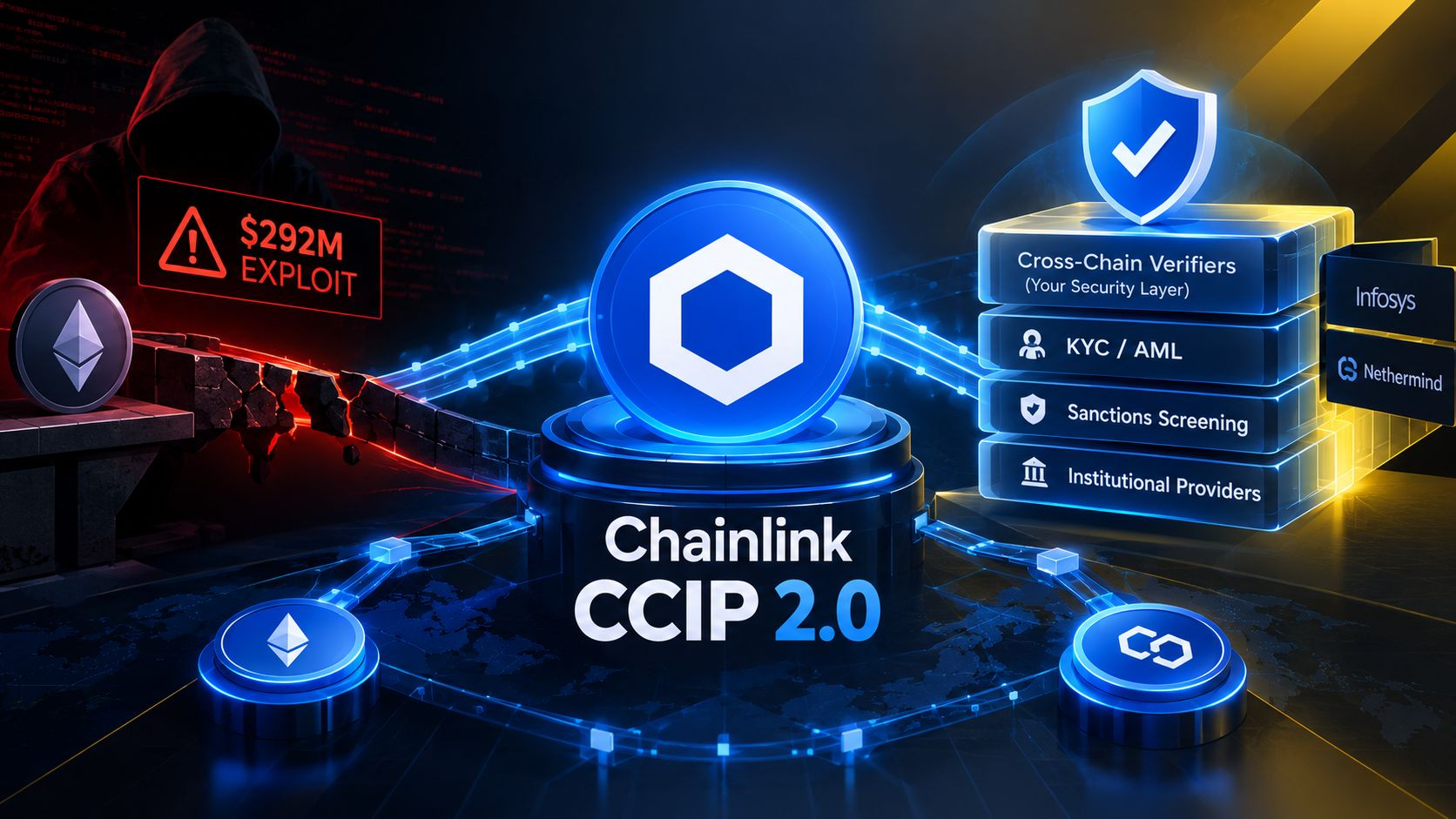
Here's what shipped: on September 28, Chainlink released CCIP 2.0, the next generation of its Cross-Chain Interoperability Protocol, which already secures more than $84 billion in total cross-chain token value. The headline feature is what Chainlink calls Cross-Chain Verifiers (CCVs) — institutions can now layer their own independent security checks on top of Chainlink's existing 16-node verification network, either running the infrastructure themselves or hiring third-party providers like Infosys or Nethermind. It also adds built-in compliance tooling for KYC, AML, and sanctions screening. The upgrade arrives roughly five months after attackers, reportedly linked to North Korea's Lazarus Group, exploited a single validator relied on by the Kelp DAO cross-chain bridge, draining approximately $292 million in rsETH — Kelp has since said it will migrate to Chainlink's infrastructure. Existing Chainlink users were automatically migrated to the new version, and platforms including Aave and Maple are already using pieces of the upgrade, though Chainlink hasn't disclosed which institutions are adopting the new verification layer specifically. One structural change worth noting: Chainlink's previously independent risk-management network no longer functions as a separate default check — that kind of independent verification is now optional rather than built in by default.
Why does this matter? Bridge exploits remain one of crypto's most costly attack vectors, largely because many cross-chain systems have historically relied on a single point of verification — exactly the weakness the Kelp DAO hack exposed. Letting institutions add their own independent verification layers, rather than depending solely on one network's default security, is a meaningful architectural shift toward defense-in-depth. At the same time, the removal of a previously mandatory independent check as a default layer is a trade-off worth watching — added flexibility can mean added security, but only if institutions actually choose to implement it.
Whether this modular approach measurably reduces future bridge exploits, or whether adoption of the optional verifiers ends up inconsistent across the ecosystem, will likely only become clear as real-world usage data comes in.
Does giving institutions the option to add their own security layers make cross-chain infrastructure genuinely safer, or does it just shift responsibility onto whoever chooses not to use it? 🤔
#Chainlink #CCIP #CrossChain #CryptoSecurity