#BitgetCEOConfirms$388MStolenInHack
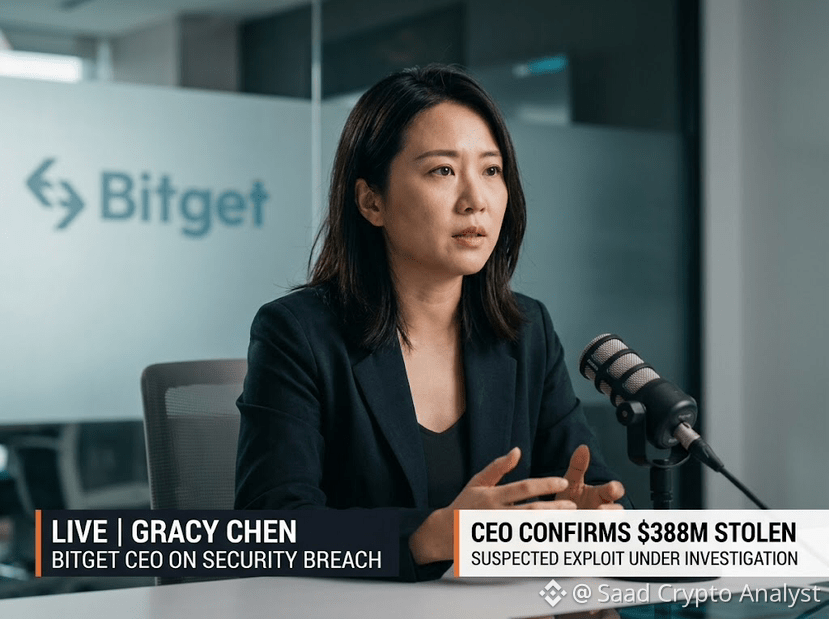
The crypto space has experienced one of its largest security breaches of the year. Bitget CEO Gracy Chen confirmed that an estimated $387.5 million was drained following an exploit targeting critical backend systems.
Here is a comprehensive breakdown of what happened, current mitigation steps, and what traders need to do next:
1. How the Breach Occurred
System Compromise: Attackers compromised a third-party security product and critical backend wallet infrastructure.
Spoofed Approvals: The hackers forged transaction data, effectively tricking Bitget's own authorization systems into validating the unauthorized outbound transfers.
Affected Chains: Losses spanned multiple blockchains, including Ethereum (ETH), XRP Ledger, TRON, Zcash, BNB Chain, and Avalanche.
Suspected Attribution: Early investigations link the exploit mechanics to sophisticated state-sponsored threat groups, such as North Korea's Lazarus/TraderTraitor network.
2. Current Status & Protection Measures
User Protection Fund: Bitget has clarified that its $400M+ Protection Fund is fully equipped to cover the affected assets, ensuring user balances remain backed.
Staggered Withdrawal Resumption: Suspended services are gradually coming back online after rigorous security audits. Bitcoin network withdrawals have begun reopening, with Ethereum and USDT expected to follow shortly.
Forensic Investigation: Leading Web3 security teams, including Mandiant and SlowMist, are working alongside law enforcement to trace and freeze stolen funds on-chain.
3. Key Action Plan for Crypto Holders
Verify Token Approvals: Use tools like Revoke.cash to review and revoke unnecessary smart contract permissions on your personal EVM wallets.
Beware of Phishing Scams: Major exchange incidents trigger influxes of fake support accounts offering "refunds" or "withdrawal assistance." Rely exclusively on official Bitget channels.
Upgrade Account Security: Ensure 2FA (hardware keys like YubiKey or authenticator apps) is enabled on all exchange accounts and avoid using SMS
The crypto space has experienced one of its largest security breaches of the year. Bitget CEO Gracy Chen confirmed that an estimated $387.5 million was drained following an exploit targeting critical backend systems.
Here is a comprehensive breakdown of what happened, current mitigation steps, and what traders need to do next:
1. How the Breach Occurred
System Compromise: Attackers compromised a third-party security product and critical backend wallet infrastructure.
Spoofed Approvals: The hackers forged transaction data, effectively tricking Bitget's own authorization systems into validating the unauthorized outbound transfers.
Affected Chains: Losses spanned multiple blockchains, including Ethereum (ETH), XRP Ledger, TRON, Zcash, BNB Chain, and Avalanche.
Suspected Attribution: Early investigations link the exploit mechanics to sophisticated state-sponsored threat groups, such as North Korea's Lazarus/TraderTraitor network.
2. Current Status & Protection Measures
User Protection Fund: Bitget has clarified that its $400M+ Protection Fund is fully equipped to cover the affected assets, ensuring user balances remain backed.
Staggered Withdrawal Resumption: Suspended services are gradually coming back online after rigorous security audits. Bitcoin network withdrawals have begun reopening, with Ethereum and USDT expected to follow shortly.
Forensic Investigation: Leading Web3 security teams, including Mandiant and SlowMist, are working alongside law enforcement to trace and freeze stolen funds on-chain.
3. Key Action Plan for Crypto Holders
Verify Token Approvals: Use tools like Revoke.cash to review and revoke unnecessary smart contract permissions on your personal EVM wallets.
Beware of Phishing Scams: Major exchange incidents trigger influxes of fake support accounts offering "refunds" or "withdrawal assistance." Rely exclusively on official Bitget channels.
Upgrade Account Security: Ensure 2FA (hardware keys like YubiKey or authenticator apps) is enabled on all exchange accounts and avoid using SMS