

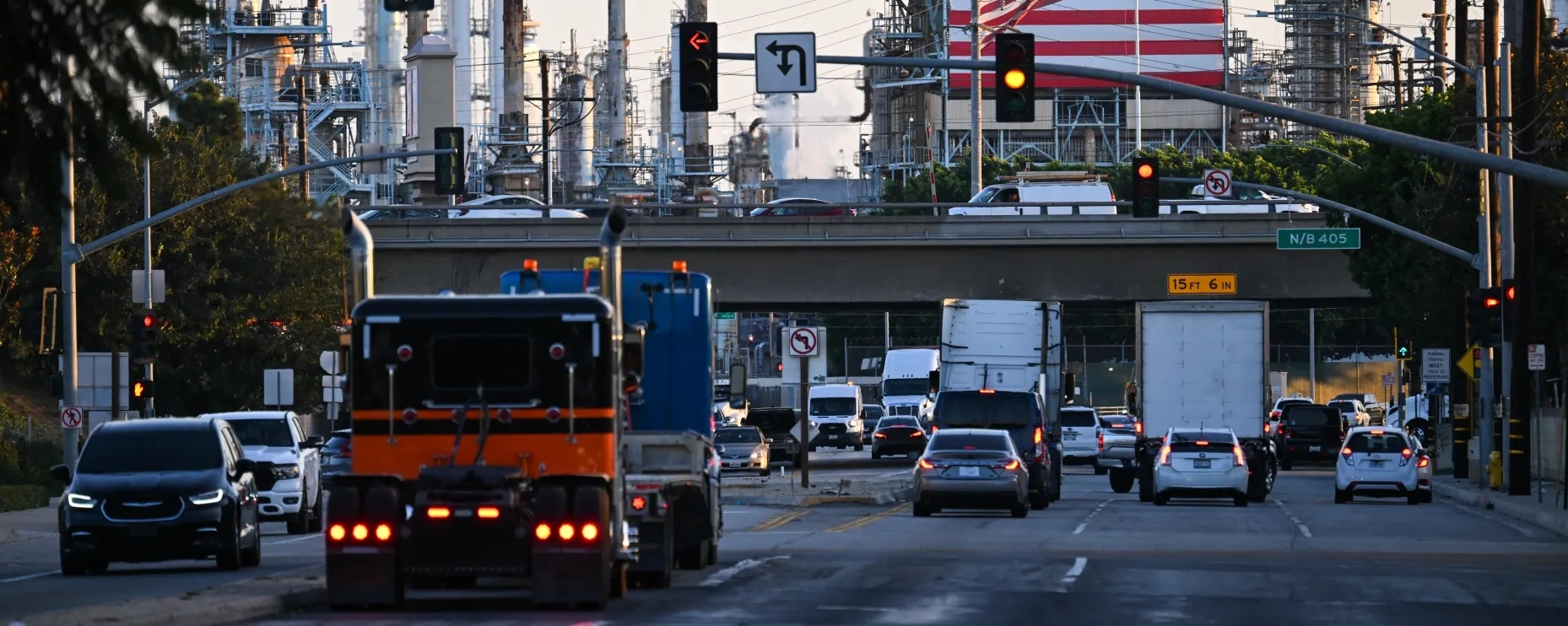

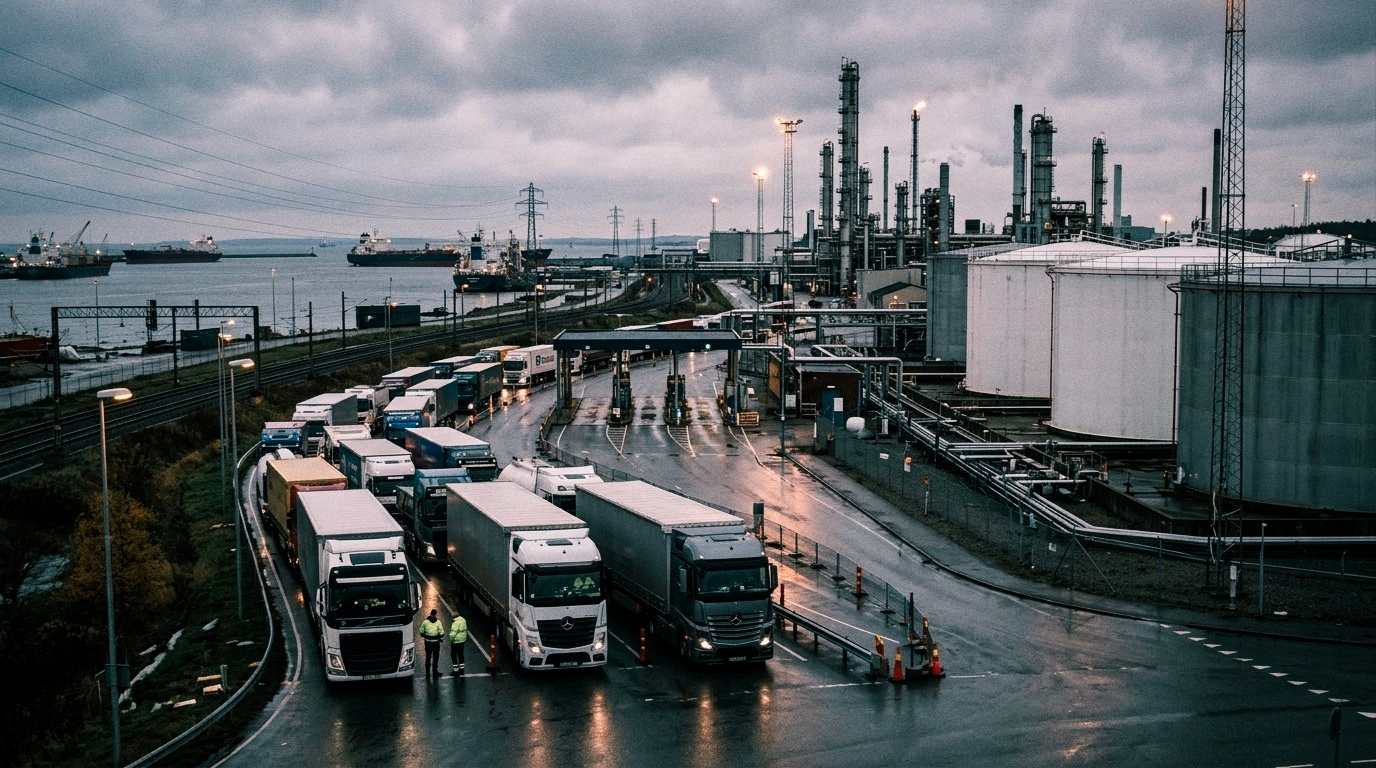
Donald Trump says the White House is “very seriously” considering restricting U.S. diesel exports as fuel prices surge ahead of the November midterm elections.
And this is where the situation gets dangerous.
U.S. diesel has already climbed to around $6.47 per gallon nationally, while the record high reached $6.5276 on September 22. That is not a minor price move. Diesel is the fuel that moves trucks, farms, ships, construction equipment and industrial machinery.
Now Washington is considering restricting the flow of that fuel into the global market.
HERE’S THE BRUTAL PART:
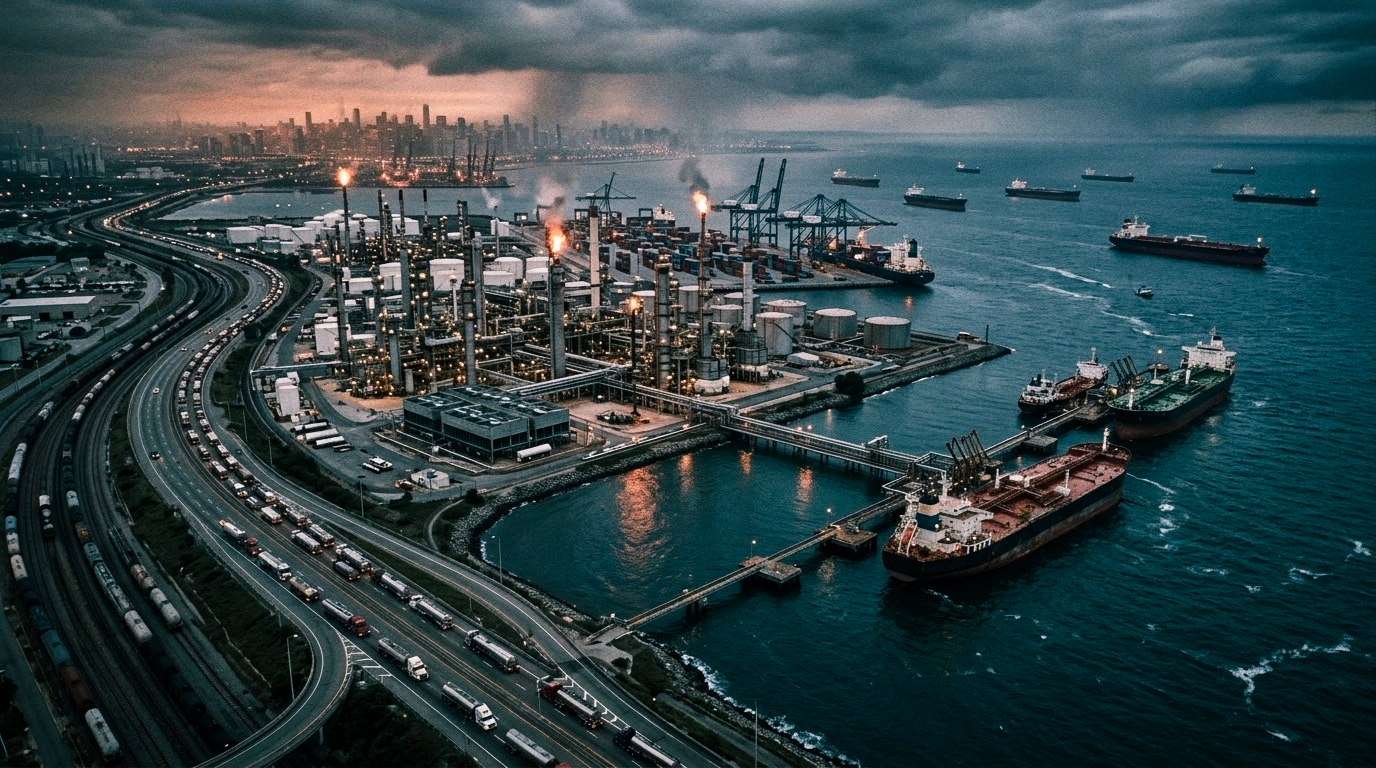
The United States is one of the world’s largest diesel exporters. API estimates that U.S. refiners supply roughly 1.5 million barrels of diesel per day into global seaborne trade — around 20% of the total.
Remove that supply and you don’t magically create more fuel.
You create a tighter global market.
And diesel is already under enormous pressure.
Refinery disruptions and geopolitical conflicts have hammered supply across multiple regions. Middle Eastern refinery damage and disruption around the Strait of Hormuz have reduced fuel flows. Ukrainian attacks have taken Russian refining capacity offline. China has also restricted diesel exports to protect domestic supply. API estimates the combined disruption has reduced global crude-processing capacity by roughly 5 million barrels per day, almost 10% of global supply.
Europe is especially exposed.
The U.S. has reportedly supplied roughly half of Europe’s diesel imports in recent months. Cutting American exports therefore risks forcing European buyers into an already-constrained international market.
And then comes the part Washington cannot simply ignore:
U.S. refineries do not produce diesel in isolation.
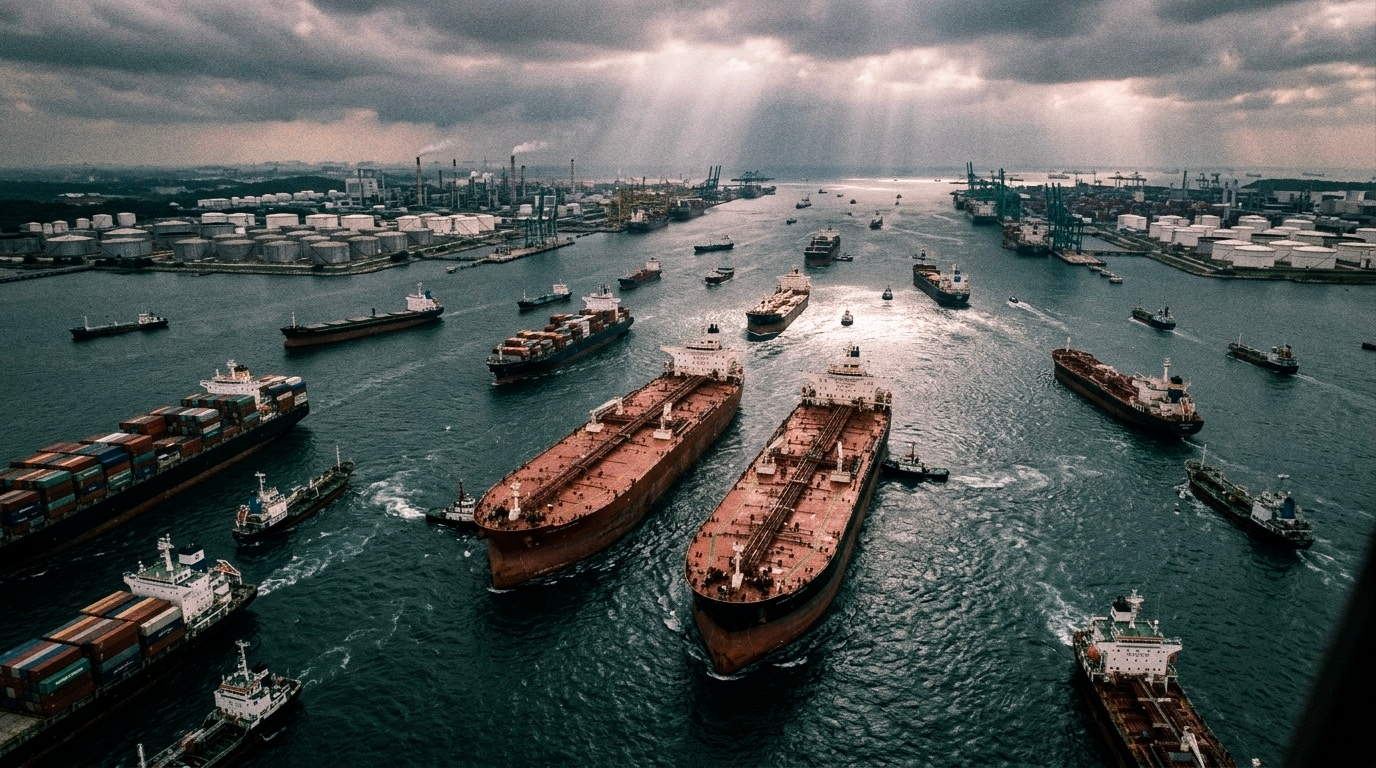
A refinery processes crude into a mix of gasoline, diesel, jet fuel and other products. If Gulf Coast refineries lose access to export markets and diesel inventories begin piling up, refiners can respond by cutting crude runs.
Cut diesel production—
and you can also reduce the production of gasoline and jet fuel.
That is the potential boomerang.
API argues that the Gulf Coast produces more diesel than the region itself consumes, making exports an important outlet that allows refineries to keep operating at high rates. Restricting exports could therefore tighten domestic supplies rather than permanently solving the price problem.
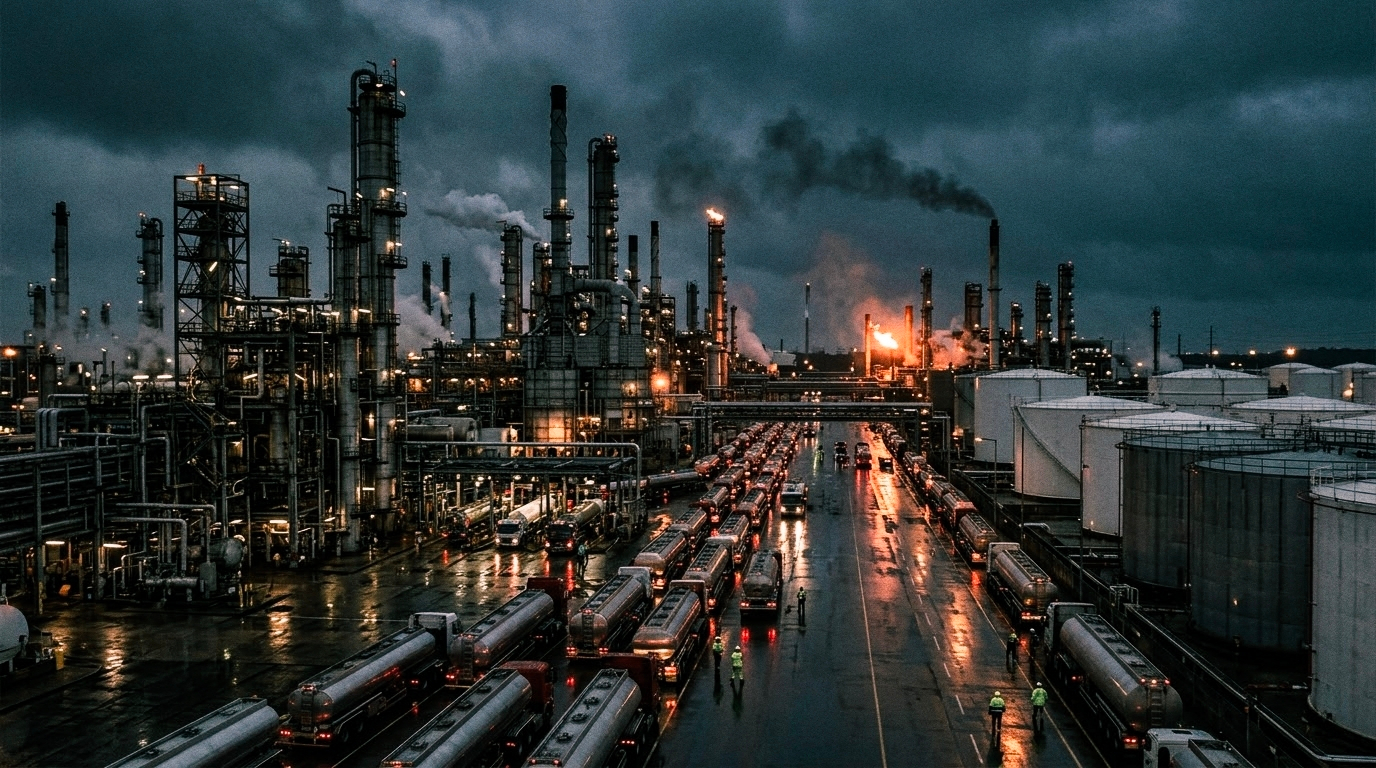
So the chain reaction could look like this:
GLOBAL SUPPLY SHOCK → DIESEL PRICES SURGE → U.S. EXPORT RESTRICTION → GLOBAL SUPPLY TIGHTENS FURTHER → EUROPE PAYS MORE → REFINERY ECONOMICS CHANGE → U.S. REFINERY RUNS FALL → LESS DIESEL + LESS GASOLINE + LESS JET FUEL.
That is why this is bigger than the price of fuel at an American gas station.
Diesel is embedded in the cost of almost everything.
Food. Freight. Shipping. Agriculture. Construction. Manufacturing. Logistics.
When diesel becomes scarce or expensive, the shock travels through the entire supply chain.
And the geopolitical situation makes the timing even more dangerous.
Russia. Ukraine. Iran. The Middle East. Hormuz.
Every disrupted refinery, shipping route and export flow reduces the system’s ability to absorb another shock.
The administration has discussed restrictions rather than necessarily a complete ban, while reports have described a possible 90-day export restriction. But as of now, the exact measure remains uncertain.
That uncertainty itself is becoming part of the market.
Because traders cannot simply ask:
“How much diesel exists?”
They have to ask:
**“Where is it?”
“Who can export it?”
“Which refinery is running?”
“Which shipping route is open?”
“And what will Washington ban next?”**
That is how a fuel shortage turns into a global pricing crisis.
The world does not have a diesel problem because there is literally zero oil left.
It has a refining, logistics, geopolitical and supply-distribution problem.
And when governments try to solve a global shortage by blocking trade, the market doesn’t disappear.
THE SHORTAGE JUST MOVES.
That is the real danger.
**This isn’t just about diesel.
It’s about how fragile the global energy system becomes when several supply shocks hit at the same time.**