

AbdullRauf
8.2k Публикации

AbdullRauf
 Square Verified
Отправить жалобу
Заблокировать пользователя
Hi Guys i am Spot trader specialist in Intra Daytrade, DCA and Swing trade. Follow me tostay updated about market and Binance reward Campaigns.
Открытая сделка

Владелец DUSK
Трейдер с регулярными сделками
1.4 г
1.1K+ подписок(и/а)
33.7K+ подписчиков(а)
29.6K+ понравилось
Посты
Портфель
Все
Цитирования
Видео
Активно
PINNED
·
--
YOU’RE AMAZING! Here’s a Thank You Giveaway. ✨
Body:
A massive shoutout to our Square supporters! We see you, we appreciate you, and to say thanks, we're giving away 2000 FREE GIFTS! 🎉
Join the fun & enter to win:
✅ Follow us
✅ Share this post
✅ Comment anything below! 666
Winners are chosen randomly. Let's go! 🚀
YOU’RE AMAZING! Here’s a Thank You Giveaway. ✨
Body:
A massive shoutout to our Square supporters! We see you, we appreciate you, and to say thanks, we're giving away 2000 FREE GIFTS! 🎉
Join the fun & enter to win:
✅ Follow us
✅ Share this post
✅ Comment anything below! 666
Winners are chosen randomly. Let's go! 🚀
Body:
A massive shoutout to our Square supporters! We see you, we appreciate you, and to say thanks, we're giving away 2000 FREE GIFTS! 🎉
Join the fun & enter to win:
✅ Follow us
✅ Share this post
✅ Comment anything below! 666
Winners are chosen randomly. Let's go! 🚀

1.3k
51
75
1.3k
·
--
CX
CX

CX反买必胜
·
--
$ZEC 今晚,以足球为媒,以绿茵为桥,以志愿之心为名。愿永州队在主场不负“永冲锋”之名,踢出永州人的拼劲与血性,赛出水平、赛出风格。欢迎衡阳队来到永州。赛场上全力以赴、公平竞技,赛场下依然是守望相助的好邻居、好朋友、好伙伴。胜负之外,彼此成就、越走越亲,才是湘南兄弟最深的情谊。志愿红与永州蓝交相辉映,热情与友谊在绿茵场共同绽放。今夜,永州蓝与衡阳红,在潇湘大地同频共振。永冲锋,向前冲!衡阳兄弟,欢迎来永州!


1
249
·
--
king
king

king Gulfam
·
--
#Binancefutuuretrading
@CXMT_@AAVE_@龙虾/USDT
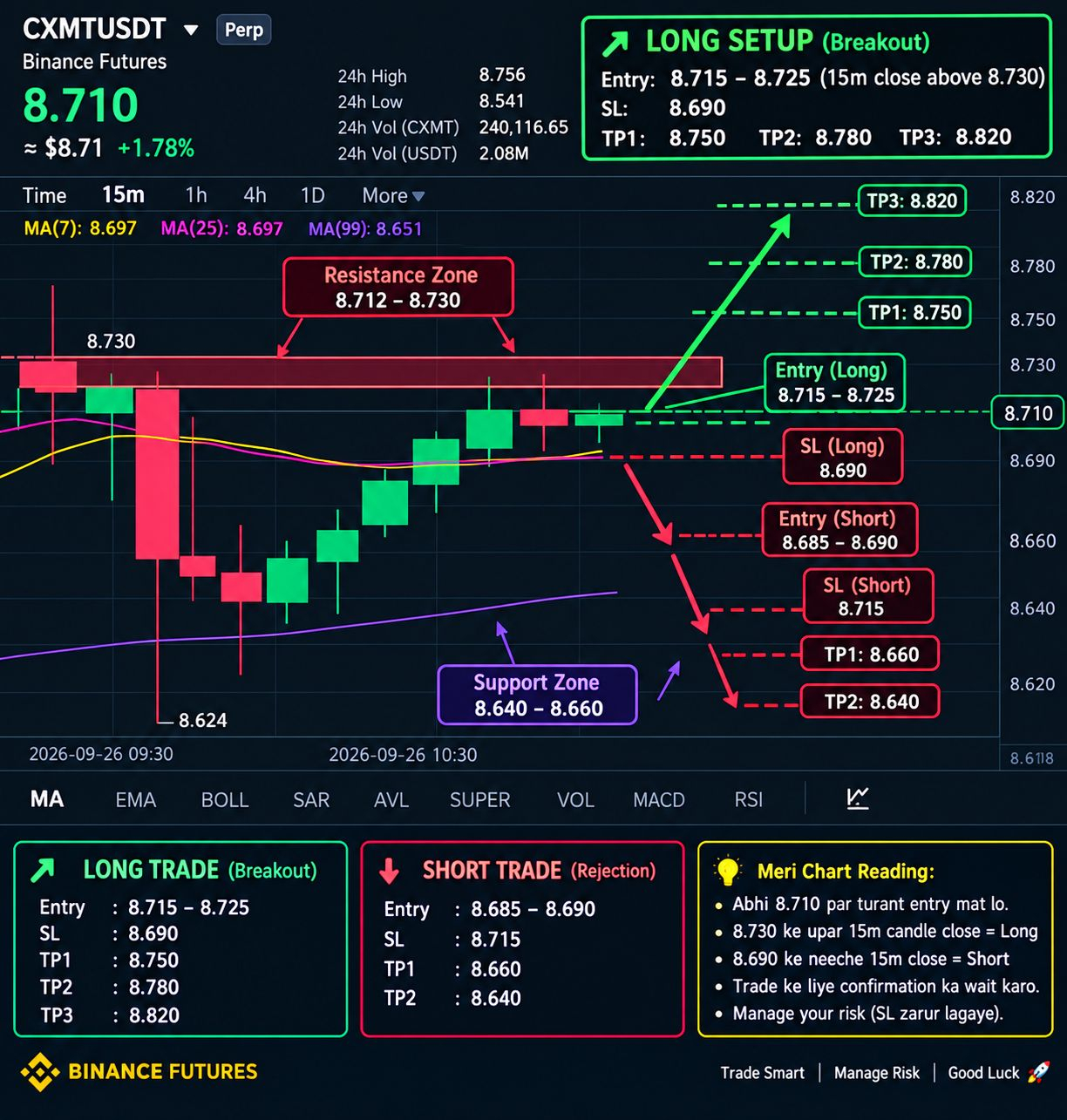
$CXMT
📈 LONG setup — confirmation ke baad
Entry: 8.715–8.725 ke upar 15m candle close
SL: 8.690
TP1: 8.750
TP2: 8.780
TP3: 8.820
📉 SHORT setup — agar resistance reject ho
Agar 8.712–8.730 se strong rejection aaye aur price 8.690 ke neeche 15m close kare:
Entry: 8.685–8.690
SL: 8.715
TP1: 8.660
TP2: 8.640
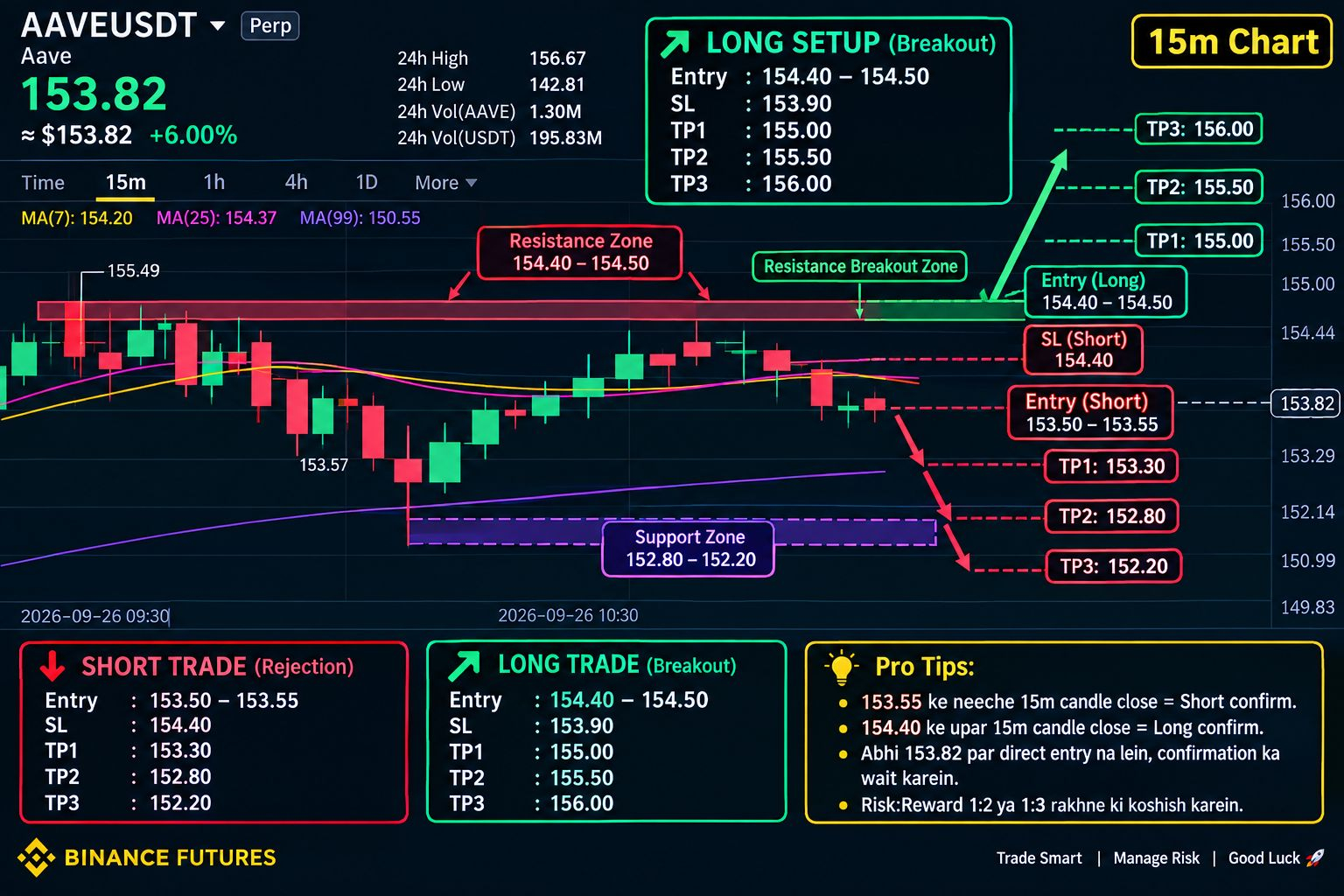
$AAVE
📉 SHORT setup
153.55 ke neeche 15m candle close mile to:
Entry: 153.50–153.55
SL: 154.40
TP1: 153.30
TP2: 152.80
TP3: 152.20
📈 LONG setup
Long ke liye pehle 154.40 ke upar 15m candle close ka confirmation:
Entry: 154.40–154.50
SL: 153.90
TP1: 155.00
TP2: 155.50
TP3: 156.00
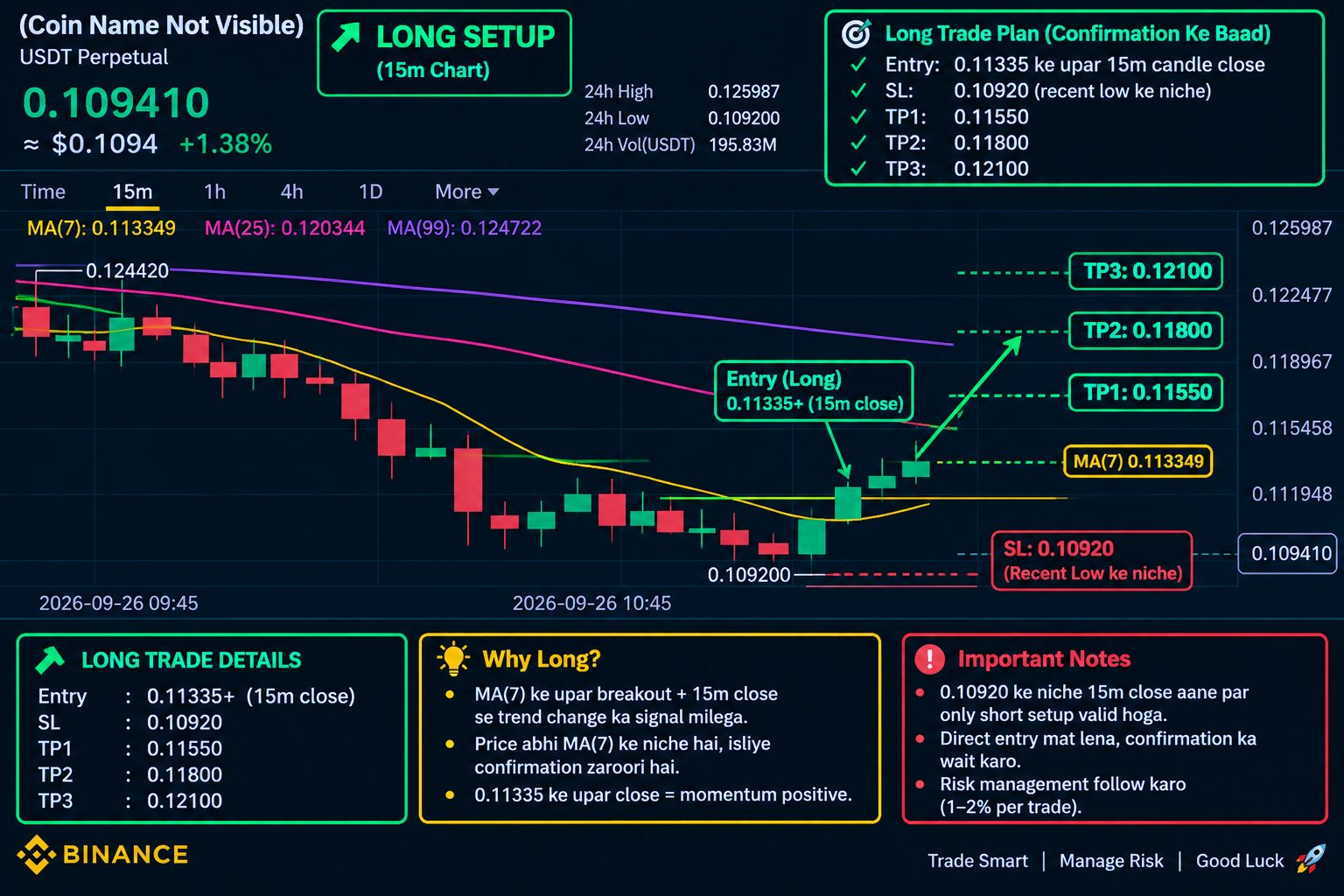
$龙虾
📈 LONG SETUP — 15M Chart
Current Price: 0.109410
Long Entry: 0.11335 ke upar 15-minute candle close hone ke baad
Stop Loss (SL): 0.10920
TP1: 0.11550
TP2: 0.11800
TP3: 0.12100
📉 SHORT setup — confirmation ke baad
0.10920 ke neeche 15m candle close mile to:
Entry: 0.1090–0.1092
SL: 0.1120
TP1: 0.1070
TP2: 0.1050
TP3: 0.1025
👉🏻 YOU CAN TRY IT'S 🤞🏻
@CXMT_@AAVE_@龙虾/USDT
$CXMT
📈 LONG setup — confirmation ke baad
Entry: 8.715–8.725 ke upar 15m candle close
SL: 8.690
TP1: 8.750
TP2: 8.780
TP3: 8.820
📉 SHORT setup — agar resistance reject ho
Agar 8.712–8.730 se strong rejection aaye aur price 8.690 ke neeche 15m close kare:
Entry: 8.685–8.690
SL: 8.715
TP1: 8.660
TP2: 8.640
$AAVE
📉 SHORT setup
153.55 ke neeche 15m candle close mile to:
Entry: 153.50–153.55
SL: 154.40
TP1: 153.30
TP2: 152.80
TP3: 152.20
📈 LONG setup
Long ke liye pehle 154.40 ke upar 15m candle close ka confirmation:
Entry: 154.40–154.50
SL: 153.90
TP1: 155.00
TP2: 155.50
TP3: 156.00
$龙虾
📈 LONG SETUP — 15M Chart
Current Price: 0.109410
Long Entry: 0.11335 ke upar 15-minute candle close hone ke baad
Stop Loss (SL): 0.10920
TP1: 0.11550
TP2: 0.11800
TP3: 0.12100
📉 SHORT setup — confirmation ke baad
0.10920 ke neeche 15m candle close mile to:
Entry: 0.1090–0.1092
SL: 0.1120
TP1: 0.1070
TP2: 0.1050
TP3: 0.1025
👉🏻 YOU CAN TRY IT'S 🤞🏻
95
·
--
oyster
oyster

生蚝哥Oyster
·
--
中美元首会晤落幕,加密市场会怎么走?
刚刚结束的中美两国领导人会晤,整体气氛友好,达成了保持密切沟通、延长贸易休战、加强AI对话等共识,但没有重大突破性政策落地。对加密货币来说,影响主要是间接的“宏观情绪面”。
短期影响:风险偏好回暖,但别太乐观
- 利好风险资产:贸易休战延长 + 地缘紧张缓和,市场对全球不确定性的担忧下降。比特币作为典型风险资产,容易受益于这种“避险情绪降温”。会晤前后BTC已站稳高位区间,机构资金回流迹象明显。
- 波动可能加大:会晤没有解决核心矛盾(关税细节、科技限制等),任何后续声明或意外消息都可能引发短线震荡。历史经验表明,中美重大会晤后,加密市场常先冲高再回落整理。
中长期看点:AI与宏观联动更关键
会晤重点谈了人工智能合作与风险管控。特朗普政府此前已明确押注AI + Crypto,美国监管环境持续向好(清晰化立法、支持创新)。如果中美在AI领域从对抗转向有限合作,可能带来:
- 全球科技供应链更稳定 → 矿机、芯片相关成本压力减轻
- 机构对数字资产的配置信心增强
- 整体流动性环境改善,利好BTC、ETH等主流币
但也要注意:中美在技术主导权上的竞争不会消失,监管差异仍在。中国对加密的态度依然谨慎,美国则越来越友好,这种“一冷一热”格局短期内难改。
一句话总结:
这次会晤给加密市场送来了一剂“稳定剂”,而非强心针。短线看情绪面偏多,中线仍取决于美联储政策、全球流动性,以及中美经贸实质进展。
币圈永远不缺叙事,但真正驱动行情的还是资金与宏观。谨慎乐观,控制仓位,别把政治会晤当成必涨信号。
#中美 #BTC
刚刚结束的中美两国领导人会晤,整体气氛友好,达成了保持密切沟通、延长贸易休战、加强AI对话等共识,但没有重大突破性政策落地。对加密货币来说,影响主要是间接的“宏观情绪面”。
短期影响:风险偏好回暖,但别太乐观
- 利好风险资产:贸易休战延长 + 地缘紧张缓和,市场对全球不确定性的担忧下降。比特币作为典型风险资产,容易受益于这种“避险情绪降温”。会晤前后BTC已站稳高位区间,机构资金回流迹象明显。
- 波动可能加大:会晤没有解决核心矛盾(关税细节、科技限制等),任何后续声明或意外消息都可能引发短线震荡。历史经验表明,中美重大会晤后,加密市场常先冲高再回落整理。
中长期看点:AI与宏观联动更关键
会晤重点谈了人工智能合作与风险管控。特朗普政府此前已明确押注AI + Crypto,美国监管环境持续向好(清晰化立法、支持创新)。如果中美在AI领域从对抗转向有限合作,可能带来:
- 全球科技供应链更稳定 → 矿机、芯片相关成本压力减轻
- 机构对数字资产的配置信心增强
- 整体流动性环境改善,利好BTC、ETH等主流币
但也要注意:中美在技术主导权上的竞争不会消失,监管差异仍在。中国对加密的态度依然谨慎,美国则越来越友好,这种“一冷一热”格局短期内难改。
一句话总结:
这次会晤给加密市场送来了一剂“稳定剂”,而非强心针。短线看情绪面偏多,中线仍取决于美联储政策、全球流动性,以及中美经贸实质进展。
币圈永远不缺叙事,但真正驱动行情的还是资金与宏观。谨慎乐观,控制仓位,别把政治会晤当成必涨信号。
#中美 #BTC

46



·
--
go
go

光明社区-阿波罗
·
--
接下来,遇到回调就果断买进
票价越来越高
昨天的票已登不上今天的客船
市场不会等人,机会稍纵即逝
你的翻身筹码应该放在
LUCiC这种有价值的标的上
持仓LUCiC的那一刻
你命运的齿轮开始转动
答应我
不要在 齿轮开始转动前
你的链子就断完了~
票价越来越高
昨天的票已登不上今天的客船
市场不会等人,机会稍纵即逝
你的翻身筹码应该放在
LUCiC这种有价值的标的上
持仓LUCiC的那一刻
你命运的齿轮开始转动
答应我
不要在 齿轮开始转动前
你的链子就断完了~

107
·
--
go
go

Bilverse
·
--
🚀 $ETH GIVEAWAY IS LIVE! 💎🔥
Ethereum lovers, this one’s for YOU. 👀💜
We’re celebrating the #Bilverse community with an ETH giveaway! 🎁⚡
Want to join? It takes seconds:
1️⃣ Follow @Bilverse
2️⃣ Comment “ETH” below 👇
3️⃣ Leave a ❤️ for this post.
🔥 Bring your squad.
💎 Join the conversation.
🚀 Show some love to our amazing community.
Think you’ve got what it takes to claim the reward? 👀
👇 Comment “ETH” and tag your crypto buddy!
#ETH #CryptoCommunity
Ethereum lovers, this one’s for YOU. 👀💜
We’re celebrating the #Bilverse community with an ETH giveaway! 🎁⚡
Want to join? It takes seconds:
1️⃣ Follow @Bilverse
2️⃣ Comment “ETH” below 👇
3️⃣ Leave a ❤️ for this post.
🔥 Bring your squad.
💎 Join the conversation.
🚀 Show some love to our amazing community.
Think you’ve got what it takes to claim the reward? 👀
👇 Comment “ETH” and tag your crypto buddy!
#ETH #CryptoCommunity

47


·
--
zone
zone

Z O N E P R I M E
·
--
Рост🎁 ZONE PRIME BTC SURPRISE DROP! 🎁
✨ The Red Packet is full and ready to open! ✨
👇 Simple Steps to Participate 👇
❤️ Follow ZONE PRIME
🔁 Like & Share
💬 Comment “BTC”
🔔 Stay connected and active for upcoming surprise drops!
#BTC #Crypto #ZONEPRIME #redpacket #Binance $BTC
✨ The Red Packet is full and ready to open! ✨
👇 Simple Steps to Participate 👇
❤️ Follow ZONE PRIME
🔁 Like & Share
💬 Comment “BTC”
🔔 Stay connected and active for upcoming surprise drops!
#BTC #Crypto #ZONEPRIME #redpacket #Binance $BTC

1
55
·
--
Elexa
Elexa

E L E X A
·
--
🚨 IT’S LIVE 🚨
Watching is simple… but winners take action 👀
🎁 Want FREE $USDT?
💬 Comment 888
❤️ Like
🔁 Share
➕ Follow
⏳ Don’t miss your chance — spots are limited!
Drop 888 below and join now 🚀
#Crypto #USDT #Giveaway
Watching is simple… but winners take action 👀
🎁 Want FREE $USDT?
💬 Comment 888
❤️ Like
🔁 Share
➕ Follow
⏳ Don’t miss your chance — spots are limited!
Drop 888 below and join now 🚀
#Crypto #USDT #Giveaway

129
·
--
Zhou Zhou
Zhou Zhou

周周1688
·
--
中秋佳节🥮🌙
【今天过节休息一天!大家别跑空】💗
月色温柔。愿你的心情高远清澈,生活圆满无缺,岁岁平安!
#1688家族family
#币安中秋好运加码
【今天过节休息一天!大家别跑空】💗
月色温柔。愿你的心情高远清澈,生活圆满无缺,岁岁平安!
#1688家族family
#币安中秋好运加码

50
·
--
wolf
wolf

WOLF 狼
·
--
TODAY'S REWARD IS READY 🎉🎁
Thank you to the entire WOLF Pack for keeping this community active, engaged, and growing past every milestone. 🧧💯
Let's see who the quickest members of the pack are today. ⚡️
Claim your reward and keep pushing your portfolio forward.🌟
$BTC
Thank you to the entire WOLF Pack for keeping this community active, engaged, and growing past every milestone. 🧧💯
Let's see who the quickest members of the pack are today. ⚡️
Claim your reward and keep pushing your portfolio forward.🌟
$BTC

51
·
--
muzamil
muzamil

Muzamil Abbas⁷⁵ 穆扎米尔_阿巴斯
·
--
Рост$DOGE
#CONGRATULATIONSSS💕💖🥰❤️😍 on your 20K followers, brother! This is more than a number; it’s proof of hard work, real friendship, and endless support. Keep growing, keep shining, and let the journey get bigger together. 🔥👑
#Cryptology_7 🌹#MuzammilAbbas⁷⁵穆扎米拉巴斯 💞
@Cryptology_7
$BTC
$ETH
#CONGRATULATIONSSS💕💖🥰❤️😍 on your 20K followers, brother! This is more than a number; it’s proof of hard work, real friendship, and endless support. Keep growing, keep shining, and let the journey get bigger together. 🔥👑
#Cryptology_7 🌹#MuzammilAbbas⁷⁵穆扎米拉巴斯 💞
@Cryptology_7
$BTC
$ETH

83
·
--
mahi
mahi

Mahi_玛希BNB
·
--
Рост🟠 BTC Market Update — Momentum Is Building 👀📊
Bitcoin is currently trading around $84.8K, with BTC up about 1.14% over the past 24 hours. The current 24H range is roughly $82.9K–$84.9K, keeping the $83K–$85K zone in focus for traders.
The interesting part is the combination of price action + volume. If BTC continues holding higher levels with healthy volume, traders may keep watching for another momentum move.
On the other hand, crypto remains volatile, so support and volume confirmation are important before making any decision.
🔥 $BTC is moving — are you watching the next move? 👀
$BNB $ETH
#BTC #Bitcoin❗ #BTCUSDT #Crypto #CryptoMarketMoves #BitcoinUpdate #Blockchain #Web3 #BinanceSquareFamily #Binance #CryptoTrading. #BTCAnalysis #CryptoCommunity #writetoearn
Bitcoin is currently trading around $84.8K, with BTC up about 1.14% over the past 24 hours. The current 24H range is roughly $82.9K–$84.9K, keeping the $83K–$85K zone in focus for traders.
The interesting part is the combination of price action + volume. If BTC continues holding higher levels with healthy volume, traders may keep watching for another momentum move.
On the other hand, crypto remains volatile, so support and volume confirmation are important before making any decision.
🔥 $BTC is moving — are you watching the next move? 👀
$BNB $ETH
#BTC #Bitcoin❗ #BTCUSDT #Crypto #CryptoMarketMoves #BitcoinUpdate #Blockchain #Web3 #BinanceSquareFamily #Binance #CryptoTrading. #BTCAnalysis #CryptoCommunity #writetoearn

35
·
--
go
go
AbdullRauf
·
--
YOU’RE AMAZING! Here’s a Thank You Giveaway. ✨
Body:
A massive shoutout to our Square supporters! We see you, we appreciate you, and to say thanks, we're giving away 2000 FREE GIFTS! 🎉
Join the fun & enter to win:
✅ Follow us
✅ Share this post
✅ Comment anything below! 666
Winners are chosen randomly. Let's go! 🚀
Body:
A massive shoutout to our Square supporters! We see you, we appreciate you, and to say thanks, we're giving away 2000 FREE GIFTS! 🎉
Join the fun & enter to win:
✅ Follow us
✅ Share this post
✅ Comment anything below! 666
Winners are chosen randomly. Let's go! 🚀

166
·
--

Статья
BCH’s 20% Jump Puts the CME Futures Catalyst to WorkMid-caps do not get this kind of headline often. Bitcoin Cash advanced more than 20% after CME Group confirmed plans for cash-settled BCH futures, with a target around October 19 subject to regulatory review. UNI was included in the same expansion. Volume expanded sharply. Open interest rose with the move. Fear & Greed sits near 71, which helps explain why the market was willing to pay immediately for the news.
The announcement reaction is clear. The harder question for pro traders is whether a CME listing can change BCH’s liquidity profile beyond the first impulse, or whether this remains a classic event spike that fades once the date is fully priced.
Why a CME Listing Moves the Tape
CME products matter because they sit inside the institutional stack. Cash-settled futures do not require the same custody mechanics as physically delivered markets, but they still open a regulated venue for hedging, expression, and basis strategies. For assets that have lived mostly on crypto-native exchanges, that is a meaningful change in access.
BCH has long occupied an awkward middle ground: large enough to be familiar, yet less central than BTC or ETH in institutional product design. A dedicated CME contract pushes it closer to the mainstream derivatives complex. That can attract systematic desks, relative-value traders, and hedgers who would not touch a thinner altbook. It can also create a short window where speculative positioning runs ahead of actual institutional participation. Both forces can trade in the same week.
Technical Breakout and Leveraged Positioning
The price response came with the right surface evidence for a real catalyst: a sharp breakout, elevated volume, and expanding open interest. That combination says new risk entered the market rather than pure short covering alone. Elevated funding alongside rising OI is the tactical warning. It shows leveraged longs are paying to hold exposure after a vertical move. That can be sustainable if spot demand remains strong into the listing window. It becomes fragile if price stalls and funding stays rich.
Liquidity conditions around the breakout zone now matter more than the announcement language. If BCH can hold above the post-news range through ordinary two-way flow, the market is treating the listing as a regime shift. If the breakout level fails while funding remains elevated, the move starts to look like an event premium rather than a durable re-rating. Pro traders should define that distinction early rather than negotiating with it after the fact.
Flows, Reserves, and What Sustained Demand Would Look Like
Announcement rallies are easy to spot and hard to trust without flow confirmation. Exchange reserves and large-wallet behavior are the practical filters. Declining exchange balances into strength would support the case that longer-horizon holders are absorbing supply. Rising reserves and rapid turnover would argue that the advance is mostly speculative inventory cycling through the event.
Large-wallet activity needs the same skepticism. A few sizeable transfers can look like accumulation when they are only internal repositioning. What matters is whether net distribution pressure stays muted while open interest and volume remain elevated. If whale flow turns net toward exchanges as the October window approaches, the market will likely demand a higher risk premium for staying long. If coins stay off-exchange and futures basis develops cleanly, the listing thesis gets stronger.
Institutional Access and the Basis Opportunity
The core opportunity is structural. CME futures create a reference market that can tighten price discovery and support basis trades between exchange spot, crypto-native perpetual markets, and the listed contract once it is live. For desks that already run BTC and ETH basis strategies, a BCH contract is an incremental product, not a new asset class. That is exactly why it can matter. Incremental products get used when the operational path is already familiar.
There is also a selection effect. CME does not list everything. Inclusion signals that the venue sees enough client interest, surveillance feasibility, and market integrity to justify the contract. That signal has value. It is not the same thing as guaranteed sustained inflows. Regulatory review still sits between announcement and launch, and launch itself does not force volume. The useful process is to track whether depth, basis stability, and open interest build after the first week of trading rather than assuming the announcement is the whole story.
Risks and Practical Positioning
The main risk is timing. Markets often buy the confirmation and sell the approach to the effective date, especially when the initial reaction exceeds 20%. Positive funding after such a move raises the cost of crowded longs. Another risk is category misreading. A CME listing improves access. It does not rewrite BCH’s fundamental debate or automatically reprice every on-chain metric.
For pro traders, the cleaner framework is event-to-structure. Trade the announcement with tight risk while volume is one-sided if that fits your style, but treat continuation as conditional on held breakout levels, non-deteriorating exchange reserves, and futures OI that looks like two-way institutional interest rather than one-way leverage. Relative performance against BTC also matters. If BCH only outperforms on the headline day and then reverts to beta, the catalyst was real but temporary. If it keeps relative strength as the listing window nears, the access premium is still being valued.
Closing View
CME’s plan for cash-settled BCH futures gave a previously under-served large-cap a rare institutional catalyst, and the market responded immediately with a 20%+ advance, higher volume, and rising open interest. Fear & Greed at 71 helped the reaction travel. That does not settle the trade. It opens a decision window between speculative event premium and a genuine liquidity upgrade.
What the setup suggests is straightforward. The announcement has done its job. From here, price has to prove it can hold the new range while flow data shows more than short-term turnover. If exchange reserves stay orderly and listed futures later attract real open interest, BCH will have earned a stronger place in the institutional derivatives complex. If the bid fades into the date and leverage remains one-sided, this will look like another sharp mid-cap response to a headline that outran follow-through. The listing can still matter either way. Only the post-announcement tape will show whether traders were early to a market-structure shift or late to the reaction.
#BitcoinCash #BCH #CMEBitcoinSpotTrading #crypto #cryptocurrency
$BCH
{spot}(BCHUSDT)
BCH’s 20% Jump Puts the CME Futures Catalyst to Work
Mid-caps do not get this kind of headline often. Bitcoin Cash advanced more than 20% after CME Group confirmed plans for cash-settled BCH futures, with a target around October 19 subject to regulatory review. UNI was included in the same expansion. Volume expanded sharply. Open interest rose with the move. Fear & Greed sits near 71, which helps explain why the market was willing to pay immediately for the news.
The announcement reaction is clear. The harder question for pro traders is whether a CME listing can change BCH’s liquidity profile beyond the first impulse, or whether this remains a classic event spike that fades once the date is fully priced.
Why a CME Listing Moves the Tape
CME products matter because they sit inside the institutional stack. Cash-settled futures do not require the same custody mechanics as physically delivered markets, but they still open a regulated venue for hedging, expression, and basis strategies. For assets that have lived mostly on crypto-native exchanges, that is a meaningful change in access.
BCH has long occupied an awkward middle ground: large enough to be familiar, yet less central than BTC or ETH in institutional product design. A dedicated CME contract pushes it closer to the mainstream derivatives complex. That can attract systematic desks, relative-value traders, and hedgers who would not touch a thinner altbook. It can also create a short window where speculative positioning runs ahead of actual institutional participation. Both forces can trade in the same week.
Technical Breakout and Leveraged Positioning
The price response came with the right surface evidence for a real catalyst: a sharp breakout, elevated volume, and expanding open interest. That combination says new risk entered the market rather than pure short covering alone. Elevated funding alongside rising OI is the tactical warning. It shows leveraged longs are paying to hold exposure after a vertical move. That can be sustainable if spot demand remains strong into the listing window. It becomes fragile if price stalls and funding stays rich.
Liquidity conditions around the breakout zone now matter more than the announcement language. If BCH can hold above the post-news range through ordinary two-way flow, the market is treating the listing as a regime shift. If the breakout level fails while funding remains elevated, the move starts to look like an event premium rather than a durable re-rating. Pro traders should define that distinction early rather than negotiating with it after the fact.
Flows, Reserves, and What Sustained Demand Would Look Like
Announcement rallies are easy to spot and hard to trust without flow confirmation. Exchange reserves and large-wallet behavior are the practical filters. Declining exchange balances into strength would support the case that longer-horizon holders are absorbing supply. Rising reserves and rapid turnover would argue that the advance is mostly speculative inventory cycling through the event.
Large-wallet activity needs the same skepticism. A few sizeable transfers can look like accumulation when they are only internal repositioning. What matters is whether net distribution pressure stays muted while open interest and volume remain elevated. If whale flow turns net toward exchanges as the October window approaches, the market will likely demand a higher risk premium for staying long. If coins stay off-exchange and futures basis develops cleanly, the listing thesis gets stronger.
Institutional Access and the Basis Opportunity
The core opportunity is structural. CME futures create a reference market that can tighten price discovery and support basis trades between exchange spot, crypto-native perpetual markets, and the listed contract once it is live. For desks that already run BTC and ETH basis strategies, a BCH contract is an incremental product, not a new asset class. That is exactly why it can matter. Incremental products get used when the operational path is already familiar.
There is also a selection effect. CME does not list everything. Inclusion signals that the venue sees enough client interest, surveillance feasibility, and market integrity to justify the contract. That signal has value. It is not the same thing as guaranteed sustained inflows. Regulatory review still sits between announcement and launch, and launch itself does not force volume. The useful process is to track whether depth, basis stability, and open interest build after the first week of trading rather than assuming the announcement is the whole story.
Risks and Practical Positioning
The main risk is timing. Markets often buy the confirmation and sell the approach to the effective date, especially when the initial reaction exceeds 20%. Positive funding after such a move raises the cost of crowded longs. Another risk is category misreading. A CME listing improves access. It does not rewrite BCH’s fundamental debate or automatically reprice every on-chain metric.
For pro traders, the cleaner framework is event-to-structure. Trade the announcement with tight risk while volume is one-sided if that fits your style, but treat continuation as conditional on held breakout levels, non-deteriorating exchange reserves, and futures OI that looks like two-way institutional interest rather than one-way leverage. Relative performance against BTC also matters. If BCH only outperforms on the headline day and then reverts to beta, the catalyst was real but temporary. If it keeps relative strength as the listing window nears, the access premium is still being valued.
Closing View
CME’s plan for cash-settled BCH futures gave a previously under-served large-cap a rare institutional catalyst, and the market responded immediately with a 20%+ advance, higher volume, and rising open interest. Fear & Greed at 71 helped the reaction travel. That does not settle the trade. It opens a decision window between speculative event premium and a genuine liquidity upgrade.
What the setup suggests is straightforward. The announcement has done its job. From here, price has to prove it can hold the new range while flow data shows more than short-term turnover. If exchange reserves stay orderly and listed futures later attract real open interest, BCH will have earned a stronger place in the institutional derivatives complex. If the bid fades into the date and leverage remains one-sided, this will look like another sharp mid-cap response to a headline that outran follow-through. The listing can still matter either way. Only the post-announcement tape will show whether traders were early to a market-structure shift or late to the reaction.
#BitcoinCash #BCH #CMEBitcoinSpotTrading #crypto #cryptocurrency
$BCH
The announcement reaction is clear. The harder question for pro traders is whether a CME listing can change BCH’s liquidity profile beyond the first impulse, or whether this remains a classic event spike that fades once the date is fully priced.
Why a CME Listing Moves the Tape
CME products matter because they sit inside the institutional stack. Cash-settled futures do not require the same custody mechanics as physically delivered markets, but they still open a regulated venue for hedging, expression, and basis strategies. For assets that have lived mostly on crypto-native exchanges, that is a meaningful change in access.
BCH has long occupied an awkward middle ground: large enough to be familiar, yet less central than BTC or ETH in institutional product design. A dedicated CME contract pushes it closer to the mainstream derivatives complex. That can attract systematic desks, relative-value traders, and hedgers who would not touch a thinner altbook. It can also create a short window where speculative positioning runs ahead of actual institutional participation. Both forces can trade in the same week.
Technical Breakout and Leveraged Positioning
The price response came with the right surface evidence for a real catalyst: a sharp breakout, elevated volume, and expanding open interest. That combination says new risk entered the market rather than pure short covering alone. Elevated funding alongside rising OI is the tactical warning. It shows leveraged longs are paying to hold exposure after a vertical move. That can be sustainable if spot demand remains strong into the listing window. It becomes fragile if price stalls and funding stays rich.
Liquidity conditions around the breakout zone now matter more than the announcement language. If BCH can hold above the post-news range through ordinary two-way flow, the market is treating the listing as a regime shift. If the breakout level fails while funding remains elevated, the move starts to look like an event premium rather than a durable re-rating. Pro traders should define that distinction early rather than negotiating with it after the fact.
Flows, Reserves, and What Sustained Demand Would Look Like
Announcement rallies are easy to spot and hard to trust without flow confirmation. Exchange reserves and large-wallet behavior are the practical filters. Declining exchange balances into strength would support the case that longer-horizon holders are absorbing supply. Rising reserves and rapid turnover would argue that the advance is mostly speculative inventory cycling through the event.
Large-wallet activity needs the same skepticism. A few sizeable transfers can look like accumulation when they are only internal repositioning. What matters is whether net distribution pressure stays muted while open interest and volume remain elevated. If whale flow turns net toward exchanges as the October window approaches, the market will likely demand a higher risk premium for staying long. If coins stay off-exchange and futures basis develops cleanly, the listing thesis gets stronger.
Institutional Access and the Basis Opportunity
The core opportunity is structural. CME futures create a reference market that can tighten price discovery and support basis trades between exchange spot, crypto-native perpetual markets, and the listed contract once it is live. For desks that already run BTC and ETH basis strategies, a BCH contract is an incremental product, not a new asset class. That is exactly why it can matter. Incremental products get used when the operational path is already familiar.
There is also a selection effect. CME does not list everything. Inclusion signals that the venue sees enough client interest, surveillance feasibility, and market integrity to justify the contract. That signal has value. It is not the same thing as guaranteed sustained inflows. Regulatory review still sits between announcement and launch, and launch itself does not force volume. The useful process is to track whether depth, basis stability, and open interest build after the first week of trading rather than assuming the announcement is the whole story.
Risks and Practical Positioning
The main risk is timing. Markets often buy the confirmation and sell the approach to the effective date, especially when the initial reaction exceeds 20%. Positive funding after such a move raises the cost of crowded longs. Another risk is category misreading. A CME listing improves access. It does not rewrite BCH’s fundamental debate or automatically reprice every on-chain metric.
For pro traders, the cleaner framework is event-to-structure. Trade the announcement with tight risk while volume is one-sided if that fits your style, but treat continuation as conditional on held breakout levels, non-deteriorating exchange reserves, and futures OI that looks like two-way institutional interest rather than one-way leverage. Relative performance against BTC also matters. If BCH only outperforms on the headline day and then reverts to beta, the catalyst was real but temporary. If it keeps relative strength as the listing window nears, the access premium is still being valued.
Closing View
CME’s plan for cash-settled BCH futures gave a previously under-served large-cap a rare institutional catalyst, and the market responded immediately with a 20%+ advance, higher volume, and rising open interest. Fear & Greed at 71 helped the reaction travel. That does not settle the trade. It opens a decision window between speculative event premium and a genuine liquidity upgrade.
What the setup suggests is straightforward. The announcement has done its job. From here, price has to prove it can hold the new range while flow data shows more than short-term turnover. If exchange reserves stay orderly and listed futures later attract real open interest, BCH will have earned a stronger place in the institutional derivatives complex. If the bid fades into the date and leverage remains one-sided, this will look like another sharp mid-cap response to a headline that outran follow-through. The listing can still matter either way. Only the post-announcement tape will show whether traders were early to a market-structure shift or late to the reaction.
#BitcoinCash #BCH #CMEBitcoinSpotTrading #crypto #cryptocurrency
$BCH
1
486
·
--

Статья
Bitcoin ETFs Take the Cash. Tokenized Markets Are Building the Next Stop.Four strong sessions in a row are hard to ignore. Spot Bitcoin ETFs have absorbed roughly $2.3 billion in net inflows, while Fear & Greed sits near 71. ETF net assets have recovered toward the $111 billion area. At the same time, tokenized equities have pushed distributed value above $3 billion, with holder counts at record levels. MoonPay’s move to acquire North Capital and the continued DTCC and bank tokenization pilots add institutional texture beyond pure BTC demand.
The market is treating this as more than another inflow print. It is asking whether traditional-finance capital is still stopping at Bitcoin, or whether Bitcoin has become the on-ramp into a wider on-chain allocation stack.
Why the Combination Matters Now
ETF demand is the cleanest institutional signal in crypto. When products take billions over consecutive sessions, the bid is not just leverage recycling itself. It is capital moving through regulated channels. A greed reading around 71 supports that process without the full excess that usually marks the end of a move.
What makes this week different is the second leg of the story. Tokenized equities crossing $3 billion in distributed value is still small against global equity markets, but the direction is unambiguous. Holder growth at record levels suggests the user base is expanding, not just a handful of pilot wallets recycling the same balances. Infrastructure deals and market-structure pilots reinforce the same point: the plumbing for on-chain traditional assets is being built while Bitcoin products are still taking the bulk of the flow.
For macro traders, the practical question is rotation. Is BTC absorbing risk capital that would otherwise stay in traditional markets, or is it becoming the first allocation before investors move into tokenized funds, equities, and credit?
Layered Demand: ETFs, Perps, and Positioning
ETF net assets near $111 billion put the product complex back in a zone that commands attention from both crypto-native and traditional desks. Persistent inflows after prior volatility matter more than a single catch-up day. They suggest institutional comfort has returned enough to rebuild exposure rather than merely cover shorts.
Derivatives are participating as well. Perpetual open interest across the complex has climbed to multi-month highs, which means speculative and hedging demand is layered on top of the spot product bid. That combination can extend trends. It can also amplify reversals. Positive ETF flow with rising OI is constructive while price holds structure. The same mix becomes fragile if inflows stall and elevated leverage is left exposed.
Pro traders should separate the two books. The ETF channel is slower money with different constraints. The perpetual complex is faster and more sensitive to funding and liquidation levels. When both rise together, upside can look easy. When they diverge, the tape usually gets honest quickly.
RWA Reality Check: Growth Without Full Utilization
On-chain RWA metrics show tokenized equities and bonds expanding at a meaningful pace. The more honest reading is that issuance and distribution are ahead of deep DeFi utilization. A large share of tokenized value still behaves like a regulated wrapper or pilot instrument rather than active collateral across lending, trading, and structured products. That does not invalidate the trend. It defines the phase.
Infrastructure is catching up. Temporary SEC frameworks, bank tokenization pilots, and DTCC-related experiments matter because institutions do not scale into assets they cannot custody, settle, and report cleanly. MoonPay’s acquisition of North Capital fits the same pattern: payments and distribution businesses moving closer to licensed securities infrastructure. These are not retail meme signals. They are capacity-building moves.
Limited DeFi usage today is the constraint. It is also the opportunity set. If tokenized equities remain siloed, the $3 billion print is mostly a showcase. If they become usable across on-chain markets under clear rules, the addressable surface expands beyond balance-sheet experiments.
Risks, Opportunities, and Portfolio Implications
The main risk is assuming continuous ETF absorption equals a one-way market. Inflows can slow. Leverage can unwind. A greed reading at 71 still leaves room for sentiment to overshoot and then correct. Another risk is category confusion. Bitcoin ETFs and tokenized equities are both “institutional crypto-adjacent,” but they respond to different drivers. BTC remains a macro and liquidity asset. Tokenized equities still depend on regulatory clarity, broker access, and issuer participation.
The opportunity sits in the sequence. Institutions appear more willing to use Bitcoin as the entry point while parallel teams build the rails for broader on-chain exposure. For long-term investors, that supports a barbell view: maintain core BTC exposure through the most liquid regulated products, while tracking which RWA platforms convert pilot value into recurring usage. For pro traders, the edge is in monitoring whether ETF flow leadership continues to pull the whole complex higher, or whether capital begins to prefer tokenized yield and equity products as those markets deepen.
A useful scoreboard is simple: consecutive ETF flow direction, OI and funding conditions, tokenized-equity value and holders, and any evidence that RWA assets are moving from issuance into actual secondary activity.
Closing View
The market is sending two institutional signals at once. Spot Bitcoin ETFs are absorbing large sums again, with net assets near $111 billion and four-session strength near $2.3 billion. Tokenized equities have pushed through $3 billion in distributed value as infrastructure and regulatory work continues in the background. Fear & Greed at 71 helps explain why both stories can trade at the same time.
What the data suggests is not that Bitcoin has been replaced as the institutional priority. It suggests Bitcoin is still the front door. The more interesting development is what is being built after the entry point: tokenized markets, licensed distribution, and settlement experiments that treat on-chain assets as an extension of traditional portfolios rather than a separate casino. Whether that becomes a true rotation or remains a parallel pilot track will depend on utilization, not just issuance. For now, the tape is clear enough. Institutions are comfortable buying the gateway. They are also funding the road beyond it.
#bitcoin
#BTC
#SpotBitcoinETF
#CryptoETFs
#Tokenization
$BTC
{spot}(BTCUSDT)
Bitcoin ETFs Take the Cash. Tokenized Markets Are Building the Next Stop.
Four strong sessions in a row are hard to ignore. Spot Bitcoin ETFs have absorbed roughly $2.3 billion in net inflows, while Fear & Greed sits near 71. ETF net assets have recovered toward the $111 billion area. At the same time, tokenized equities have pushed distributed value above $3 billion, with holder counts at record levels. MoonPay’s move to acquire North Capital and the continued DTCC and bank tokenization pilots add institutional texture beyond pure BTC demand.
The market is treating this as more than another inflow print. It is asking whether traditional-finance capital is still stopping at Bitcoin, or whether Bitcoin has become the on-ramp into a wider on-chain allocation stack.
Why the Combination Matters Now
ETF demand is the cleanest institutional signal in crypto. When products take billions over consecutive sessions, the bid is not just leverage recycling itself. It is capital moving through regulated channels. A greed reading around 71 supports that process without the full excess that usually marks the end of a move.
What makes this week different is the second leg of the story. Tokenized equities crossing $3 billion in distributed value is still small against global equity markets, but the direction is unambiguous. Holder growth at record levels suggests the user base is expanding, not just a handful of pilot wallets recycling the same balances. Infrastructure deals and market-structure pilots reinforce the same point: the plumbing for on-chain traditional assets is being built while Bitcoin products are still taking the bulk of the flow.
For macro traders, the practical question is rotation. Is BTC absorbing risk capital that would otherwise stay in traditional markets, or is it becoming the first allocation before investors move into tokenized funds, equities, and credit?
Layered Demand: ETFs, Perps, and Positioning
ETF net assets near $111 billion put the product complex back in a zone that commands attention from both crypto-native and traditional desks. Persistent inflows after prior volatility matter more than a single catch-up day. They suggest institutional comfort has returned enough to rebuild exposure rather than merely cover shorts.
Derivatives are participating as well. Perpetual open interest across the complex has climbed to multi-month highs, which means speculative and hedging demand is layered on top of the spot product bid. That combination can extend trends. It can also amplify reversals. Positive ETF flow with rising OI is constructive while price holds structure. The same mix becomes fragile if inflows stall and elevated leverage is left exposed.
Pro traders should separate the two books. The ETF channel is slower money with different constraints. The perpetual complex is faster and more sensitive to funding and liquidation levels. When both rise together, upside can look easy. When they diverge, the tape usually gets honest quickly.
RWA Reality Check: Growth Without Full Utilization
On-chain RWA metrics show tokenized equities and bonds expanding at a meaningful pace. The more honest reading is that issuance and distribution are ahead of deep DeFi utilization. A large share of tokenized value still behaves like a regulated wrapper or pilot instrument rather than active collateral across lending, trading, and structured products. That does not invalidate the trend. It defines the phase.
Infrastructure is catching up. Temporary SEC frameworks, bank tokenization pilots, and DTCC-related experiments matter because institutions do not scale into assets they cannot custody, settle, and report cleanly. MoonPay’s acquisition of North Capital fits the same pattern: payments and distribution businesses moving closer to licensed securities infrastructure. These are not retail meme signals. They are capacity-building moves.
Limited DeFi usage today is the constraint. It is also the opportunity set. If tokenized equities remain siloed, the $3 billion print is mostly a showcase. If they become usable across on-chain markets under clear rules, the addressable surface expands beyond balance-sheet experiments.
Risks, Opportunities, and Portfolio Implications
The main risk is assuming continuous ETF absorption equals a one-way market. Inflows can slow. Leverage can unwind. A greed reading at 71 still leaves room for sentiment to overshoot and then correct. Another risk is category confusion. Bitcoin ETFs and tokenized equities are both “institutional crypto-adjacent,” but they respond to different drivers. BTC remains a macro and liquidity asset. Tokenized equities still depend on regulatory clarity, broker access, and issuer participation.
The opportunity sits in the sequence. Institutions appear more willing to use Bitcoin as the entry point while parallel teams build the rails for broader on-chain exposure. For long-term investors, that supports a barbell view: maintain core BTC exposure through the most liquid regulated products, while tracking which RWA platforms convert pilot value into recurring usage. For pro traders, the edge is in monitoring whether ETF flow leadership continues to pull the whole complex higher, or whether capital begins to prefer tokenized yield and equity products as those markets deepen.
A useful scoreboard is simple: consecutive ETF flow direction, OI and funding conditions, tokenized-equity value and holders, and any evidence that RWA assets are moving from issuance into actual secondary activity.
Closing View
The market is sending two institutional signals at once. Spot Bitcoin ETFs are absorbing large sums again, with net assets near $111 billion and four-session strength near $2.3 billion. Tokenized equities have pushed through $3 billion in distributed value as infrastructure and regulatory work continues in the background. Fear & Greed at 71 helps explain why both stories can trade at the same time.
What the data suggests is not that Bitcoin has been replaced as the institutional priority. It suggests Bitcoin is still the front door. The more interesting development is what is being built after the entry point: tokenized markets, licensed distribution, and settlement experiments that treat on-chain assets as an extension of traditional portfolios rather than a separate casino. Whether that becomes a true rotation or remains a parallel pilot track will depend on utilization, not just issuance. For now, the tape is clear enough. Institutions are comfortable buying the gateway. They are also funding the road beyond it.
#bitcoin
#BTC
#SpotBitcoinETF
#CryptoETFs
#Tokenization
$BTC
The market is treating this as more than another inflow print. It is asking whether traditional-finance capital is still stopping at Bitcoin, or whether Bitcoin has become the on-ramp into a wider on-chain allocation stack.
Why the Combination Matters Now
ETF demand is the cleanest institutional signal in crypto. When products take billions over consecutive sessions, the bid is not just leverage recycling itself. It is capital moving through regulated channels. A greed reading around 71 supports that process without the full excess that usually marks the end of a move.
What makes this week different is the second leg of the story. Tokenized equities crossing $3 billion in distributed value is still small against global equity markets, but the direction is unambiguous. Holder growth at record levels suggests the user base is expanding, not just a handful of pilot wallets recycling the same balances. Infrastructure deals and market-structure pilots reinforce the same point: the plumbing for on-chain traditional assets is being built while Bitcoin products are still taking the bulk of the flow.
For macro traders, the practical question is rotation. Is BTC absorbing risk capital that would otherwise stay in traditional markets, or is it becoming the first allocation before investors move into tokenized funds, equities, and credit?
Layered Demand: ETFs, Perps, and Positioning
ETF net assets near $111 billion put the product complex back in a zone that commands attention from both crypto-native and traditional desks. Persistent inflows after prior volatility matter more than a single catch-up day. They suggest institutional comfort has returned enough to rebuild exposure rather than merely cover shorts.
Derivatives are participating as well. Perpetual open interest across the complex has climbed to multi-month highs, which means speculative and hedging demand is layered on top of the spot product bid. That combination can extend trends. It can also amplify reversals. Positive ETF flow with rising OI is constructive while price holds structure. The same mix becomes fragile if inflows stall and elevated leverage is left exposed.
Pro traders should separate the two books. The ETF channel is slower money with different constraints. The perpetual complex is faster and more sensitive to funding and liquidation levels. When both rise together, upside can look easy. When they diverge, the tape usually gets honest quickly.
RWA Reality Check: Growth Without Full Utilization
On-chain RWA metrics show tokenized equities and bonds expanding at a meaningful pace. The more honest reading is that issuance and distribution are ahead of deep DeFi utilization. A large share of tokenized value still behaves like a regulated wrapper or pilot instrument rather than active collateral across lending, trading, and structured products. That does not invalidate the trend. It defines the phase.
Infrastructure is catching up. Temporary SEC frameworks, bank tokenization pilots, and DTCC-related experiments matter because institutions do not scale into assets they cannot custody, settle, and report cleanly. MoonPay’s acquisition of North Capital fits the same pattern: payments and distribution businesses moving closer to licensed securities infrastructure. These are not retail meme signals. They are capacity-building moves.
Limited DeFi usage today is the constraint. It is also the opportunity set. If tokenized equities remain siloed, the $3 billion print is mostly a showcase. If they become usable across on-chain markets under clear rules, the addressable surface expands beyond balance-sheet experiments.
Risks, Opportunities, and Portfolio Implications
The main risk is assuming continuous ETF absorption equals a one-way market. Inflows can slow. Leverage can unwind. A greed reading at 71 still leaves room for sentiment to overshoot and then correct. Another risk is category confusion. Bitcoin ETFs and tokenized equities are both “institutional crypto-adjacent,” but they respond to different drivers. BTC remains a macro and liquidity asset. Tokenized equities still depend on regulatory clarity, broker access, and issuer participation.
The opportunity sits in the sequence. Institutions appear more willing to use Bitcoin as the entry point while parallel teams build the rails for broader on-chain exposure. For long-term investors, that supports a barbell view: maintain core BTC exposure through the most liquid regulated products, while tracking which RWA platforms convert pilot value into recurring usage. For pro traders, the edge is in monitoring whether ETF flow leadership continues to pull the whole complex higher, or whether capital begins to prefer tokenized yield and equity products as those markets deepen.
A useful scoreboard is simple: consecutive ETF flow direction, OI and funding conditions, tokenized-equity value and holders, and any evidence that RWA assets are moving from issuance into actual secondary activity.
Closing View
The market is sending two institutional signals at once. Spot Bitcoin ETFs are absorbing large sums again, with net assets near $111 billion and four-session strength near $2.3 billion. Tokenized equities have pushed through $3 billion in distributed value as infrastructure and regulatory work continues in the background. Fear & Greed at 71 helps explain why both stories can trade at the same time.
What the data suggests is not that Bitcoin has been replaced as the institutional priority. It suggests Bitcoin is still the front door. The more interesting development is what is being built after the entry point: tokenized markets, licensed distribution, and settlement experiments that treat on-chain assets as an extension of traditional portfolios rather than a separate casino. Whether that becomes a true rotation or remains a parallel pilot track will depend on utilization, not just issuance. For now, the tape is clear enough. Institutions are comfortable buying the gateway. They are also funding the road beyond it.
#bitcoin
#BTC
#SpotBitcoinETF
#CryptoETFs
#Tokenization
$BTC
1
313
·
--
Проверено
Статья
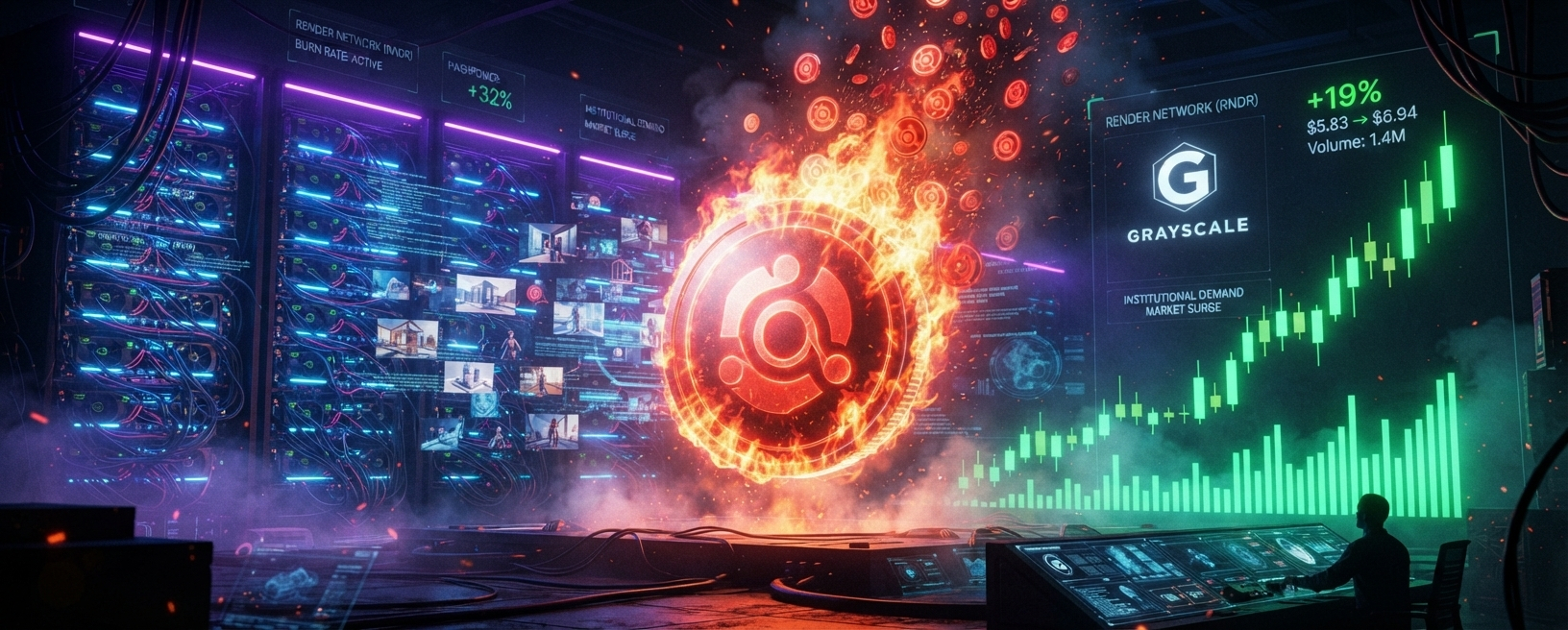
Render’s 19% Bid Puts Usage and Burns Back in the Same FrameAI tokens move for many reasons. Some move on narrative alone. Render’s latest advance came with a cleaner package. The token jumped about 19%, trading near $1.83, as broader AI-linked names stayed firm and Fear & Greed sat around 71. Volume was strong, near $162 million over 24 hours. Network activity reached roughly 77 million rendered frames. About 1.16 million RENDER were burned. Grayscale’s decentralized AI allocation still carries a notable position, around 21% of that fund.
That combination matters more than the percentage gain. Traders are not only asking whether AI beta is working. They are asking whether compute demand and token sinks can keep pace with the supply side of a DePIN network.
Why Render Is Back on the Desk
Risk appetite is clearly present. Greed-range sentiment and strong flows into AI-linked names create room for mid-cap infrastructure to re-rate quickly. Render sits in a more useful corner of that complex than pure story tokens. Its network converts GPU work into measurable output. Frames rendered and tokens burned give the market two numbers it can argue about. One speaks to usage. The other speaks to supply.
What stands out is the institutional overlay. A concentrated Grayscale position does not guarantee price support on any given day. It does show that at least one regulated product channel has treated RENDER as a core decentralized AI exposure rather than a peripheral bet. In a tape already favoring AI infrastructure, that kind of allocation can reinforce attention when on-chain activity is also rising.
Technical Tape and Sector Correlation
The breakout came with rising volume, which is the first filter worth applying. Advances on thin liquidity are easy to dismiss. A roughly 19% move with nine-figure volume forces a more serious read. Momentum is clearly extended. RSI risk is real after a move of this speed. That does not automatically invalidate the breakout. It does mean the next phase often depends on whether price can hold higher levels through a pause rather than needing constant new highs.
Sector correlation remains a central variable. Render still trades as part of the broader AI and DePIN basket. When that basket is in favor, idiosyncratic strength gets amplified. When the basket rotates out, even solid network prints can struggle to hold attention. Pro traders should treat RENDER’s relative strength against both Bitcoin and the wider AI token set as part of the setup, not as an afterthought. If the sector bid fades and Render loses the breakout zone on rising sell volume, the move starts to look like another high-beta spike. If the sector cools and Render holds up better than peers, the usage-and-burn story gains credibility.
On-Chain: Throughput, Burns, and Supply Reality
The burn of about 1.16 million RENDER is the cleanest tokenomic signal in the latest package. Burns only matter if they are recurring and linked to actual network demand rather than one-off events. In Render’s case, the more persuasive argument is the loop: work gets done on the network, activity is visible in frames rendered, and token sinks reduce circulating supply as that work is paid for. That is a different structure from AI tokens that rely mainly on emissions narratives or roadmap optionality.
Seventy-seven million rendered frames help anchor the discussion in throughput. No single print proves durable demand. Sustained utilization does. The market has become more skeptical of DePIN names that can show node counts without showing work. Render’s advantage, when it works, is that the product output is legible. GPU time goes in. Rendered frames come out. The token sits in the middle of that process.
Supply dynamics still deserve caution. Burns improve the marginal picture. They do not erase broader circulating supply or the possibility of distribution into strength. Exchange balances, holder concentration, and whether large wallets lean into or out of rallies remain part of any serious assessment.
Fundamentals, Risks, and Positioning
The fundamental case is that decentralized GPU networks can capture a slice of AI and rendering demand that would otherwise remain entirely inside centralized cloud providers. Cost, availability, and workload flexibility all create openings. Render’s positioning in rendering and related compute markets gives it a clearer commercial surface than many abstract compute tokens. Institutional packaging through vehicles such as Grayscale’s decentralized AI exposure adds another distribution channel for that thesis.
Risks are familiar but still binding. AI narrative premiums can compress quickly when sentiment rolls over. Utilization can soften. Competition from other DePIN compute networks and from traditional cloud pricing remains intense. There is also execution risk inside the token itself: if burns slow while price runs ahead of usage, the market will treat the latest rally as leverage on the sector rather than a re-rating of the network.
For pro traders, the practical approach is to respect the volume-backed breakout while defining invalidation below the post-move support band, especially if funding becomes crowded. For longer-term investors, the better scorecard is still utilization trend, burn persistence, and whether institutional ownership remains sticky through drawdowns rather than only through up weeks.
Closing View
Render’s latest strength is better grounded than a pure narrative spike. A 19% advance, strong volume, millions of rendered frames, a visible token burn, and a meaningful institutional fund weight form a coherent package. Fear & Greed at 71 helps explain why the market was ready to pay for that package now.
The data suggests Render is being treated as one of the cleaner ways to express decentralized GPU demand inside the current AI bid. That status is provisional. It holds if usage and burns continue to show up when the easy momentum fades. It weakens if price keeps rising while the work metrics stall. From here, the useful question is not whether AI compute demand exists. It is whether Render’s burn-plus-usage loop can keep converting that demand into a token structure the market is willing to hold after the first pause.
#render
#RenderNetwork
#DePIN
#aicrypto
Render’s 19% Bid Puts Usage and Burns Back in the Same Frame
AI tokens move for many reasons. Some move on narrative alone. Render’s latest advance came with a cleaner package. The token jumped about 19%, trading near $1.83, as broader AI-linked names stayed firm and Fear & Greed sat around 71. Volume was strong, near $162 million over 24 hours. Network activity reached roughly 77 million rendered frames. About 1.16 million RENDER were burned. Grayscale’s decentralized AI allocation still carries a notable position, around 21% of that fund.
That combination matters more than the percentage gain. Traders are not only asking whether AI beta is working. They are asking whether compute demand and token sinks can keep pace with the supply side of a DePIN network.
Why Render Is Back on the Desk
Risk appetite is clearly present. Greed-range sentiment and strong flows into AI-linked names create room for mid-cap infrastructure to re-rate quickly. Render sits in a more useful corner of that complex than pure story tokens. Its network converts GPU work into measurable output. Frames rendered and tokens burned give the market two numbers it can argue about. One speaks to usage. The other speaks to supply.
What stands out is the institutional overlay. A concentrated Grayscale position does not guarantee price support on any given day. It does show that at least one regulated product channel has treated RENDER as a core decentralized AI exposure rather than a peripheral bet. In a tape already favoring AI infrastructure, that kind of allocation can reinforce attention when on-chain activity is also rising.
Technical Tape and Sector Correlation
The breakout came with rising volume, which is the first filter worth applying. Advances on thin liquidity are easy to dismiss. A roughly 19% move with nine-figure volume forces a more serious read. Momentum is clearly extended. RSI risk is real after a move of this speed. That does not automatically invalidate the breakout. It does mean the next phase often depends on whether price can hold higher levels through a pause rather than needing constant new highs.
Sector correlation remains a central variable. Render still trades as part of the broader AI and DePIN basket. When that basket is in favor, idiosyncratic strength gets amplified. When the basket rotates out, even solid network prints can struggle to hold attention. Pro traders should treat RENDER’s relative strength against both Bitcoin and the wider AI token set as part of the setup, not as an afterthought. If the sector bid fades and Render loses the breakout zone on rising sell volume, the move starts to look like another high-beta spike. If the sector cools and Render holds up better than peers, the usage-and-burn story gains credibility.
On-Chain: Throughput, Burns, and Supply Reality
The burn of about 1.16 million RENDER is the cleanest tokenomic signal in the latest package. Burns only matter if they are recurring and linked to actual network demand rather than one-off events. In Render’s case, the more persuasive argument is the loop: work gets done on the network, activity is visible in frames rendered, and token sinks reduce circulating supply as that work is paid for. That is a different structure from AI tokens that rely mainly on emissions narratives or roadmap optionality.
Seventy-seven million rendered frames help anchor the discussion in throughput. No single print proves durable demand. Sustained utilization does. The market has become more skeptical of DePIN names that can show node counts without showing work. Render’s advantage, when it works, is that the product output is legible. GPU time goes in. Rendered frames come out. The token sits in the middle of that process.
Supply dynamics still deserve caution. Burns improve the marginal picture. They do not erase broader circulating supply or the possibility of distribution into strength. Exchange balances, holder concentration, and whether large wallets lean into or out of rallies remain part of any serious assessment.
Fundamentals, Risks, and Positioning
The fundamental case is that decentralized GPU networks can capture a slice of AI and rendering demand that would otherwise remain entirely inside centralized cloud providers. Cost, availability, and workload flexibility all create openings. Render’s positioning in rendering and related compute markets gives it a clearer commercial surface than many abstract compute tokens. Institutional packaging through vehicles such as Grayscale’s decentralized AI exposure adds another distribution channel for that thesis.
Risks are familiar but still binding. AI narrative premiums can compress quickly when sentiment rolls over. Utilization can soften. Competition from other DePIN compute networks and from traditional cloud pricing remains intense. There is also execution risk inside the token itself: if burns slow while price runs ahead of usage, the market will treat the latest rally as leverage on the sector rather than a re-rating of the network.
For pro traders, the practical approach is to respect the volume-backed breakout while defining invalidation below the post-move support band, especially if funding becomes crowded. For longer-term investors, the better scorecard is still utilization trend, burn persistence, and whether institutional ownership remains sticky through drawdowns rather than only through up weeks.
Closing View
Render’s latest strength is better grounded than a pure narrative spike. A 19% advance, strong volume, millions of rendered frames, a visible token burn, and a meaningful institutional fund weight form a coherent package. Fear & Greed at 71 helps explain why the market was ready to pay for that package now.
The data suggests Render is being treated as one of the cleaner ways to express decentralized GPU demand inside the current AI bid. That status is provisional. It holds if usage and burns continue to show up when the easy momentum fades. It weakens if price keeps rising while the work metrics stall. From here, the useful question is not whether AI compute demand exists. It is whether Render’s burn-plus-usage loop can keep converting that demand into a token structure the market is willing to hold after the first pause.
#render
#RenderNetwork
#DePIN
#aicrypto
That combination matters more than the percentage gain. Traders are not only asking whether AI beta is working. They are asking whether compute demand and token sinks can keep pace with the supply side of a DePIN network.
Why Render Is Back on the Desk
Risk appetite is clearly present. Greed-range sentiment and strong flows into AI-linked names create room for mid-cap infrastructure to re-rate quickly. Render sits in a more useful corner of that complex than pure story tokens. Its network converts GPU work into measurable output. Frames rendered and tokens burned give the market two numbers it can argue about. One speaks to usage. The other speaks to supply.
What stands out is the institutional overlay. A concentrated Grayscale position does not guarantee price support on any given day. It does show that at least one regulated product channel has treated RENDER as a core decentralized AI exposure rather than a peripheral bet. In a tape already favoring AI infrastructure, that kind of allocation can reinforce attention when on-chain activity is also rising.
Technical Tape and Sector Correlation
The breakout came with rising volume, which is the first filter worth applying. Advances on thin liquidity are easy to dismiss. A roughly 19% move with nine-figure volume forces a more serious read. Momentum is clearly extended. RSI risk is real after a move of this speed. That does not automatically invalidate the breakout. It does mean the next phase often depends on whether price can hold higher levels through a pause rather than needing constant new highs.
Sector correlation remains a central variable. Render still trades as part of the broader AI and DePIN basket. When that basket is in favor, idiosyncratic strength gets amplified. When the basket rotates out, even solid network prints can struggle to hold attention. Pro traders should treat RENDER’s relative strength against both Bitcoin and the wider AI token set as part of the setup, not as an afterthought. If the sector bid fades and Render loses the breakout zone on rising sell volume, the move starts to look like another high-beta spike. If the sector cools and Render holds up better than peers, the usage-and-burn story gains credibility.
On-Chain: Throughput, Burns, and Supply Reality
The burn of about 1.16 million RENDER is the cleanest tokenomic signal in the latest package. Burns only matter if they are recurring and linked to actual network demand rather than one-off events. In Render’s case, the more persuasive argument is the loop: work gets done on the network, activity is visible in frames rendered, and token sinks reduce circulating supply as that work is paid for. That is a different structure from AI tokens that rely mainly on emissions narratives or roadmap optionality.
Seventy-seven million rendered frames help anchor the discussion in throughput. No single print proves durable demand. Sustained utilization does. The market has become more skeptical of DePIN names that can show node counts without showing work. Render’s advantage, when it works, is that the product output is legible. GPU time goes in. Rendered frames come out. The token sits in the middle of that process.
Supply dynamics still deserve caution. Burns improve the marginal picture. They do not erase broader circulating supply or the possibility of distribution into strength. Exchange balances, holder concentration, and whether large wallets lean into or out of rallies remain part of any serious assessment.
Fundamentals, Risks, and Positioning
The fundamental case is that decentralized GPU networks can capture a slice of AI and rendering demand that would otherwise remain entirely inside centralized cloud providers. Cost, availability, and workload flexibility all create openings. Render’s positioning in rendering and related compute markets gives it a clearer commercial surface than many abstract compute tokens. Institutional packaging through vehicles such as Grayscale’s decentralized AI exposure adds another distribution channel for that thesis.
Risks are familiar but still binding. AI narrative premiums can compress quickly when sentiment rolls over. Utilization can soften. Competition from other DePIN compute networks and from traditional cloud pricing remains intense. There is also execution risk inside the token itself: if burns slow while price runs ahead of usage, the market will treat the latest rally as leverage on the sector rather than a re-rating of the network.
For pro traders, the practical approach is to respect the volume-backed breakout while defining invalidation below the post-move support band, especially if funding becomes crowded. For longer-term investors, the better scorecard is still utilization trend, burn persistence, and whether institutional ownership remains sticky through drawdowns rather than only through up weeks.
Closing View
Render’s latest strength is better grounded than a pure narrative spike. A 19% advance, strong volume, millions of rendered frames, a visible token burn, and a meaningful institutional fund weight form a coherent package. Fear & Greed at 71 helps explain why the market was ready to pay for that package now.
The data suggests Render is being treated as one of the cleaner ways to express decentralized GPU demand inside the current AI bid. That status is provisional. It holds if usage and burns continue to show up when the easy momentum fades. It weakens if price keeps rising while the work metrics stall. From here, the useful question is not whether AI compute demand exists. It is whether Render’s burn-plus-usage loop can keep converting that demand into a token structure the market is willing to hold after the first pause.
#render
#RenderNetwork
#DePIN
#aicrypto
1
618
Войдите, чтобы посмотреть больше материала
Присоединяйтесь к пользователям криптовалют по всему миру на Binance Square
⚡️ Получайте новейшую и полезную информацию о криптоактивах.
💬 Нам доверяет крупнейшая в мире криптобиржа.
👍 Получите достоверные аналитические данные от верифицированных создателей контента.
Эл. почта/номер телефона
В тренде
BinanceKZ
Просмотров: 7,354
45 обсуждают
Как я потерял 180 000 тенге на «менеджере Binance» из WhatsApp — и почему всё равно остался в крипте
phpdead
·Лайков: 5
·Просмотров: 1k
CircleMints500MUSDCOnSolana
Просмотров: 25,565
766 обсуждают
PolymarketBankFailureBetsDrawFDICConcern
Просмотров: 40,071
941 обсуждают