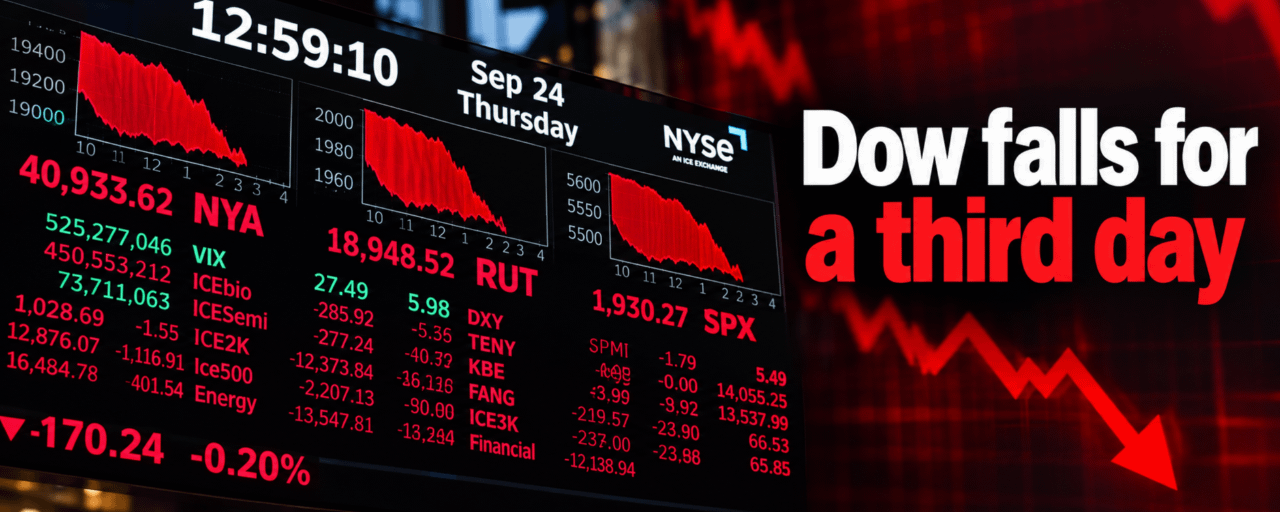

US stocks closed mixed on Thursday, caught between a deepening bond selloff and a stack of single-name earnings and dealmaking headlines. The bond market did most of the early damage. The 30-year Treasury yield touched 5.501%. That's a level nobody has seen since June 2004. The 10-year wasn't far behind, climbing to 5.223%, its highest since June 2007. Same old culprits are behind it: inflation that won't quit, oil creeping higher again, and a growing sense that the US simply owes too much.
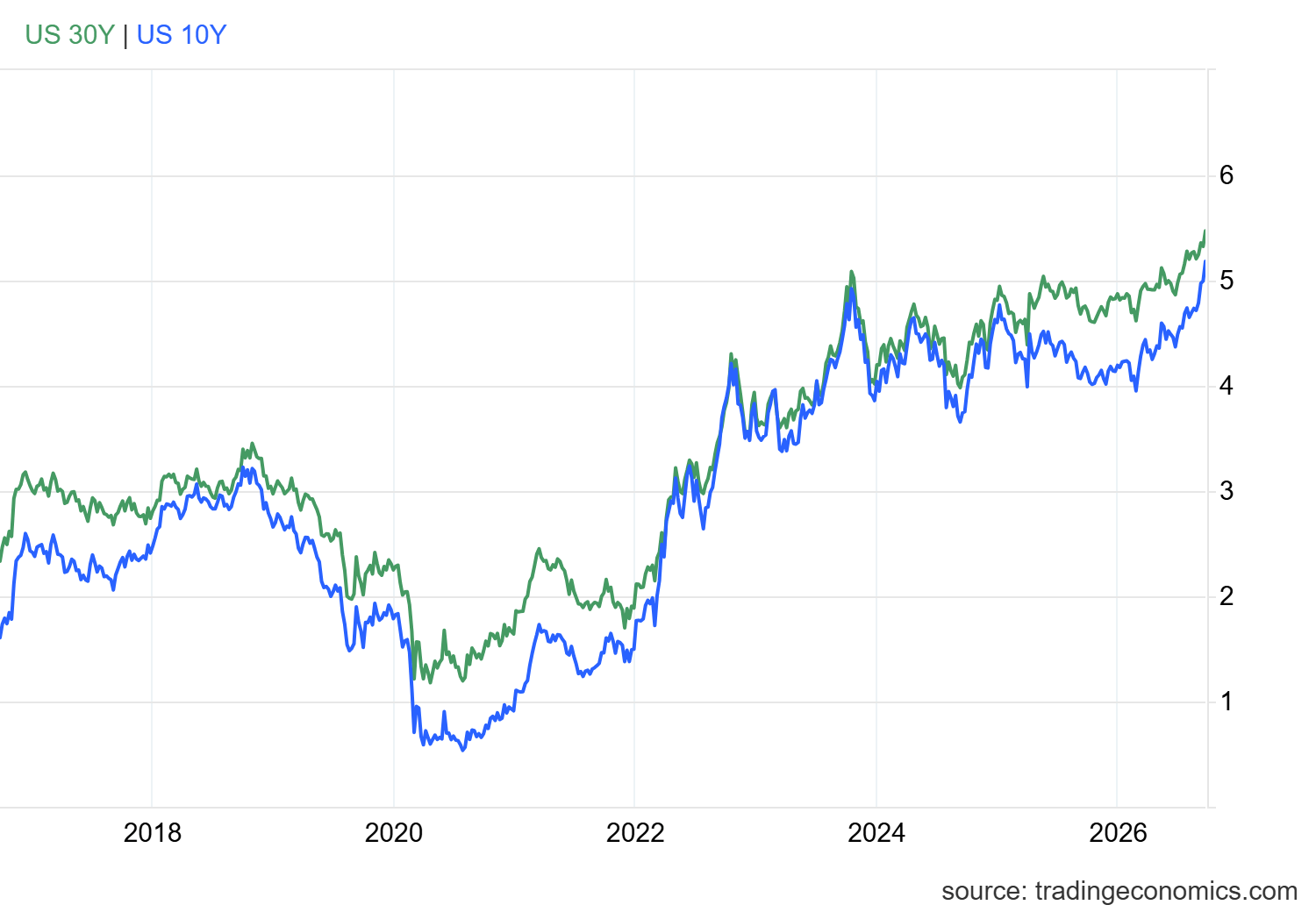
"People are running out of superlatives for the yield on the 30-year bond," is how Ed Al-Hussainy, a portfolio manager at Columbia Threadneedle, put it. And he's right. Washington hasn't had to pay this much to borrow long-term in over two decades.
Rate-hike bets climbed right along with the yields. The CME FedWatch tool now shows roughly 70% odds of another quarter-point hike at the Fed's late-October meeting. A week ago, that number sat at about half. Quite a jump. The Fed has only raised rates once this cycle, back in mid-September, after more than two years of standing still. So another hike this fast? That would be an unusually quick pivot back toward tightening.
Oil explains a lot of it. Reports surfaced that US and Iranian negotiators, meeting on the sidelines of the United Nations General Assembly in New York, were exploring a phased deal to end their nearly seven-month conflict.
Markets breathed a little easier on the news. The rough outline: Tehran reopens the Strait of Hormuz, Washington eases its naval blockade on Iranian ports. Neither side wants to move first, though. Nobody wants to be the one who blinks. Qatari mediators are reportedly stuck trying to bridge that gap. But even just the whisper of a deal was enough to pull stocks off their session lows and take some heat out of crude.
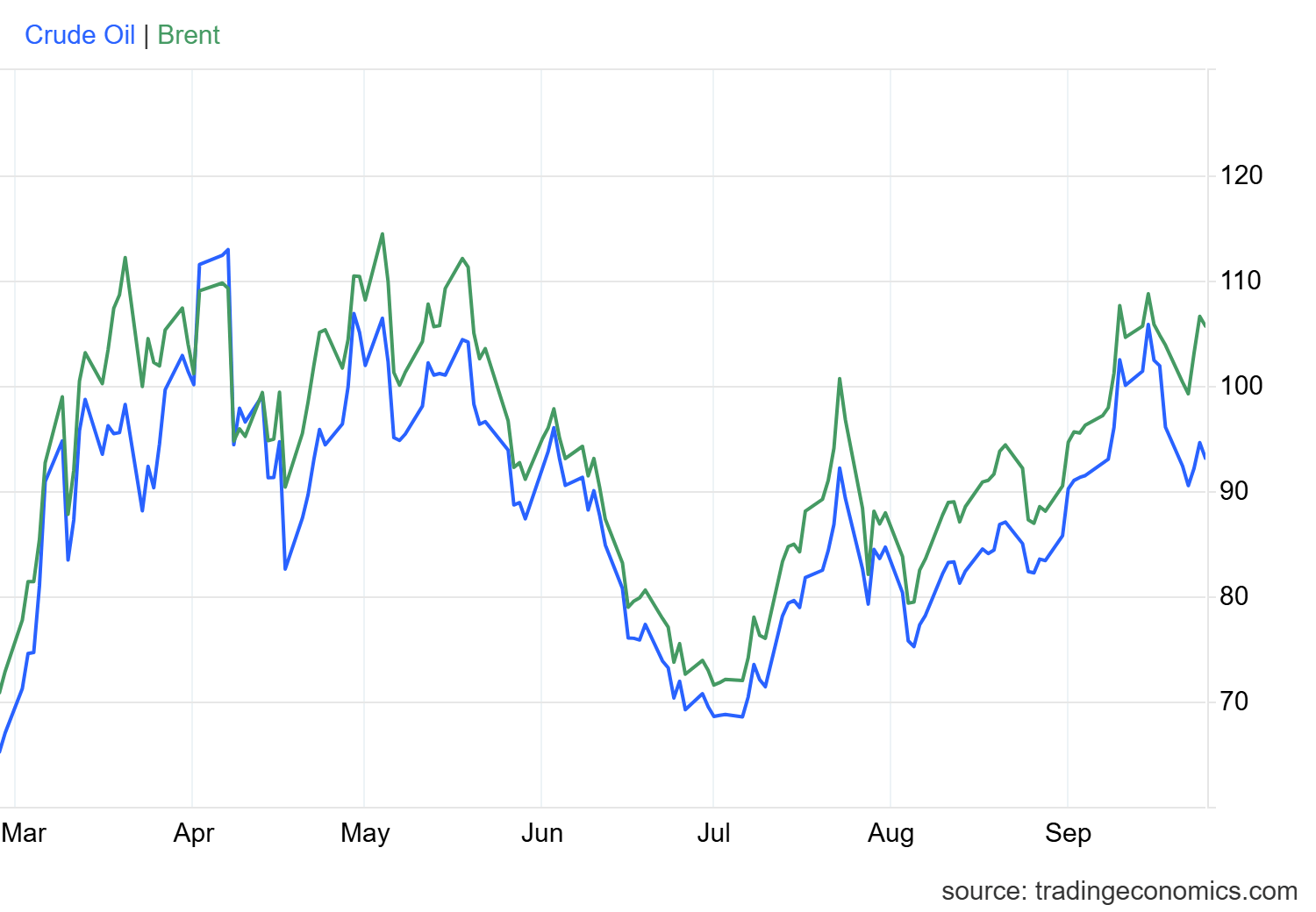
Crude did give back some of its earlier gains once those Hormuz headlines hit. But both benchmarks still closed higher on the day. Brent rose 2.5% to settle at $105.69 a barrel. West Texas Intermediate added 2.3%, closing at $94.30. Both have stayed elevated for months now, ever since the US-Iran conflict escalated back in spring.
Major US indices closed mixed. The Dow slipped 0.31%, its third straight losing session. The S&P 500 and Nasdaq Composite basically shrugged, finishing flat. The small-cap Russell 2000 closed down 0.11% to close at 2,835.92. But that quiet headline number hides a much louder story underneath, because individual stocks moved a lot.
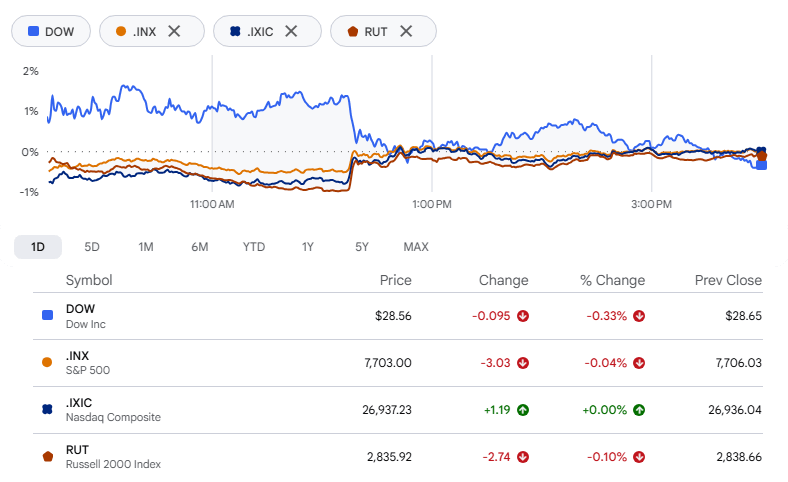
But that quiet headline number hides a much louder story underneath, because individual stocks moved a lot.
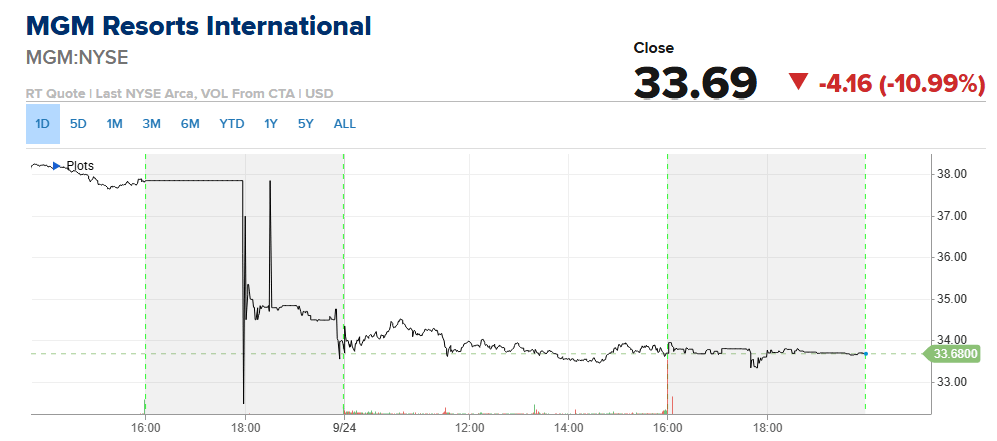
MGM Resorts had it worst. Shares tumbled 11% to $33.90, the lowest price in seven months, after Barry Diller pulled People Inc.'s roughly $18 billion offer to buy out the rest of the casino operator. People already owns about 27% of MGM. Back in June, it had proposed $48.30 a share. "There are lots of ingredients that go into a proposal of this kind," Diller said in a statement, adding that People remains open to a future deal. Fair enough. But the selloff wiped out basically every gain MGM had made since the offer was first announced, and the stock had already slid 27% from its 18-year high back in June. Truist Securities thinks the drop might just be buyout bettors heading for the exits. Then again, the firm had previously argued MGM might actually do just as well without a takeover, operating with less short-term investor scrutiny.
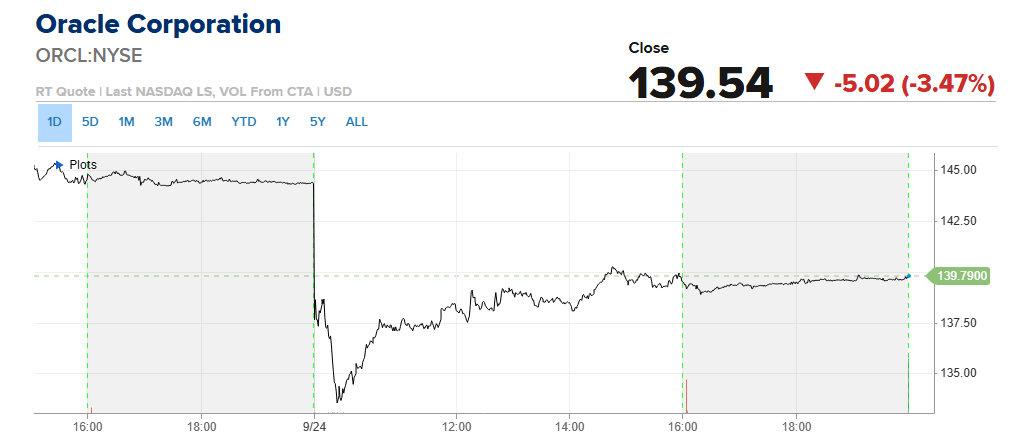
Oracle fell 3.5%, the day's biggest laggard among large-cap tech names. Bloomberg reported the company sent developer Blue Owl Capital a force majeure notice over Project Jupiter, the roughly $165 billion AI data centre it's building near the New Mexico border as part of the wider Stargate initiative. That doesn't mean Oracle is walking away, though. It just buys the company room to delay payments if the site misses its planned 2028 opening. And that's looking like a real possibility, given the ongoing permitting fights over the natural gas pipeline meant to power the whole thing.
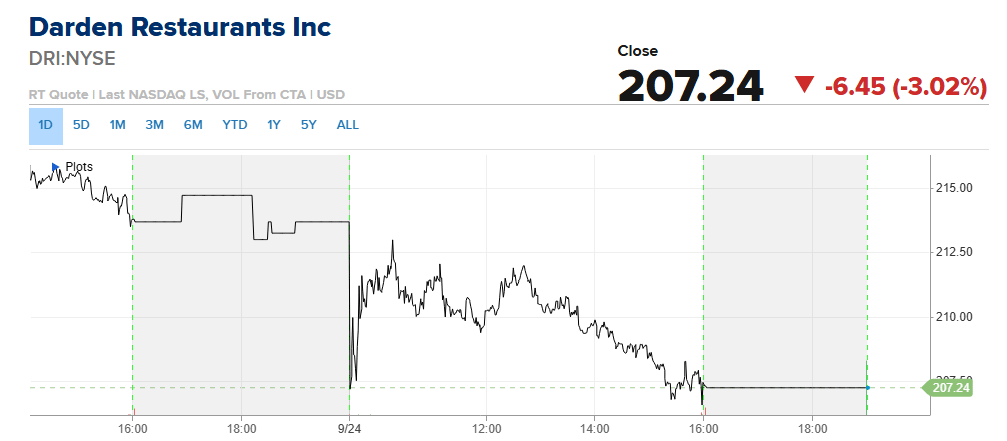
Darden Restaurants dropped more than 3%. The owner of Olive Garden and LongHorn Steakhouse posted fiscal first-quarter earnings of $2.05 a share, right in line with estimates. Revenue came in at $3.20 billion, just a hair under the $3.21 billion FactSet consensus. Close, but not quite. The company left its full-year guidance untouched.
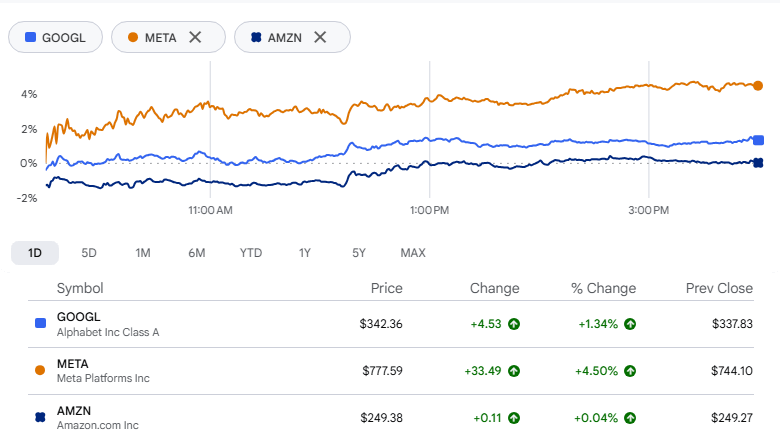
Not everything was red, though. The Magnificent Seven outperformed again. The Roundhill Magnificent Seven ETF held its gains even as the broader market slipped through the afternoon, and it's now up more than 5% for the week. But dig a little deeper and only three of the seven names actually advanced. Meta Platforms did the heavy lifting. It's been on a tear since rolling out Muse, its new AI agent that books travel, handles payments, and manages a calendar, earlier this month. Alphabet gained too. Amazon, meanwhile, barely moved.
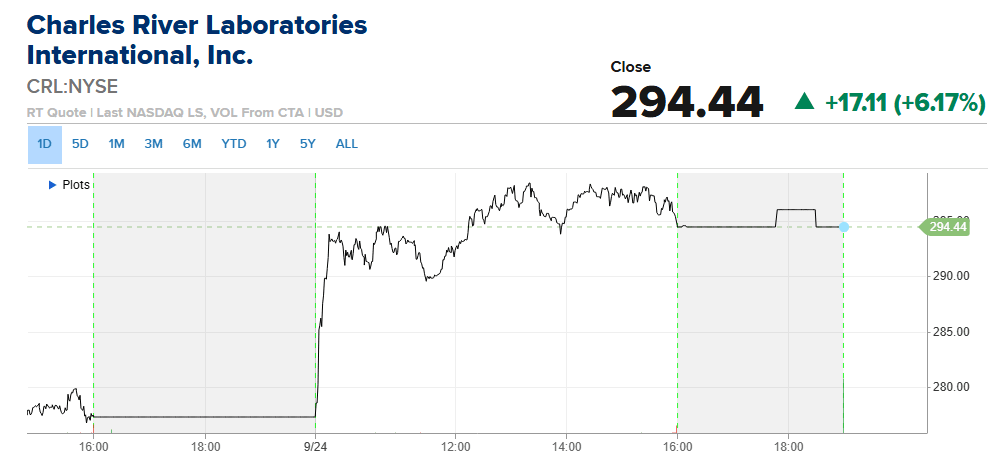
Charles River Laboratories climbed 6%. At its Investor Day, the company reaffirmed 2026 guidance, telling investors revenue and adjusted earnings should both land at the upper end of prior ranges. It also rolled out fresh long-term targets through 2030, part of what it's branding its Pathway to Purpose strategy.
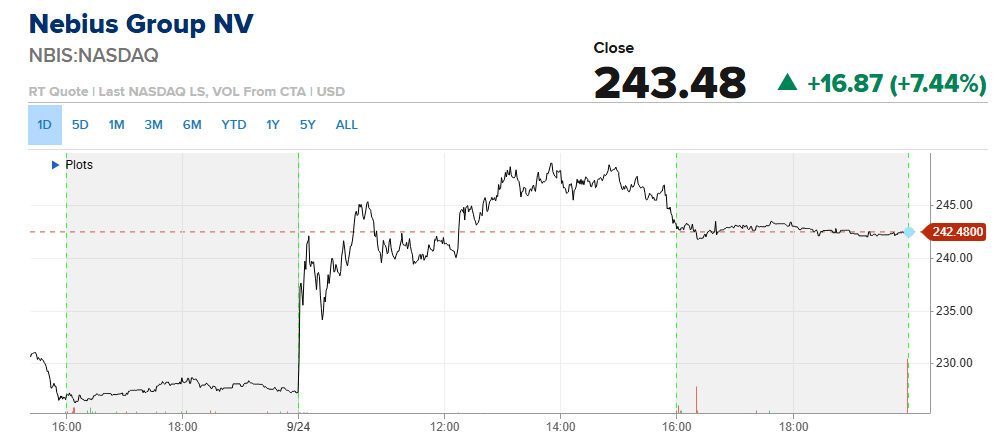
Nebius Group rose more than 7% after Bank of America lifted its revenue expectations through 2028. Analyst Tal Liani kept his buy rating and $310 price target. His case is simple: Nebius mixes long-duration deals with big cloud providers, which gives it stable utilisation, with shorter one-to-three-year agreements priced at roughly double the going hyperscaler rate. That combination, he expects, should keep pushing margins wider.
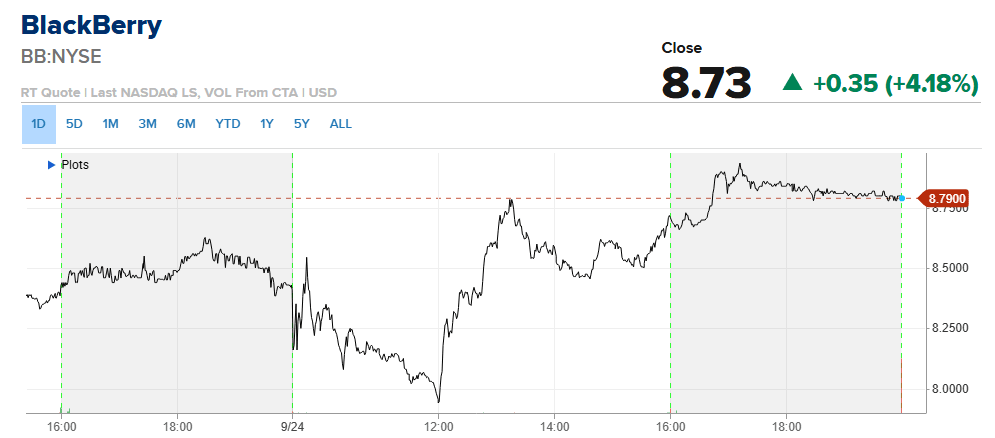
BlackBerry gained 4%. Second-quarter results beat on both lines: 7 cents a share in adjusted earnings against a 4-cent estimate, and revenue of $163.3 million against $142.5 million expected. Not a bad quarter at all. Most of the strength came from QNX, its automotive software unit, which posted record revenue and its largest design win to date. Management responded by raising its full-year outlook.
Sector Analysis:
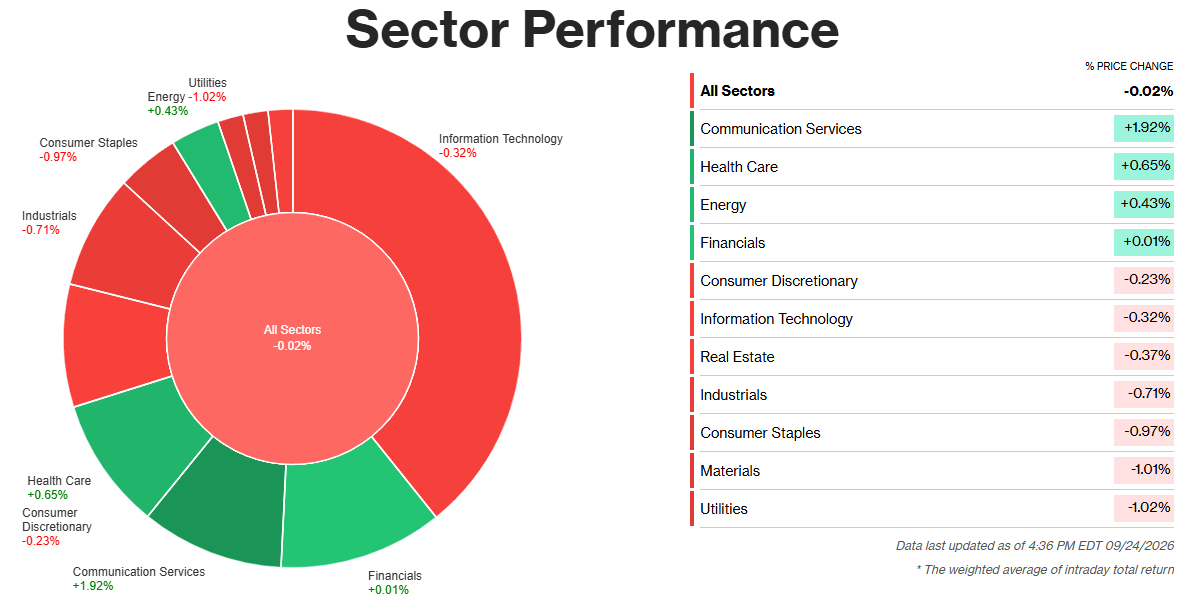
Only four of the S&P 500's eleven sectors closed higher on Thursday, and Communication Services led by a wide margin, up 1.92%. The gain traced almost entirely to Meta Platforms, up 4.5% after JPMorgan raised its price target on the stock, citing the new Muse AI agent as the premier software breakthrough behind the move, unveiled at this week's Meta Connect event.
Energy rose 0.43% as Brent crude settled near $107 after briefly paring its rally on reports that the US and Iran are exploring a phased deal to reopen the Strait of Hormuz. That diplomatic headline took some of the geopolitical premium out of the barrel into the close.
Health Care's 0.65% gain looks less like a reaction to one headline than classic defensive rotation: with yields spiking and the market pricing in a real chance of another Fed hike, investors leaned toward earnings that don't bend much to interest rates. Financials barely moved, up 0.01%, as the usual margin tailwind from higher rates ran into unease over what borrowing costs near two-decade highs mean for loan demand.
Worst-Performing Sectors
The pressure on the rest of the market came from one place: yields. A hotter-than-expected September flash PMI, with services at 58.7 and manufacturing at 57, pushed the yield higher on the long end.
Utilities absorbed the brunt, down 1.02%, as dividend yields that once looked attractive lost their shine next to risk-free rates approaching 5%. Materials fell 1.01%, squeezed by the same rate math and a firmer dollar leaning on metals prices.
Consumer Staples slipped 0.97% for similar reasons — it trades like a bond proxy when yields move this fast. Industrials lagged too, down 0.71%, even though the same PMI beat should, in theory, have flattered factory activity; instead, investors read strong growth as fuel for more Fed tightening. The weakness was sector-wide and rate-driven, not tied to any one company's stumble.