In 1981, seven engineers in India started a software company with about 250u borrowed from one founder's wife.
Today that company runs the software under a big chunk of the world's banks.
Yesterday it picked Chainlink.
Most people in crypto have no idea who Infosys is. So let's start there.
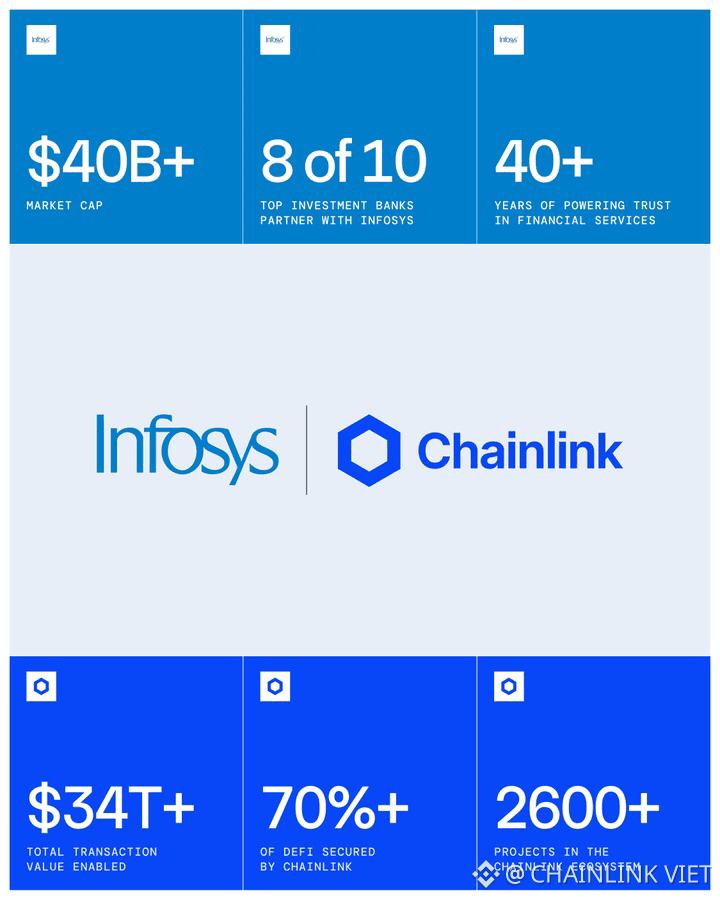
On paper, it's an Indian IT company. 20B in revenue last year. Around 330,000 employees. Listed in New York.
Almost 30% of that revenue comes from one industry: Finance. That's over 5B a year from banks and insurers.
8 of the 10 largest investment banks work with them.
But the part that matters most is a product called Finacle. Finacle is core banking software. It holds your balance, moves your payments, adds your interest every month.
Over 1,000 banks in 100+ countries run on it. DBS. ICICI. Emirates NBD. Standard Bank. India Post runs hundreds of millions of accounts on it.
So when a bank wants to change how its money moves, it doesn't call a crypto startup. It calls the people who built its system.
A lot of the time, that's Infosys. That's who just standardized on @chainlink.
Banks were never stuck on crypto because of the tech. They were stuck on the paperwork. New vendor, new security review, new contracts, two years of meetings. Now the vendor they already trust walks Chainlink in the door.
The word Infosys used was "standardizing." Not "exploring."
So when a bank asks Infosys how to launch tokenized deposits or check what's backing a stablecoin, the answer comes with Chainlink already in it. Nobody gets fired for picking what their vendor recommends.
And it also finishes a pattern.
Swift. Then Bottomline earlier this month, a payments company working with 600+ banks. Now Infosys.
Chainlink isn't chasing banks one by one. It's getting into the pipes banks already use. How they message. How they pay. Now, possibly, the system that holds the accounts.
45 years ago, Infosys started with 250u and a bet that banks would need software.
Now it's betting they'll need onchain rails too. $SOL
They were right the first time.
Today that company runs the software under a big chunk of the world's banks.
Yesterday it picked Chainlink.
Most people in crypto have no idea who Infosys is. So let's start there.
On paper, it's an Indian IT company. 20B in revenue last year. Around 330,000 employees. Listed in New York.
Almost 30% of that revenue comes from one industry: Finance. That's over 5B a year from banks and insurers.
8 of the 10 largest investment banks work with them.
But the part that matters most is a product called Finacle. Finacle is core banking software. It holds your balance, moves your payments, adds your interest every month.
Over 1,000 banks in 100+ countries run on it. DBS. ICICI. Emirates NBD. Standard Bank. India Post runs hundreds of millions of accounts on it.
So when a bank wants to change how its money moves, it doesn't call a crypto startup. It calls the people who built its system.
A lot of the time, that's Infosys. That's who just standardized on @chainlink.
Banks were never stuck on crypto because of the tech. They were stuck on the paperwork. New vendor, new security review, new contracts, two years of meetings. Now the vendor they already trust walks Chainlink in the door.
The word Infosys used was "standardizing." Not "exploring."
So when a bank asks Infosys how to launch tokenized deposits or check what's backing a stablecoin, the answer comes with Chainlink already in it. Nobody gets fired for picking what their vendor recommends.
And it also finishes a pattern.
Swift. Then Bottomline earlier this month, a payments company working with 600+ banks. Now Infosys.
Chainlink isn't chasing banks one by one. It's getting into the pipes banks already use. How they message. How they pay. Now, possibly, the system that holds the accounts.
45 years ago, Infosys started with 250u and a bet that banks would need software.
Now it's betting they'll need onchain rails too. $SOL
They were right the first time.