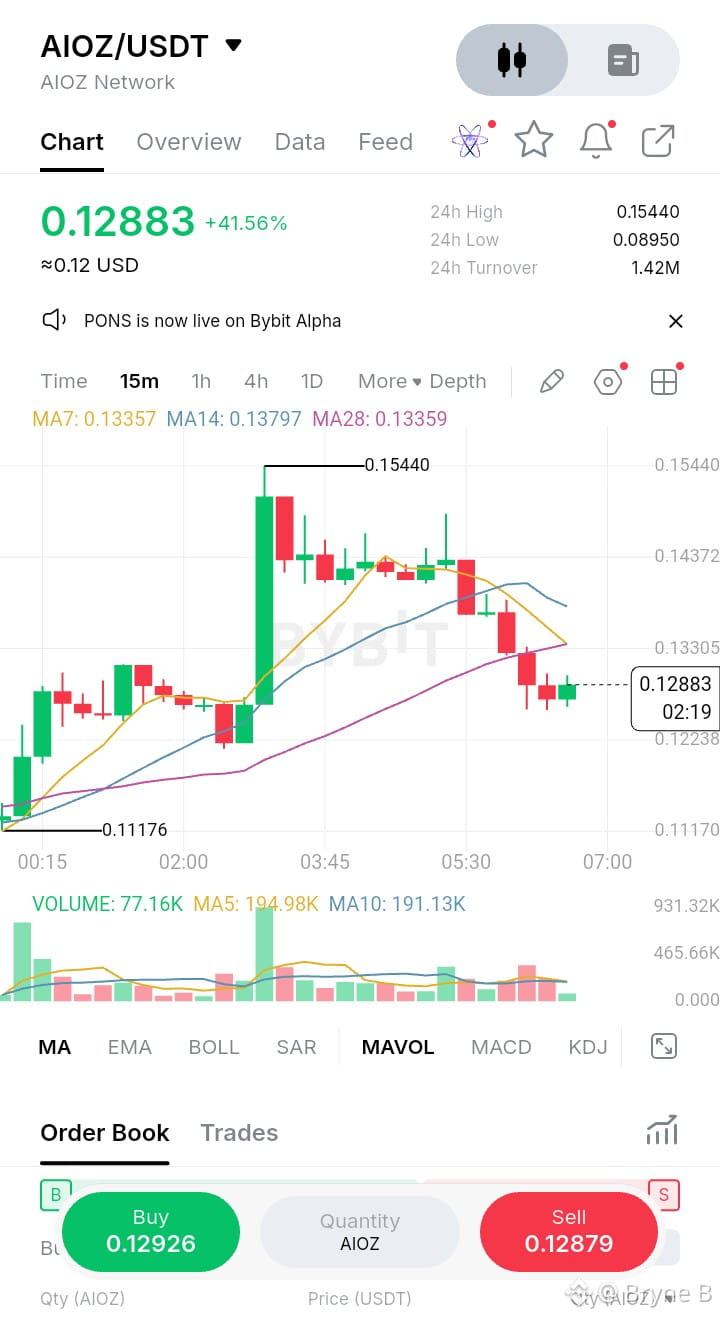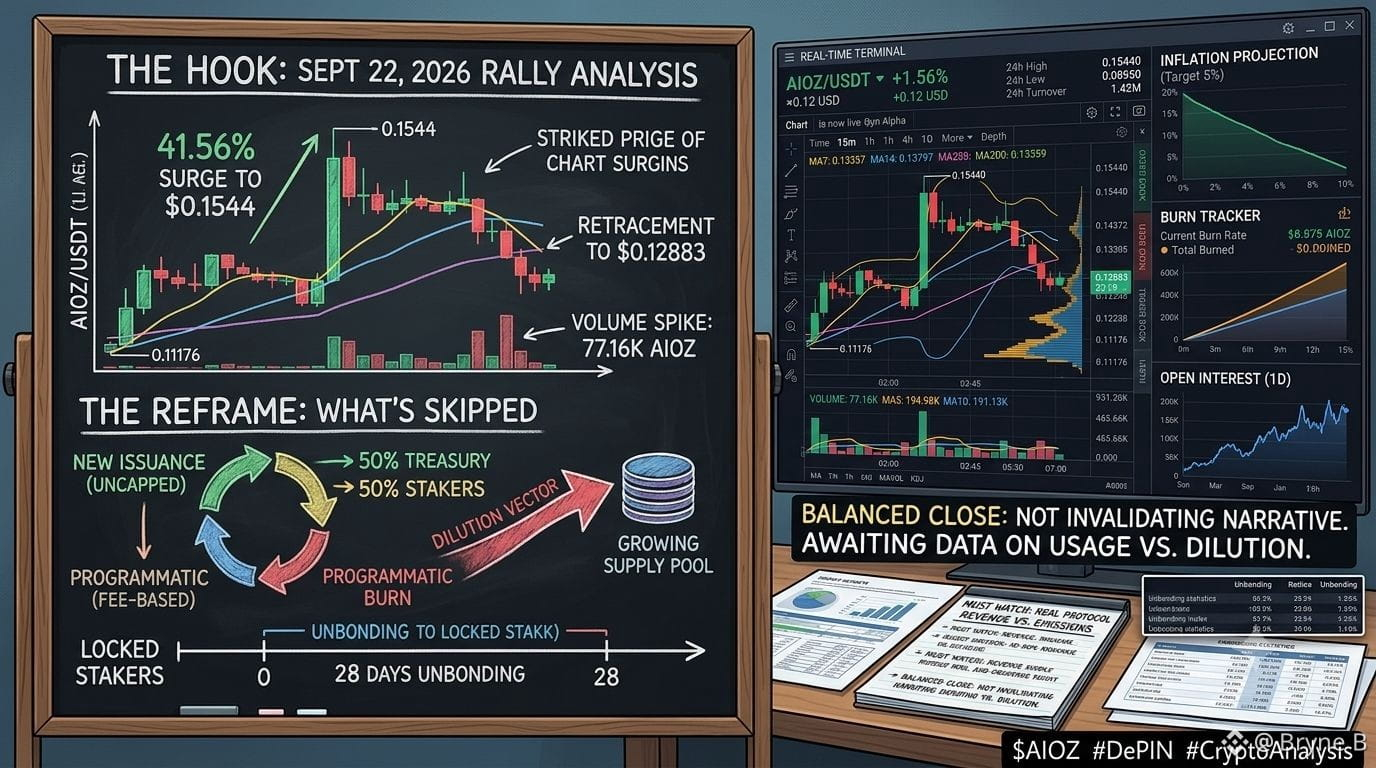
On September 22, 2026, $AIOZ Network surged +41.56% to reach a 24-hour peak of $0.1544 before retracing to $0.1288 on Bybit. The move coincided with a volume spike of 77.16K AIOZ against an average 10-period moving average volume of 191.13K. Market coverage framing the token as a top decentralized AI infrastructure play continues to highlight its target dilution reduction to a 5% inflation rate by late 2026.
Here is the part that gets skipped: supply is not capped. While 50% of base transaction fees are programmatically burned, new issuance is split directly 50/50 between staking validators and the project treasury. Furthermore, locked stakers face a strict 28-day unbonding period. The surface metric treats decreasing inflation as equivalent to net deflation, masking the reality that usage-based fee burns must consistently outpace programmatic emissions to offset continuous dilution.
That gap matters because it highlights a recurring DePIN incentive design: relying on treasury-funded inflation to subsidize node operators while liquid spot trading absorbs the sell pressure. When spot price volatility accelerates—such as today's 41.56% move on Bybit—unstaked holders carry immediate downside exposure while stakers remain locked behind the 28-day queue.
None of this means the underlying utility narrative is invalid. It means token performance remains tethered to whether real network usage fees can scale fast enough to absorb daily supply growth. Will verifiable protocol revenue eventually cross the threshold of daily inflation, or will treasury rewards continue to drive token supply faster than on-chain demand burns it?
$AIOZ #DePIN #CryptoAnalysis
Here is the part that gets skipped: supply is not capped. While 50% of base transaction fees are programmatically burned, new issuance is split directly 50/50 between staking validators and the project treasury. Furthermore, locked stakers face a strict 28-day unbonding period. The surface metric treats decreasing inflation as equivalent to net deflation, masking the reality that usage-based fee burns must consistently outpace programmatic emissions to offset continuous dilution.
That gap matters because it highlights a recurring DePIN incentive design: relying on treasury-funded inflation to subsidize node operators while liquid spot trading absorbs the sell pressure. When spot price volatility accelerates—such as today's 41.56% move on Bybit—unstaked holders carry immediate downside exposure while stakers remain locked behind the 28-day queue.
None of this means the underlying utility narrative is invalid. It means token performance remains tethered to whether real network usage fees can scale fast enough to absorb daily supply growth. Will verifiable protocol revenue eventually cross the threshold of daily inflation, or will treasury rewards continue to drive token supply faster than on-chain demand burns it?
$AIOZ #DePIN #CryptoAnalysis