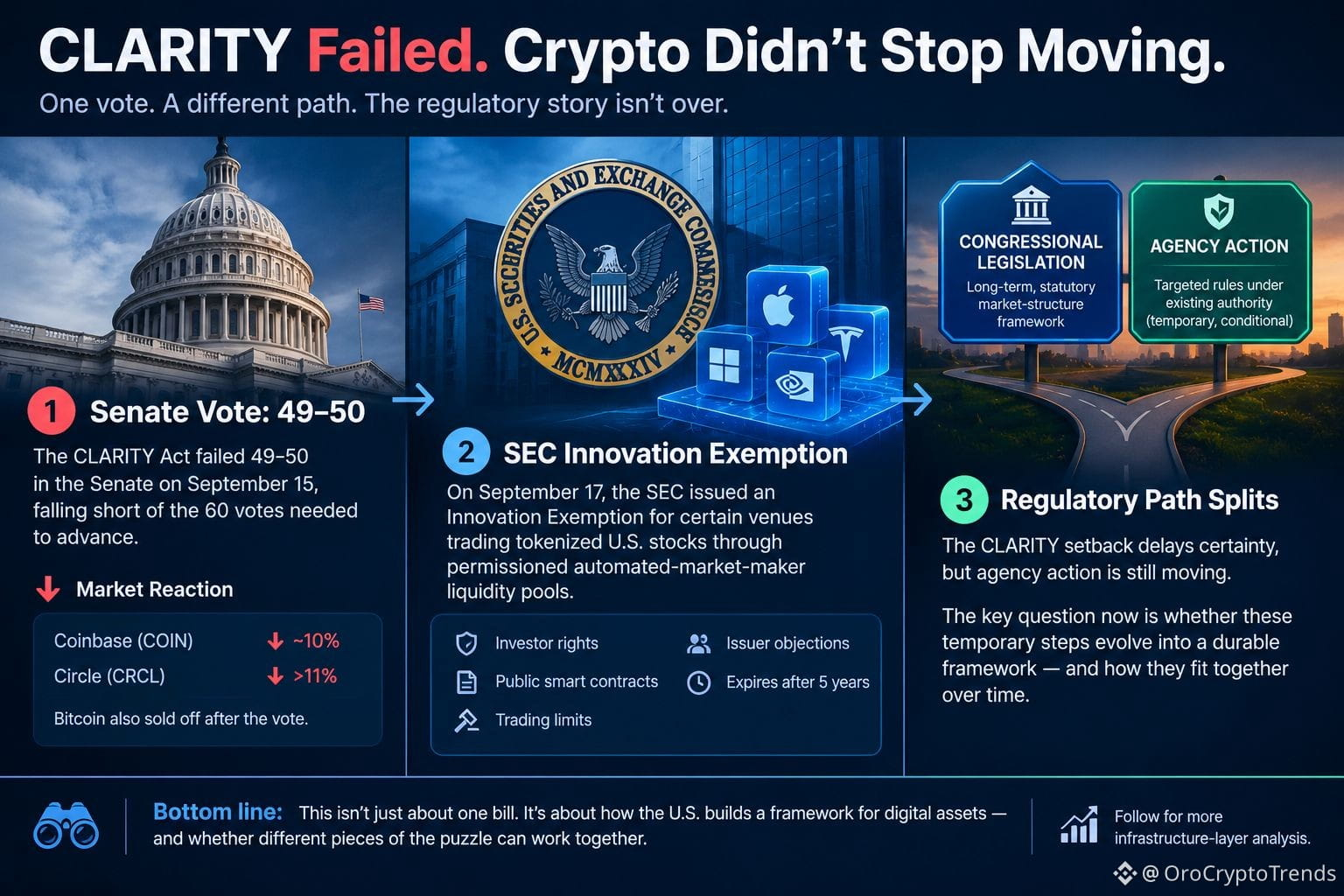

The CLARITY Act failed 49–50 in the Senate. But the more interesting part of the story is what happened next.
The vote on September 15 was a procedural defeat, leaving the broader U.S. crypto market-structure framework unresolved. Coinbase fell about 10% and Circle more than 11% that day, while Bitcoin also sold off.
Then the regulatory picture started moving through a different channel.
The SEC issued its Innovation Exemption on September 17, creating temporary, conditional relief for certain venues trading tokenized U.S. stocks through permissioned automated-market-maker liquidity pools. The framework includes requirements around investor rights, public smart contracts, trading limits and issuer objections. The exemption is scheduled to expire after five years.
That creates an important distinction.
Congressional legislation would provide a statutory market-structure framework. Agency action can still change the operating environment without waiting for Congress.
So I’m watching the regulatory architecture, not just the Senate headline.
If agencies continue filling specific gaps under existing authority, the CLARITY setback may delay certainty without completely stopping market development. But agency-based rules and congressional legislation are not interchangeable, especially when durability matters.
The next question is whether these temporary regulatory steps evolve into a durable framework.
The vote on September 15 was a procedural defeat, leaving the broader U.S. crypto market-structure framework unresolved. Coinbase fell about 10% and Circle more than 11% that day, while Bitcoin also sold off.
Then the regulatory picture started moving through a different channel.
The SEC issued its Innovation Exemption on September 17, creating temporary, conditional relief for certain venues trading tokenized U.S. stocks through permissioned automated-market-maker liquidity pools. The framework includes requirements around investor rights, public smart contracts, trading limits and issuer objections. The exemption is scheduled to expire after five years.
That creates an important distinction.
Congressional legislation would provide a statutory market-structure framework. Agency action can still change the operating environment without waiting for Congress.
So I’m watching the regulatory architecture, not just the Senate headline.
If agencies continue filling specific gaps under existing authority, the CLARITY setback may delay certainty without completely stopping market development. But agency-based rules and congressional legislation are not interchangeable, especially when durability matters.
The next question is whether these temporary regulatory steps evolve into a durable framework.