
What is #FundingRates and why can it become dangerous?
If you trade perpetual futures this is one of the most important concepts to understand.
Funding Fee is a periodic payment exchanged between long and short traders. It helps keep the perpetual futures price close to the spot market.
The basic rule is simple:
Positive funding: Longs pay shorts.
Negative funding: Shorts pay longs.
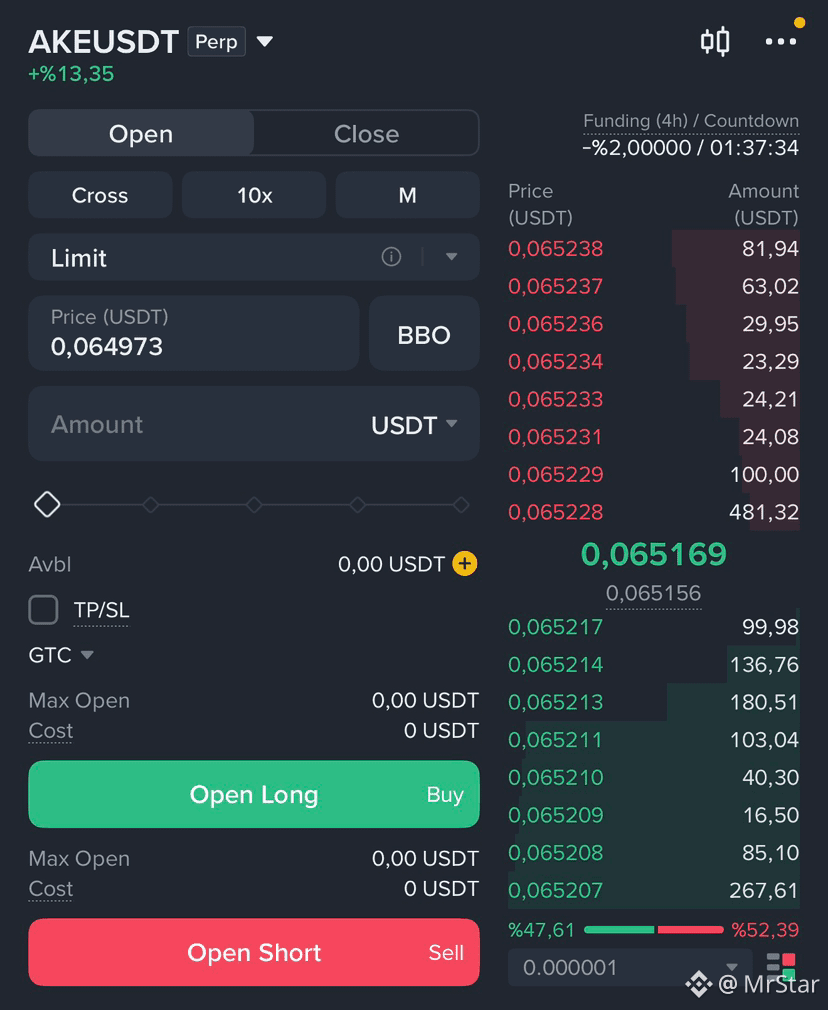
Now look at the current $AKE example.
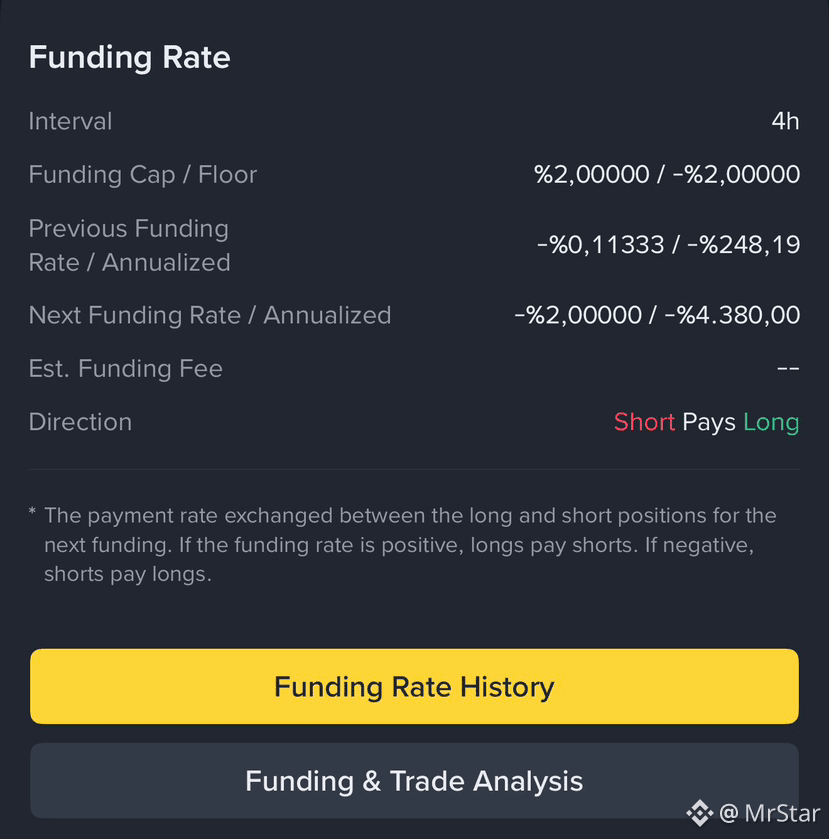
The next funding rate is -2.00% with a 4 hour interval.
That means traders holding short positions at the funding settlement time pay traders holding long positions.
A rate this extreme deserves attention.
#Binance also shows an annualized figure of around -4,380%. This does not mean the rate will stay at that level for an entire year. It simply shows how unusually expensive the current funding environment is.
Why does this matter?
Because funding is charged repeatedly while the position remains open across settlement periods.
A trader can correctly predict the direction of the market and still lose a significant amount through funding costs.
Leverage makes this even more important.
High leverage reduces your margin buffer while repeated funding payments can continue to reduce your available balance.
That is why every futures trader should check three things before entering a position:
Price
Leverage
Funding
In this $AKE example the market is up around 13.35% while the funding rate is at -2.00%.
This tells us that holding a short position is currently very expensive.
It does not tell us that price must keep rising.
It does not guarantee a short squeeze.
Funding should be treated as a risk indicator rather than a prediction tool.
The lesson is simple:
Never open a perpetual futures position without checking the funding rate first.
Sometimes your biggest cost is not being wrong about price.
It is staying in the position too long.
If you trade perpetual futures this is one of the most important concepts to understand.
Funding Fee is a periodic payment exchanged between long and short traders. It helps keep the perpetual futures price close to the spot market.
The basic rule is simple:
Positive funding: Longs pay shorts.
Negative funding: Shorts pay longs.
Now look at the current $AKE example.
The next funding rate is -2.00% with a 4 hour interval.
That means traders holding short positions at the funding settlement time pay traders holding long positions.
A rate this extreme deserves attention.
#Binance also shows an annualized figure of around -4,380%. This does not mean the rate will stay at that level for an entire year. It simply shows how unusually expensive the current funding environment is.
Why does this matter?
Because funding is charged repeatedly while the position remains open across settlement periods.
A trader can correctly predict the direction of the market and still lose a significant amount through funding costs.
Leverage makes this even more important.
High leverage reduces your margin buffer while repeated funding payments can continue to reduce your available balance.
That is why every futures trader should check three things before entering a position:
Price
Leverage
Funding
In this $AKE example the market is up around 13.35% while the funding rate is at -2.00%.
This tells us that holding a short position is currently very expensive.
It does not tell us that price must keep rising.
It does not guarantee a short squeeze.
Funding should be treated as a risk indicator rather than a prediction tool.
The lesson is simple:
Never open a perpetual futures position without checking the funding rate first.
Sometimes your biggest cost is not being wrong about price.
It is staying in the position too long.