



Bitcoin just passed one of September's biggest tests.....
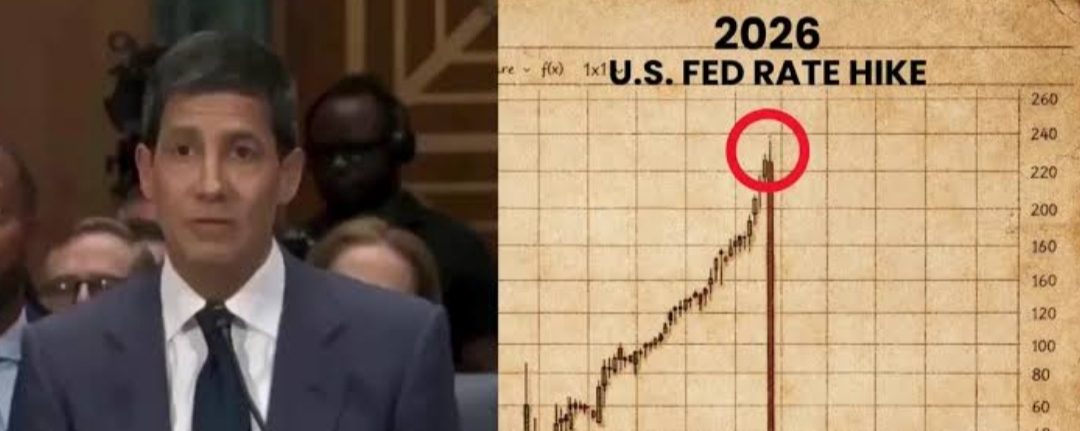
The Federal Reserve raised interest rates by 25 basis points on September 16, taking the target range to 3.75%–4.00%. It was the first Fed hike since 2023.
Normally, that is exactly the kind of event capable of creating serious pressure across risk markets.
But Bitcoin didn't collapse.
BTC remained around the upper-$70,000 area on September 17, showing that much of the expected Fed move had already been absorbed by the market.
So if a Fed hike couldn't immediately break Bitcoin, the more interesting question becomes:
What actually could?
Another Rate Hike Could Be More Important Than This One
The September hike wasn't necessarily the end of the story.
The Fed's new projections showed a median federal-funds rate of 4.1% at the end of 2026, while 16 of 18 policymakers expected at least one more quarter-point increase this year.
That matters because markets had plenty of time to prepare for September.
The next hike could become more disruptive if investors aren't expecting it.
Crypto doesn't simply react to whether rates rise or fall. It reacts to the difference between what investors expected and what actually happens.
If markets suddenly begin pricing a longer period of tight monetary policy, Bitcoin could face a much tougher environment.
Inflation Is Still the Real Problem
The Fed didn't raise rates for no reason.
Its September projections put 2026 PCE inflation at 3.7% and core PCE inflation at 3.4%, both still well above the Fed's 2% objective.
That means inflation remains one of the biggest macro risks for crypto.
Imagine another unexpectedly hot inflation report.
Traders could quickly start pricing additional Fed tightening. Treasury yields could rise. The dollar could strengthen. Risk appetite could weaken.
One inflation report wouldn't automatically crash Bitcoin, but a series of hotter-than-expected readings could change the entire liquidity narrative.
That may be a bigger threat than the September hike itself.
Treasury Yields Are Getting Hard to Ignore
Crypto traders spend hours watching Bitcoin support and resistance.
Right now, they should probably keep one eye on the bond market too.
The U.S. 10-year Treasury yield reached 5.00% on September 15, while the 30-year yield stood at 5.36%, according to Federal Reserve data.
Higher yields create competition for capital.
When relatively safer assets offer attractive returns, investors have less reason to move aggressively into volatile assets.
Bitcoin managed to rally from its late-August lows even while yields remained elevated, but that doesn't mean it is immune to them. Reuters noted before the Fed meeting that renewed inflation concerns and rising bond yields remained important risks to BTC's recovery.
If yields push significantly higher again, the pressure could eventually become harder for crypto to ignore.
Leverage Could Turn a Normal Drop Into Something Bigger
Sometimes Bitcoin doesn't need terrible news to fall hard.
It simply needs too many traders positioned in the same direction.
The latest Fed move demonstrated how quickly leveraged positions can disappear. Roughly $345 million in crypto derivatives positions were liquidated over a 24-hour period surrounding the decision, according to market data reported September 17.
This is why leverage matters.
If traders become extremely confident after Bitcoin survives the Fed decision, more leveraged long positions can build.
Then even a normal correction can begin triggering liquidations.
Those forced sales push prices lower, which can trigger another group of liquidations.
A small move can suddenly become a much larger one.
The dangerous moment isn't always when everyone is scared.
Sometimes it comes when everyone becomes too comfortable.
Institutional Demand Could Also Change
One reason Bitcoin has been able to absorb difficult macro conditions is continued institutional interest.
Ahead of the Fed meeting, Reuters reported renewed inflows into U.S. spot Bitcoin ETFs as BTC recovered from roughly $60,000 in late August to above $70,000.
That demand matters.
If institutional flows remain healthy, sellers have another source of buyers waiting on the other side.
But flows can reverse.
Persistent ETF outflows combined with weaker spot demand would change the picture considerably.
A falling market with strong underlying demand can recover.
A falling market while major sources of demand are disappearing is a different situation entirely.
That's why traders should watch not only Bitcoin's price but also who is buying behind that price.
A Wider Liquidity Shock Would Be the Bigger Test
The biggest threat may not come from crypto at all.
It could come from traditional financial markets.
Bitcoin still exists inside a global financial system where stocks, bonds, currencies and commodities compete for capital.
A sudden economic shock, geopolitical escalation or broader rush toward cash could force investors to reduce risk across multiple markets simultaneously.
During those moments, correlations can change quickly.
Assets that normally behave differently can suddenly fall together because investors aren't asking which asset has the strongest narrative.
They're looking for liquidity.
Bitcoin surviving a predictable 25-basis-point Fed hike therefore doesn't prove that it would survive a genuine global liquidity shock with the same strength.
Those are two very different events.
The Most Important Signal Is Bitcoin's Reaction
There is another way to look at all of this.
Bad news alone doesn't determine price.
The market's reaction to bad news does.
Bitcoin fell to around $60,000 in late August before recovering above $70,000 ahead of the Fed meeting. Despite inflation concerns, high Treasury yields and expectations of tighter monetary policy, buyers returned.
That resilience deserves attention.
But it shouldn't create overconfidence.
If another negative catalyst arrives and Bitcoin suddenly stops absorbing the selling, that change in behavior could matter more than the headline itself.
So What Could Actually Break Bitcoin's Strength?
Probably not one headline by itself.
The more serious scenario would be several pressures arriving together.
Persistent inflation.
More aggressive Fed tightening.
Rising Treasury yields.
Weakening institutional demand.
Heavy leverage.
And a break in Bitcoin's underlying market structure.
Any one of those could create volatility.
Several happening together could create something much larger.
For now, Bitcoin has survived the Fed's first rate hike since 2023.
That is notable.
But the real test isn't whether Bitcoin can survive news the market already expected.
The real test comes when something arrives that the market isn't prepared for.