


Binance Futures Pulls the Last-Price Safety Net on ONEUSDT Perps — While the SEC Quietly Rewires the Entire Derivatives Map
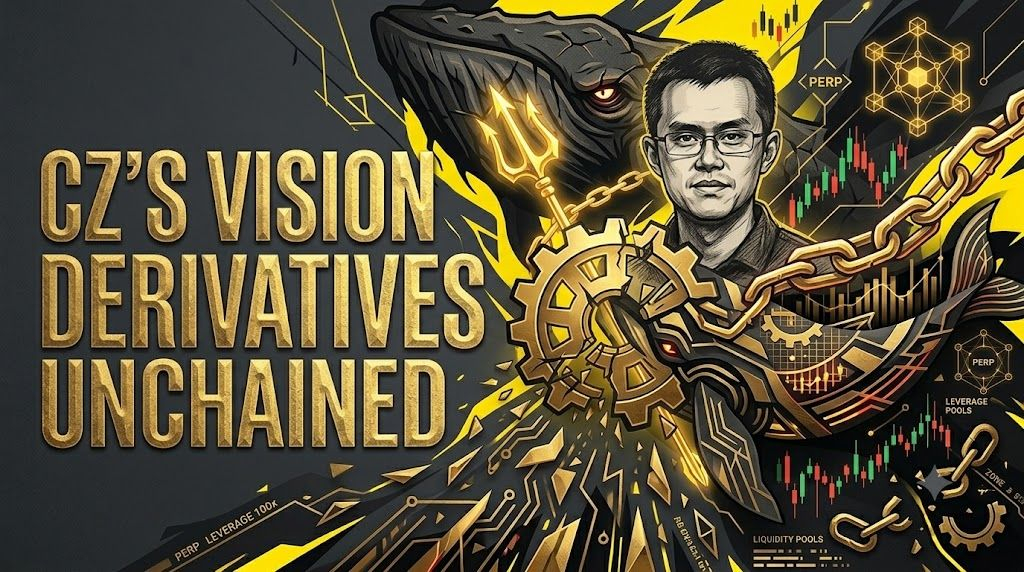
Binance Futures is terminating the Last Price Protected Period on the USDⓈ-Margined ONEUSDT perpetual contract, effective 2026-09-17. For market makers and basis traders, this is not a footnote — it is a structural change to how the orderbook behaves under stress.
Simultaneously, in the same 24-hour window, the SEC acknowledged OG.com's 1-N filing to list single-stock futures in the US, and rolled out a long-awaited "innovation exemption" for tokenized securities venues. Two regulatory doors opened while one exchange closed a protective one.
The signal is unmistakable: derivatives infrastructure is being repriced on both sides of the TradFi–crypto divide. Here is what actually happened, in order, and what it means for positioning.
Chronological Timeline & Verified Data
12:41 UTC — Crypto.com registers with the SEC for single-stock futures, plans US stock perps.
The Block reported that Crypto.com filed with the US securities regulator for single-stock futures, with stated plans to bring US stock perpetuals to market. This is the paperwork layer — the legal scaffolding that precedes any product listing.
13:00 UTC — SEC rolls out "innovation exemption" for tokenized securities venues.
CoinDesk reported the SEC formally introduced its long-awaited innovation exemption framework for tokenized securities venues. This is the macro catalyst of the day. An exemption regime — rather than a blanket rule — gives the Commission discretionary room to greenlight venues that blend tokenized assets with traditional securities infrastructure, without forcing them through the full national exchange registration gauntlet on day one.
13:35 UTC — OG.com cleared by SEC to offer single-stock futures, says Crypto.com CEO.
Cointelegraph reported that Kris Marszalek, co-founder and CEO of Crypto.com, announced via a Thursday X post that OG.com — the sister futures exchange — received SEC authorization to list single-stock futures in the US.
The mechanics matter here. The SEC acknowledged OG.com's 1-N filing, authorizing the platform to offer single-stock futures. OG.com's legal entity, North American Derivatives Exchange, filed the Form 1-N with the SEC on Monday to register as a national securities exchange for trading futures products.
Marszalek framed the approval as a bridge: the company said it is working with both the SEC and the Commodity Futures Trading Commission (CFTC) to offer single-stock perps that combine "the innovations of the digital asset markets with the US capital markets."
That quote is the thesis statement of this entire news cycle. A crypto-native exchange is explicitly describing its product roadmap as a merger of digital asset market structure and US capital markets — and it has the regulatory acknowledgement in hand to pursue it.
13:54 UTC — Binance Futures ends the Last Price Protected Period on USDⓈ-Margined ONEUSDT perpetuals.
Binance's official market announcement confirmed the termination of the Last Price Protected Period on the USDⓈ-margined ONEUSDT perpetual contract, dated 2026-09-17.
For those unfamiliar with the mechanism: the Last Price Protected Period is a temporary post-listing safeguard. During this window, the exchange constrains how far the contract's last traded price can deviate from a reference band, shielding a newly listed perpetual from thin-book manipulation, violent wick prints, and cascading liquidation spirals while liquidity bootstraps itself.
When that period ends, the contract trades on standard rules. The safety rails come off. The orderbook is now the only referee.
Why These Three Events Belong in the Same Article
On the surface, a ONEUSDT perpetual contract parameter change and an SEC exemption for tokenized securities venues have nothing to do with each other. They are, in fact, two ends of the same structural shift.
End one: crypto-native derivatives are maturing into normal market plumbing. Binance removing the Last Price Protected Period on ONEUSDT is a routine lifecycle event — but routine lifecycle events are exactly what define a maturing venue. The exchange is signaling that the contract has sufficient liquidity depth, market maker participation, and price discovery to stand on its own without artificial banding. That is a graduation, not a downgrade.
End two: TradFi derivatives are migrating onto crypto rails. OG.com's SEC acknowledgement for single-stock futures, paired with the innovation exemption for tokenized securities venues, is the regulatory apparatus catching up to a product that crypto exchanges have been building toward for years — 24/7 equity exposure, perpetual-style funding mechanics applied to traditional assets, and settlement infrastructure that does not respect the NYSE closing bell.
The connective tissue is market structure convergence. Crypto venues are adopting TradFi product categories. TradFi regulators are adopting crypto-native venue frameworks. And the exchanges in the middle — Binance, Crypto.com, Kraken — are optimizing their derivatives stacks for a world where the distinction between a perpetual and a futures contract is a legal formality, not a product difference.
The ONEUSDT Detail Deserves More Attention Than It Is Getting
Traders scrolling past the Binance announcement are making a mistake. Here is why.
When a Last Price Protected Period ends, three things change mechanically:
1. Wick risk increases. During the protected window, the exchange's reference band prevents the last price from printing far outside a defined corridor. Once removed, a single aggressive market order into a thin book can print a wick that triggers stop-loss clusters and liquidation engines. For ONEUSDT specifically — a mid-cap altcoin perpetual with shallower depth than BTC or ETH contracts — the marginal impact of rail removal is proportionally larger.
2. Funding rate dynamics shift. Protected periods often coincide with suppressed funding volatility, because the reference band indirectly dampens the extremes of mark-price divergence. Post-protection, funding can swing harder in both directions as the contract's price discovery becomes fully reflexive to spot and to positioning.
3. Market maker obligations change. Quoting obligations and risk limits that were calibrated to the protected regime are typically re-tuned once the contract trades on standard rules. This can mean wider spreads in the immediate aftermath, before makers re-calibrate to the new risk profile.
None of this is a prediction of a specific price move. It is a description of the mechanical regime change. The correct response is not to front-run a direction — it is to widen your mental stop bands, reduce leverage on the affected contract until spreads normalize, and watch the funding rate for the first 24–48 hours post-transition for signs of one-sided positioning.
The SEC Innovation Exemption Is the Sleeper Catalyst
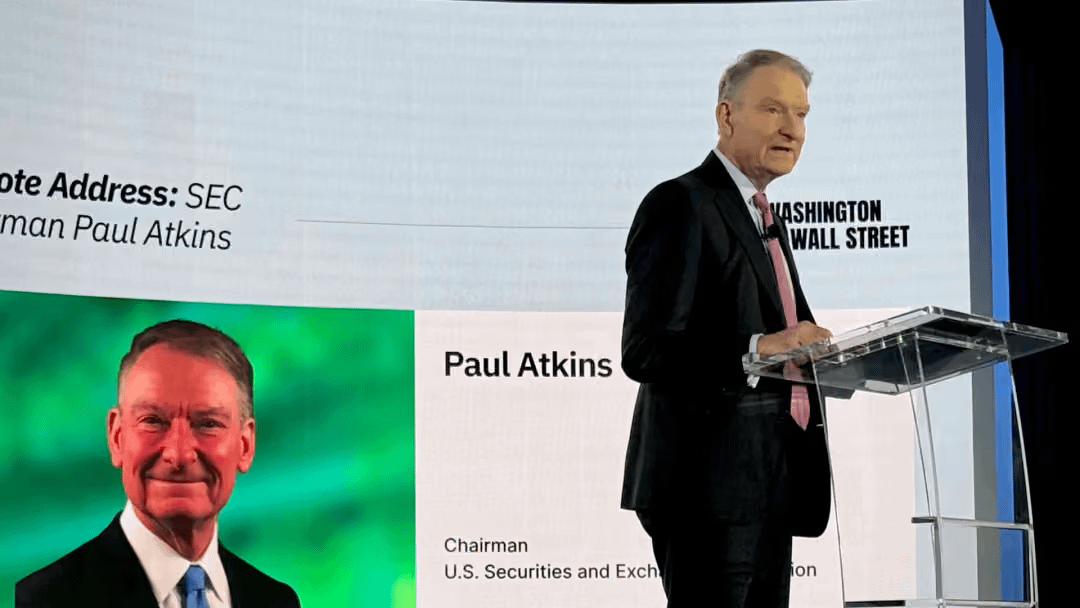
The CoinDesk headline — SEC rolls out long-awaited "innovation exemption" for tokenized securities venues — is the kind of regulatory news that gets underpriced on day one and repriced over the following quarter.
Here is the structural read. An "innovation exemption" is a regulatory tool that allows the Commission to permit novel market structures — in this case, venues that trade tokenized versions of securities — without requiring those venues to satisfy every element of the existing national securities exchange rulebook upfront. It is a sandbox with teeth: real products, real capital, real investors, but under a bespoke supervisory framework rather than the legacy one.
The timing is not coincidental. Within the same hour, OG.com's 1-N acknowledgement landed. The exemption framework and the OG.com approval are two halves of the same policy posture: the SEC is choosing to accommodate tokenized and crypto-adjacent derivatives venues rather than litigate them into oblivion.
For market structure, the implications compound:
Venue competition intensifies. If tokenized securities venues can operate under an exemption, the moat that traditional exchanges held via the full registration process narrows. Crypto-native venues with existing matching engines, custody stacks, and 24/7 uptime suddenly have a viable path into equity-linked products.
Product convergence accelerates. Single-stock perps, tokenized equities, and 24/5 equity trading (as Kraken reportedly pursued with the London Stock Exchange in September) all point the same direction: continuous, global, collateral-efficient exposure to traditional assets.
Collateral efficiency becomes the battleground. Once the same venue can list a Bitcoin perpetual, a single-stock future, and a tokenized equity, the differentiator is no longer product access — it is margin efficiency, cross-collateralization, and portfolio margining across asset classes.
That last point is where the real long-term value accrues. The exchange that lets a trader post one collateral pool against crypto perps, equity perps, and tokenized securities simultaneously wins the institutional flow. OG.com's stated intent — combining digital asset innovations with US capital markets — is a direct play for exactly that.
Trading Angle
On ONEUSDT specifically: The removal of the Last Price Protected Period is a regime change, not a directional signal. Expect wider intraday ranges, sharper wick behavior, and more volatile funding in the first 24–48 hours. Traders running leveraged positions on this contract should treat the transition as a volatility event: reduce size, widen stops, and avoid placing tight stop clusters near obvious liquidation levels where a single wick can sweep them. Watch the funding rate for the first several settlements — a persistent one-sided funding print post-transition is the clearest tell that positioning has become crowded in one direction.
On the broader derivatives complex: The OG.com approval and the SEC innovation exemption are medium-term bullish for venue tokens and for exchanges with existing derivatives infrastructure. The market has historically underpriced regulatory clarity of this kind on day one and repriced it over subsequent weeks as product announcements follow the paperwork. Watch for follow-on filings, additional 1-N acknowledgements, and any CFTC parallel action — Marszalek explicitly named the CFTC as a counterparty in the single-stock perp effort, which means the next catalyst may come from that agency, not the SEC.
On market structure: The convergence trade is real. Exchanges that can offer crypto perps and equity-linked derivatives under one margin account are building a product that neither a pure crypto venue nor a pure TradFi broker can replicate. Monitor which venues announce cross-margin between asset classes first — that announcement, whenever it comes, is the one that matters most for institutional flow.
Key levels and monitors:
ONEUSDT funding rate and open interest in the 48 hours post-transition — the cleanest read on whether the rail removal triggered a positioning imbalance.
Orderbook depth on ONEUSDT relative to its pre-transition baseline — depth recovery speed tells you how quickly makers re-calibrated.
Any CFTC statement or filing related to single-stock perps — the next regulatory domino.
Follow-on SEC innovation exemption grants to additional tokenized securities venues — each one widens the competitive field and compresses the incumbents' moat.
What would invalidate the constructive read: A reversal or narrowing of the innovation exemption framework, a CFTC objection to single-stock perps, or a disorderly ONEUSDT transition that forces Binance to reinstate protective measures. None of these are indicated in the verified data — but they are the tail risks worth naming.
Sources
Binance Official: Binance Futures Will End Last Price Protected Period on USDⓈ-Margined ONEUSDT Perpetual Contract (2026-09-17)
Cointelegraph: OG.com cleared by SEC to offer single-stock futures, says Crypto.com CEO
CoinDesk: SEC rolls out long-awaited 'innovation exemption' for tokenized securities venues
The Block: Crypto.com registers with SEC for single-stock futures, plans US stock perps
💡 Disclaimer: This analysis compiles verified media reports and open-source intelligence for independent research (DYOR). Digital asset markets are highly volatile; scenarios discussed do not constitute financial advice or investment recommendations.
#CryptoNews #BinanceSquare #MarketUpdate #Bitcoin #Derivatives