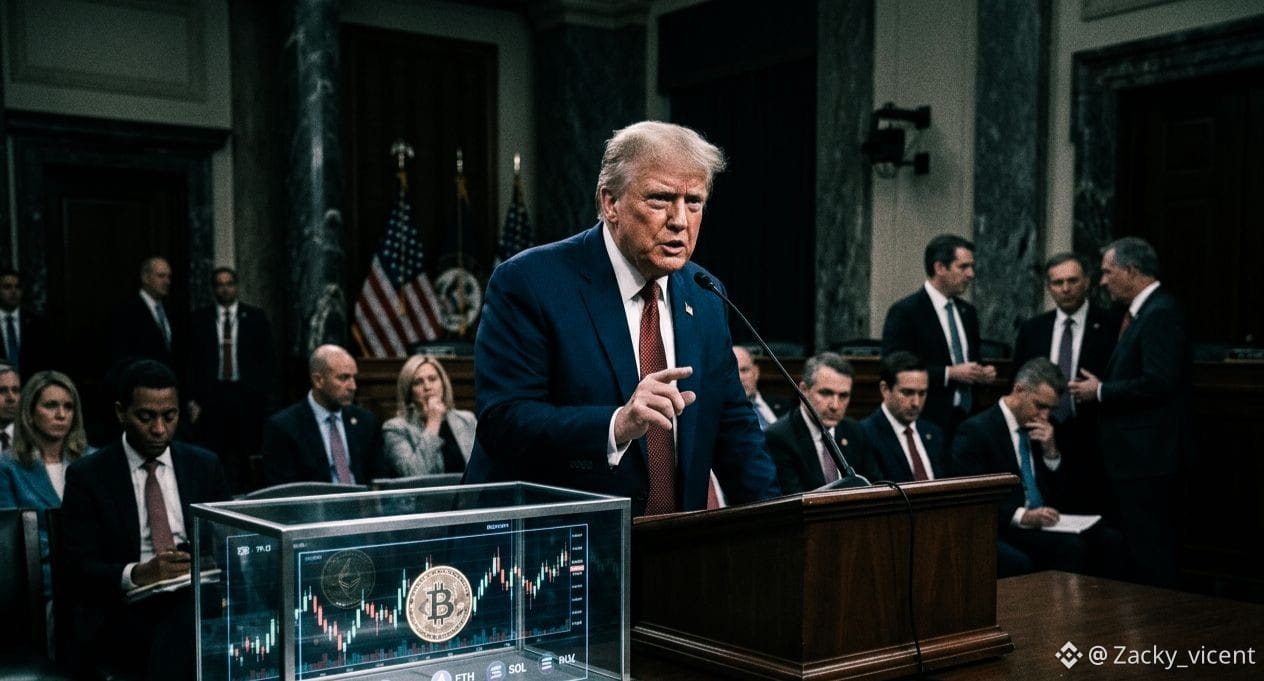
**TRUMP-BACKED CLARITY ACT: ETHICS CRACKDOWN OR POLITICAL FIRESTORM?**
The revised **Digital Asset Market Clarity Act** is tightening the rules—and the political stakes just got a lot higher.
The latest draft, publicly released Monday morning ahead of a critical Senate vote Tuesday, introduces tougher ethics provisions that could force senior U.S. government officials to **divest significant crypto holdings or place them into a qualified blind trust.**
And this time, the enforcement teeth are sharper.
### THE NEW RULES ARE NOT JUST WORDS
Under the revised language, covered individuals—including the president and other senior government officials—would face restrictions on:
* Issuing digital assets.
* Sponsoring digital assets.
* Holding a significant financial interest in digital assets, except under specified conditions.
* Maintaining significant equity interests that must be divested or placed in a qualified blind trust.
The draft also gives covered individuals **three days to notify the appropriate ethics office** after divestment. That office would then have another **three days to publicly disclose the divestment.**
And here is the part that changes the game:
**State attorneys general would be allowed to sue to enforce the ethics provisions.**
This is no longer just an internal ethics discussion. The revised bill introduces a potential legal enforcement mechanism that could turn violations into courtroom battles.
### CRYPTO EXCHANGES COULD BE FORCED TO DRAW THE LINE
The draft would also prohibit crypto exchanges from listing digital assets issued by covered individuals.
That means the consequences would not stop at the individual holding the asset. The restrictions could extend into the market infrastructure itself.
If enacted, this could create a direct collision between political influence, digital-asset ownership, and exchange compliance.
$BTC
The revised **Digital Asset Market Clarity Act** is tightening the rules—and the political stakes just got a lot higher.
The latest draft, publicly released Monday morning ahead of a critical Senate vote Tuesday, introduces tougher ethics provisions that could force senior U.S. government officials to **divest significant crypto holdings or place them into a qualified blind trust.**
And this time, the enforcement teeth are sharper.
### THE NEW RULES ARE NOT JUST WORDS
Under the revised language, covered individuals—including the president and other senior government officials—would face restrictions on:
* Issuing digital assets.
* Sponsoring digital assets.
* Holding a significant financial interest in digital assets, except under specified conditions.
* Maintaining significant equity interests that must be divested or placed in a qualified blind trust.
The draft also gives covered individuals **three days to notify the appropriate ethics office** after divestment. That office would then have another **three days to publicly disclose the divestment.**
And here is the part that changes the game:
**State attorneys general would be allowed to sue to enforce the ethics provisions.**
This is no longer just an internal ethics discussion. The revised bill introduces a potential legal enforcement mechanism that could turn violations into courtroom battles.
### CRYPTO EXCHANGES COULD BE FORCED TO DRAW THE LINE
The draft would also prohibit crypto exchanges from listing digital assets issued by covered individuals.
That means the consequences would not stop at the individual holding the asset. The restrictions could extend into the market infrastructure itself.
If enacted, this could create a direct collision between political influence, digital-asset ownership, and exchange compliance.
$BTC